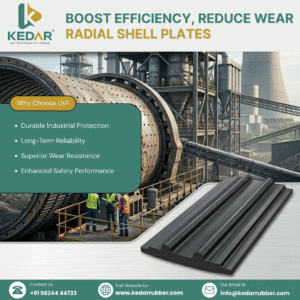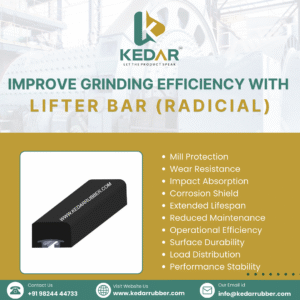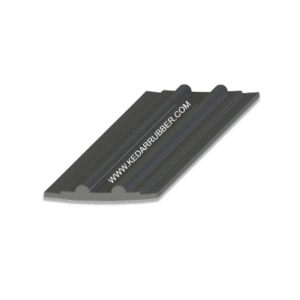


Kedar Rubber Products: Leading Supplier of Impact Resistant Rubber Liners in India
In heavy‑duty industrial environments such as mining, metal and steelmaking, cement production, ceramics manufacturing, and bulk material handling, equipment wear and impact remain some of the most persistent and costly challenges. Abrasive ores, high‑velocity particulate flows, repeated impact loads, and corrosive atmospheres can quickly degrade liners, chutes, hoppers, screens, and conveyors. These conditions lead to frequent maintenance, unplanned downtime, safety risks, and elevated life‑cycle costs for capital equipment. Partnering with a reliable impact resistant rubber liner supplier in India ensures durable, high-performance liners that protect equipment, enhance operational efficiency, and reduce long-term costs.
The demand for wear protection and reliability is not limited to a single geography. Industrial hubs in Pan India — including Jharkhand (Jamshedpur, Bokaro), Chhattisgarh (Bhilai, Raipur), Odisha (Rourkela, Sundergarh), Maharashtra (Nagpur, Chandrapur, Pune), Gujarat (Vadodara, Ankleshwar, Ahmedabad), Rajasthan (Udaipur), Tamil Nadu (Coimbatore, Tiruchirappalli), Andhra Pradesh (Vijayawada), and Karnataka (Bengaluru) — all exhibit significant needs for engineered wear solutions. Across Asia, Africa, Australia, and the Americas, mining and processing plants face similar equipment degradation pressures.
Within this context, Impact Resistant Rubber Liners play a critical role. These engineered liners help improve equipment resilience, extend service life, and reduce the frequency of costly interventions. This article explores their function, engineering rationale, applications, and operational value in industrial use.
Industrial Challenges That Drive Demand for Impact Resistant Rubber Liner
Heavy‑duty plants operate in environments that combine several extreme stressors:
- Abrasion: Mining and mineral processing expose equipment surfaces to hard, angular particles. Repeated sliding and rolling abrasion wear down metal parts rapidly without adequate protection.
- Impact Loads: High drop heights of ore, clinker, or ceramic bodies impose dynamic stresses. Unprotected steel surfaces deform, crack, or fatigue, leading to failures in feeders, chutes, and mills.
- Corrosion: Aggressive environments — especially in cement and chemical processing — pair mechanical wear with chemical attack. This accelerates material loss and undermines structural integrity.
- Downtime: Unexpected liner failure forces plant shutdowns. Experienced plant engineers often observe that a single unplanned stoppage can ripple through production schedules, compromising deliveries and profitability.
- Maintenance Cost: Frequent part replacement and labor‑intensive repairs increase operating expenses. Maintenance teams are often stretched thin managing corrective actions rather than planning preventive strategies.
These intrinsic challenges drive demand for engineered wear protection such as impact resistant liners, ceramic wear protection tiles, rubber lining systems, and conveyor solutions designed for durability and field serviceability.
What Is Impact Resistant Rubber Liner?
Impact Resistant Rubber Liner refers to elastomeric protective sheets, molded components, or bonded systems installed on internal surfaces of equipment that experience high impact and abrasive wear. Unlike plain rubber sheets, these liners are engineered with specific compounding to balance:
- Elasticity for impact absorption
- Hardness for abrasion resistance
- Tear strength for durability against mechanical shock
In heavy‑duty industrial environments, impact resistant liners cushion slamming loads and mitigate abrasion without transmitting stress directly to the base structure. They protect castings, structural steel, and housings in ball mills, conveyors, hoppers, chutes, screens, and feeders.
Applications Across Industries
Impact resistant rubber liners have real use cases across sectors with heavy particulate handling:
- Mining: In iron ore, coal, bauxite, and base metal operations, crushers, screens, chutes, and transfer points are subjected to continuous particle impact and abrasion. Rubber liners reduce wear on steel surfaces and extend maintenance intervals.
- Cement Plants: Clinker, raw mix, and ash flow at high velocities through mills, cyclones, and ducts. Lining systems protect these surfaces from abrasion and impact, improving equipment uptime in rotary kilns, mills, and conveyors.
- Metal & Steel Plants: In steel melt shops and continuous casting lines, heavy slag, scale, and metal particles erode chutes, launders, and hoppers. Impact resistant liners reduce metal loss and preserve critical infrastructure.
- Ceramic Manufacturing: Ceramic bodies and frits are heavy and abrasive. In ball mills, mixers, and conveyors, wear protection safeguards equipment, particularly in manufacturing hubs like Morbi (Gujarat), Salem (Tamil Nadu), and Rajasthan.
- Power Plants: Coal handling systems, ash hoppers, and pulverizer circuits benefit from elastomeric liners that minimize wear, reduce dust generation, and protect structural components.
- Bulk Material Handling: Ports, terminals, sugar mills, and fertilizer plants process large volumes of abrasive bulk solids. Impact resistant liners on conveyors, chutes, and transfer stations prolong service life.
Across these applications, impact resistant rubber liners support operational continuity under some of the harshest wear conditions encountered in industry.
Material Science & Engineering Considerations
Selecting and engineering a wear liner requires understanding material behavior:
- Rubber Properties: Impact resistant liners use specially formulated elastomers. Key properties include:
- Shore hardness: Balanced to resist indentation but retain shock absorption
- Tear resistance: To prevent crack propagation under dynamic load
- Elastic modulus: Designed to flex and return without fatigue
Compounding additives (e.g., carbon black, silica) and curing systems influence performance, tailored to application demands.
Manufacturing Quality & Process Control
Manufacturing impact resistant liners involves discipline and control:
- Precision Manufacturing: Sheets and molded parts must meet dimensional tolerances to ensure proper seating and minimize installation effort.
- Quality Checks: Physical tests for hardness, tensile strength, elongation, and tear resistance ensure consistency with specified performance characteristics.
- Batch Consistency: Consistent compounding and curing processes prevent variability that could lead to premature wear or failure in service.
Manufacturers with rigor in quality control deliver products that behave predictably in demanding service conditions.
Installation & Maintenance Considerations
Proper installation and routine inspection influence liner effectiveness:
- Ease of Installation: Modular design and pre‑cut profiles reduce onsite labor. Experienced plant fitters can install liners with minimal disruption during planned outages.
- Reduced Downtime: Quick‑change liners minimize dead time. With planned maintenance cycles, operations teams can schedule swaps without unplanned stoppages.
- Maintenance Cycles: Regular inspection of impact and abrasion zones allows engineers to replace worn segments before failure affects adjacent components.
Maintenance teams require standard procedures for wear measurement and liner condition assessment to optimize life and safety.
Safety & Operational Reliability
Protective liners contribute to a safer plant environment:
- Worker Safety: Reduced metal wear decreases the risk of sharp fragments and structural failures that could harm personnel.
- Equipment Protection: By absorbing impact and resisting abrasion, liners safeguard costly structural assets and moving parts.
- Plant Reliability: Stable equipment performance with fewer breakdowns improves throughput, production predictability, and workforce planning.
Experienced plant engineers often observe that enhanced wear protection translates into better overall operational discipline and safety culture.
Cost Efficiency Over Equipment Life Cycle
While initial investment in quality liners is a consideration, long‑term efficiency gains are measurable:
- Long‑Term Savings: Reduced part replacement and labor costs lower operational expenditure over the life of the equipment.
- Reduced Shutdowns: Fewer unplanned interruptions maintain production rhythm and protect revenue streams.
- Maintenance Optimization: Reliable liner performance allows maintenance planning based on condition rather than crisis.
These practical efficiencies matter most to procurement managers, maintenance supervisors, and plant executives responsible for operational budgets.
Why Experienced Manufacturers Matter?
Selecting a supplier with deep industrial expertise makes a difference:
- Engineering Expertise: Companies with long‑term industry exposure understand subtle differences in applications — such as how ore type affects abrasion or how impact angles influence liner design.
- Industry Experience: Solutions grounded in real plant conditions outperform theoretical designs that lack field validation.
- Reliable Supply: Experienced manufacturers plan production, inventory, and delivery logistics to meet scheduled plant shutdowns and urgent needs.
About Kedar Rubber Products
Kedar Rubber Products Pvt Ltd is an experienced industrial manufacturer specializing in Ball Mill Rubber Liners, Ceramic Wear Protection Solutions, Rubber Lining Systems, Ball Mill Rubber Products, and Conveyor Solutions. Based in Gujarat and serving Pan India industrial markets — including centers in Jharkhand (Jamshedpur, Bokaro), Odisha (Rourkela, Sundergarh), Maharashtra (Nagpur, Chandrapur), Gujarat (Vadodara, Ankleshwar, Ahmedabad), Tamil Nadu (Coimbatore, Salem), Karnataka (Bengaluru), Andhra Pradesh (Vijayawada), Rajasthan (Udaipur) — Kedar Rubber Products has partnered with mining companies, metal & steel plants, cement manufacturers, ceramic units, power plants, and bulk material handling operations. In heavy‑duty industrial environments, their engineered wear liners and systems support operational reliability and wear mitigation. For more information, visit https://www.kedarrubber.com/.
Conclusion:
In mining and metal processing operations, material handling systems endure extreme abrasion and impact. Impact Resistant Rubber Liners, engineered for specific plant conditions, offer a practical solution to minimize wear, enhance equipment life, and improve overall reliability. When paired with proper design, quality manufacturing, and maintenance discipline, these liners contribute to safer, more efficient industrial operations.
If your plant is evaluating wear protection strategies, consider engaging seasoned engineering teams for assessment and tailored solutions that fit your equipment and process needs.
Key Takeaways
- Engineered wear protection reduces abrasion and impact damage.
- Impact resistant liners improve operational reliability.
- Suitable for mining, cement, metals, ceramics, and bulk handling.
- Material science and design customization optimize performance.
- Quality manufacturing and maintenance planning extend service life.
- Industrial acceptance grows with documented performance.
FAQS
1. What is the typical lifespan of impact resistant rubber liners?
- Lifespan depends on application severity, material flow, and maintenance practices. In moderate conditions, liners may last months; in severe applications, regular inspection and scheduled replacement are essential.
2. Are impact resistant liners suitable for all conveyors?
- They are effective in conveyors with high impact zones — transfer points, loading chutes, and idler seats. Selection should be based on velocity, material properties, and impact energy.
3. How often should these liners be maintained?
- Regular inspections during shutdowns help identify wear patterns. Maintenance frequency aligns with production schedules and severity of service.
4. How do rubber wear solutions compare with ceramic solutions?
- Rubber excels at impact absorption and shock damping, while ceramics offer superior wear resistance in high‑abrasion sliding zones. Often, a hybrid approach delivers optimal protection.
#BallMillRubberLiner #CeramicWearProtection #RubberLining #MiningSolutions #BulkMaterialHandling #ConveyorSolutions #kedarrubberproduct #WearProtection #IndustrialManufacturing