High-Performance Ball Mill Rubber Liners for Heavy Industries: Kedar Rubber Products Pvt. Ltd.
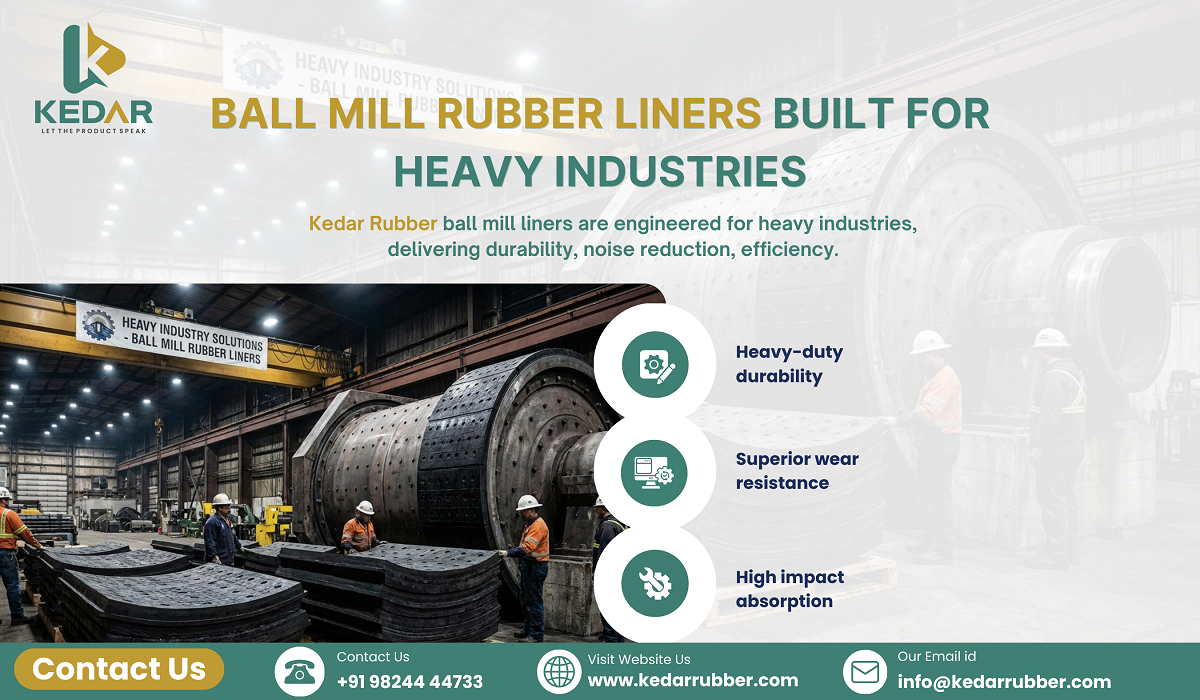
Ball Mill Rubber Liners Built for Heavy Industries play a crucial role in addressing the challenges faced across mining, metal processing, cement manufacturing, ceramics, and bulk material handling industries. Equipment handling abrasive ores, clinker, raw minerals, or hard ceramic media is constantly exposed to mechanical stress, repeated impact loads, and often chemically aggressive environments, making durable and high-performance rubber liners essential for prolonged equipment life and reliable operations.
In this context, Ball Mill Rubber Linings have become a crucial answer for mills operating in mineral extraction, cement works, metal processing, and ceramic production facilities. Providers such as Kedar Rubber Products, possessing extensive knowledge of industrial wear scenarios, recognize that the lining’s performance directly influences grinding effectiveness, plant uptime, and overall running expenses over time.
Industrial Hurdles Driving the Need for Ball Mill Rubber Linings
- Friction and Material Degradation: In mining and metal processing activities, ores and grinding elements constantly wear down the mill’s interior surfaces. Conventional metal linings often show faster surface deterioration, particularly when grinding finely.
- Substantial Impact Forces: Large ball mills are subjected to repeated heavy impacts during operation. Steel linings transfer these shock loads straight to the mill casing, increasing material fatigue over duration.
- Process Corrosion: Operations involving slurries, contact with dampness, and added chemical agents introduce corrosion hazards that decrease liner longevity and compromise structural soundness.
Service Interruptions and Upkeep Expenses
Frequent lining replacement results in:
- Loss of production hours
- Increased labour demands
- Bigger maintenance budgets
- Worldwide Industrial Settings
From iron ore extraction sites in Odisha to cement factories in Rajasthan and ceramic production hubs in Morbi, Gujarat, mills operate under varied yet equally demanding circumstances. Similar difficulties are observed in international mining centers and metal-refining areas, fueling global demand for robust lining solutions.
What Constitutes Ball Mill Rubber Linings?
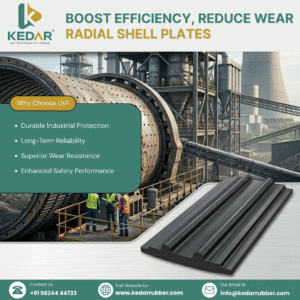
Ball Mill Rubber Linings are protective wear components made from engineered elastomers, fitted inside grinding mills to shield the mill shell from wear, impact, and chemical attack.
In contrast to metal linings, rubber coverings:
- Soak up impact energy
- Lessen noise and shaking
- Exhibit predictable wear patterns
They aren’t a one-size-fits-all substitute for every lining type; instead, they provide tailored solutions best suited for mills where absorbing impacts, resisting corrosion, and ease of handling are top operational priorities.
Applications Across Various Sectors
- Mining Sector: Utilized in primary and secondary grinding mills handling coal, iron ore, bauxite, copper, gold, and other minerals across mining regions including: Odisha, Jharkhand, Chhattisgarh, Karnataka, Andhra Pradesh, Telangana, Maharashtra, and Rajasthan.
- Cement Facilities: Installed in raw material mills and finish mills throughout cement production centers in states such as Madhya Pradesh, Tamil Nadu, Andhra Pradesh, Gujarat, and Himachal Pradesh.
- Metal & Steel Mills: Applied in separation circuits, slag grinding units, and material preparation setups supporting steel plants across Maharashtra, Odisha, West Bengal, and Jharkhand.
- Ceramic Production: Ceramic and mineral grinding mills in Morbi (Gujarat), Jaipur (Rajasthan), Khurja (Uttar Pradesh), and similar areas rely on rubber linings to minimize contamination and extend operational time.
- Power Generation Sites: Employed in coal grinding and ash management systems where abrasion and impact often occur together.
Material Science & Engineering Factors
From an engineering viewpoint, the lining’s performance hinges on the material’s behaviour under dynamic loading.
- Rubber Characteristics
- High flexibility allows for controlled shape change
- Outstanding shock absorption
- Resistance to moisture and corrosive agents
- Ceramic Integration (Hybrid Arrangements)
Design & Modification Needs
No two mills function under identical conditions. Effective rubber liner systems necessitate:
- Exact size conformity with mill shells
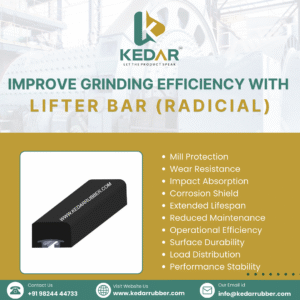
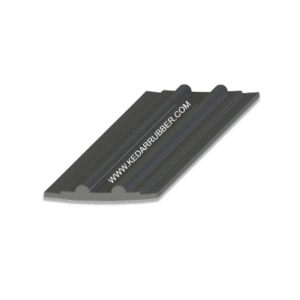
- Custom-designed lifter bar shapes
- Selection of appropriate thickness and firmness for the specific use
Manufacturers with extensive industry background know that poor liner design leads to uneven wear, reduced grinding performance, and premature necessary replacement.
Manufacturing Excellence & Process Oversight
Industrial-grade rubber linings require:
- Precise mould creation
- Controlled rubber mixture formulation
- Consistent heat treatment phases
Fitting & Upkeep Considerations
Simplicity of Installation
Rubber linings are considerably lighter than their metal counterparts, which reduces:
- Time spent on installation
- Reliance on lifting equipment
- Physical strain on workers
- Maintenance Schedule Intervals
Safety & Operational Dependability
In rigorous industrial settings, safety is directly linked to equipment design.
Rubber linings contribute to:
- Lower risks during handling and fitting
- Diminished noise levels
- Enhanced structural safeguarding for mill shells
Operational dependability increases when the likelihood of liner failure is minimized.
Cost Effectiveness Across the Equipment Lifecycle
While the initial material choice is essential, performance throughout the life cycle determines genuine cost efficiency.
Rubber linings support:
- Longer service life for the mill shell
- Fewer unexpected stoppages
- Optimized maintenance timing
This supports long-term operational planning rather than just short-term cost comparisons.
Export Readiness & Worldwide Acceptance
Global industrial purchasers expect:
- Uniform high quality
- Detailed technical documentation
- Knowledge of international operating settings
Indian producers providing wear protection solutions must meet the standards expected in export markets across mining, cement, and ceramic sectors, where process dependability is paramount.
Why Manufacturer Experience Matters?
Manufacturers with hands-on plant exposure offer:
- Design input driven by engineering principles
- Material selection tailored to the application
- Consistent long-term supply
Experience spanning mining, cement, steel, and bulk material handling industries translates directly into superior field performance of the linings.
About Kedar Rubber Products
KEDAR RUBBER PRODUCTS PVT LTD is a seasoned manufacturer of industrial rubber wear protection systems serving both the Indian and international industrial sectors. Focusing on engineered rubber linings, ceramic wear protection systems, and rubber overlay solutions, the firm supports applications across the mining, cement, metal processing, ceramics, and bulk material handling industries.
Further details are found at 👉 https://www.kedarrubber.com/
Summary:
Ball Mill Rubber Linings serve a vital purpose in safeguarding milling machinery, boosting operational safety, and ensuring long-term plant efficiency. When conceived and produced with genuine industrial insight, they become an essential component of dependable milling work rather than just a disposable part.
For plant engineers, purchasing departments, and project advisors, selecting the appropriate lining system ultimately centers on equipment protection, reliable performance, and uninterrupted operations.
Key Takeaways
- Effective wear defence enhances mill dependability
- Rubber linings cushion impacts and resist corrosion
- Applicable across mining, cement, metal, and ceramic sectors
- Lowers downtime and maintenance complexity
- Demonstrated relevance in global industrial operations
FAQs
1. What is the usual service duration for ball mill rubber linings?
- Longevity varies based on ore type, mill rotational speed, impact forces, and operating conditions. Predictable wear patterns aid in more effective maintenance scheduling.
2. Are rubber linings suitable for every milling task?
- They excel in situations that demand impact damping and corrosion resistance, but may be paired with ceramic options for zones with severe abrasion.
3. How frequently do rubber linings need upkeep?
- Maintenance intervals are typically longer and more predictable than with metal linings.
4. Rubber versus ceramic wear solutions—how is the choice made?
- Rubber absorbs impacts; ceramics withstand abrasion. Hybrid systems are often used to achieve balanced results.
#BallMillRubberLiner #CeramicWearProtection #RubberLining #MiningSolutions
#BulkMaterialHandling #ConveyorSolutions #kedarrubberproduct
#WearProtection #IndustrialManufacturing