
Top Man Hole Frame Manufacturer for Industrial Heavy Loads: Kedar Rubber Products
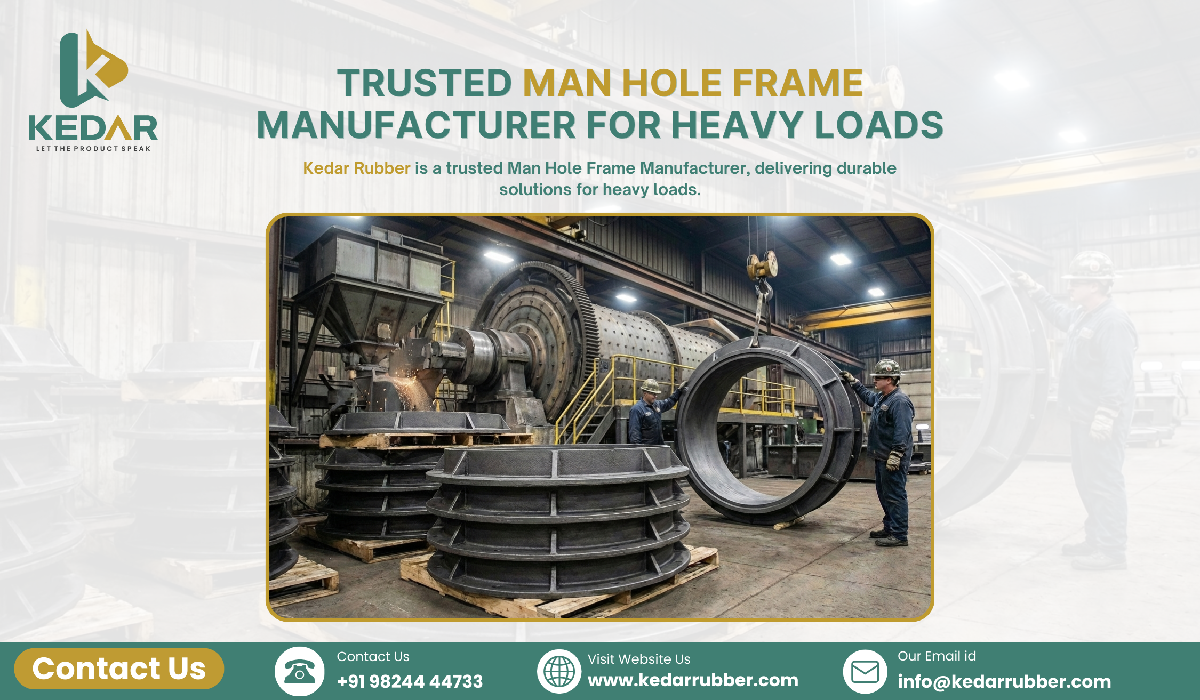
In heavy-duty industrial environments — including mining, metal processing, cement production, and bulk material handling — maintaining equipment reliability is critical for operational efficiency. Challenges such as abrasion, impact loads, corrosion, and frequent maintenance cycles can significantly reduce productivity. Downtime in these industries disrupts supply chains and leads to high costs in labor, replacement parts, and energy. As a Trusted Man Hole Frame Manufacturer for Heavy Loads, we provide durable and reliable solutions that enhance equipment longevity and minimize operational interruptions.
To tackle these issues, manufacturing specialists focus on robust protection systems against wear and on tough parts able to withstand harsh operating conditions. A key fix for this is the Man Hole Frame, built to maintain its strength, allow safe entry into equipment interiors, and boost overall facility reliability.
Worldwide, demand is rising for parts that resist wear and withstand impacts, especially in mining centers, ceramic production areas, steel mills, and cement factories. As mechanical operations expand across India and specific global locations, the use of designed solutions such as Man Hole Frames has become vital to reduce operational risks and maintain steady output.
Industrial Issues Driving the Need for Manhole Frames
Seasoned facility engineers frequently note that the subsequent operational aspects fuel the requirement for tough Man Hole Frames:
- Friction: In mining, cement, and ceramic facilities, the constant movement of raw goods across metal surfaces causes significant wear. Equipment parts, including access points, degrade quickly without protective structures, eventually leading to structural failures.
- Impact Loads: Heavy items, such as ore, clinker, or ceramic grains, often impart sudden force to machinery. Man Hole Frames are engineered to withstand and distribute these loads, safeguarding access covers and related machinery.
- Corrosion: Exposure to dampness, chemical agents, or highly humid environments accelerates corrosion, particularly in steel-based plants. Protective frames made with rust-resistant materials guarantee a longer lifespan and reduce the need to change parts.
- Outages: In mining and metal refining operations, unexpected stops because of worn access points can halt production. High-quality Man Hole Frames reduce the risk of failure, enabling continuous facility operation.
- Upkeep Expenses: Frequent swapping of subpar parts drives up maintenance budgets. Producers with extensive industry experience know that investing in long-lasting access solutions significantly reduces recurring maintenance costs.
Worldwide industrial settings, from the steel-producing regions of Jamshedpur to the ceramic hubs in Morbi, Gujarat, highlight how crucial engineered solutions for wear protection are. Man Hole Frames, when properly conceived and maintained, serve a vital function in reducing these operational hazards.
What is a Man Hole Frame?
A Man Hole Frame is a specially engineered access setup installed on large industrial machinery, enabling facility staff to safely examine, clean, or service the inner workings of the equipment. Unlike simple openings, Man Hole Frames are built to handle abrasive materials, shock forces, and heat stress, ensuring worker safety and equipment integrity.
Practically speaking, these frames offer:
- Structural strengthening for heavily worn access points.
- Integration with sealing mechanisms to block leaks of dust, gases, or slurry.
- Compliance with facility safety standards for personnel entry.
They are more than covers; they are essential parts that enhance the lifespan and dependability of industrial machinery.
Uses Across Sectors
- Mining: Manhole frames are widely utilized in ore processing areas, crushing and grinding facilities, and conveyor networks. Abrasive ores like bauxite, iron, and manganese require frames that can withstand continuous material impact while providing secure access for servicing.
- Cement: Cement plants operate under high-heat conditions, with highly abrasive cement dust. Man Hole Frames on kilns, storage units, and clinker conveyors permit inspection without exposing staff to hazardous dust, all while preserving machinery soundness.
- Metal & Steel: In steel mills and metal-refining plants, heavy residues, such as slag and molten material, cause severe equipment wear. Man Hole Frames ensure secure access to furnaces, storage containers, and cooling conduits, preventing unexpected halts and improving operational security.
- Ceramic: Ceramic manufacturing involves abrasive clays, coatings, and kiln residues. Frames fitted with rubber or composite linings minimize wear while making regular cleaning of kilns and processing units easier.
- Power Stations: Facilities using coal or biomass rely on Man Hole Frames in boiler systems, ash management units, and exhaust gas ducts. Frames protect both workers and machinery from high-temperature environments while allowing for checks and upkeep.
- Bulk Material Handling: Conveyor systems, chutes, and storage bays moving large quantities of material benefit from access points reinforced with wear-resistant Man Hole Frames. They allow for efficient servicing intervals without sacrificing facility operational time.
Material Science & Engineering Considerations
The performance of a Man Hole Frame relies on the materials chosen and their engineered qualities:
- Rubber Characteristics: Rubber provides superb shock absorption, vibration dampening, and resistance to wear from rubbing. Both natural and synthetic rubbers are developed for high firmness and resistance to tearing, ensuring toughness under heavy loads.
- Ceramic Firmness: Ceramics offer superior resistance to abrasion, often surpassing that of hardened steel. In areas subjected to heavy rubbing, ceramic-lined frames extend the lifespan by preventing material erosion.
- Wear Resistance Principles: Industrial designers assess sliding speed, material hardness, and particle size to select the proper lining. Rubber and ceramic combinations are used when both shock absorption and wear resistance are required.
- Impact Handling: The rubber’s flexibility dissipates energy from impact loads, reducing strain on structural elements and protecting both the frame and the equipment it supports.
In demanding industrial settings, choosing the appropriate material is vital for balancing durability, maintenance demands, and operational consistency.
Design & Customization Needs
Effective Man Hole Frames demand precise fabrication tailored to facility specifics:
- Equipment Fit: Frames must align precisely with the measurements, flange types, and sealing methods of existing machinery.
- Custom Sizing: Off-the-shelf frames often require modifications to accommodate unique facility layouts or material flow paths.
- Application-Specific Design: Areas with severe abrasion may require ceramic inserts, while locations prone to vibration may benefit from rubber lining. Knowledgeable producers can suggest mixed solutions that optimize performance.
Design thinking goes beyond just size; it includes allowances for thermal expansion, sealing arrangements, and ease of access for service personnel.
Manufacturing Quality & Process Control
Producers with substantial industry tenure recognize that consistent excellence is mandatory:
- Precision Fabrication: Computerized machining, mold casting, and laser cutting ensure exact dimensions for smooth integration with facility equipment.
- Quality Reviews: Measuring dimensional accuracy, testing firmness, and verifying impact resilience are essential steps before shipping.
- Batch Uniformity: Maintaining consistency across production runs minimizes differences, ensuring that replacement parts fit existing setups without adjustment.
Quality checks at every phase confirm that Man Hole Frames meet or surpass industry benchmarks for toughness and safety.
Installation & Maintenance Factors
How installation and upkeep are handled directly affects how long a facility can run:
- Simple Mounting: Well-designed frames can be installed using standard fasteners without complex tools or structural alterations.
- Reduced Lulls: Fast setup minimizes facility shutdowns, enabling maintenance tasks to be performed efficiently.
- Service Intervals: Durable materials reduce the frequency of inspections and replacements, optimizing labor assignments and operational planning.
Experienced facility engineers often observe that poorly fitted frames or lower-grade materials lead to faster wear, more downtime, and increased safety risks.
Safety & Operational Dependability
Man Hole Frames contribute to both personnel well-being and equipment trustworthiness:
- Personnel Well-being: Correctly designed frames prevent unintended contact with moving parts, high-temperature surfaces, or dangerous substances.
- Equipment Security: Impact-resistant and attrition-resistant frames shield vital access points, preserving the structural soundness of machinery.
- Facility Dependability: Stable operation lessens unexpected outages, supporting predictable manufacturing schedules and improved supply chain oversight.
Cost Effectiveness Across Equipment Lifespan
In extraction and metal fabrication processes, cost effectiveness stems from durability and lessened upkeep necessities:
- Extended Savings: Opting for superior Man Hole Frames reduces the need for frequent swaps and minimizes downtime-related expenditures.
- Fewer Stoppages: Dependable frames avert unplanned facility shutdowns, boosting overall output.
- Maintenance Streamlining: Reduced needs for checks and upkeep, freeing up engineering personnel for more strategic endeavors.
Over the equipment’s service life, a well-conceived Man Hole Frame delivers greater cost reductions than numerous short-term, budget-friendly alternatives.
Export Readiness & Worldwide Acceptance
Industrial purchasers increasingly mandate adherence to universal benchmarks:
- Industrial Shipment Requirements: Manhole frames must conform to ISO, ASTM, or comparable standards for material grade and size precision.
- Paperwork & Standard Awareness: Certificates of material conformity, batch testing records, and setup guides are vital for international industrial purchasing.
- Global Purchaser Expectations: Industrial hubs in Europe, the USA, and Southeast Asia anticipate consistent performance, durability, and operational security.
Kedar Rubber Products guarantees that all frames meet these requirements, facilitating smooth export and approval in global industrial markets.
Why Seasoned Producers Are Important?
- Engineering Prowess: Experienced fabricators grasp material behavior under extreme circumstances, ensuring peak functioning.
- Sector Insight: Familiarity with extraction, cement, steel, and ceramic operations guides design selections that reduce maintenance and downtime.
- Assured Supply: Prompt delivery of premium components minimizes production lags and aligns with facility timetables.
Producers with a proven history supply not just products but industrial solutions backed by expertise.
Regarding Kedar Rubber Products
Kedar Rubber Products Pvt Ltd is a recognized industrial manufacturer serving all of India and global industrial arenas. With many years of know-how, the firm specializes in:
- Ball Mill Rubber Linings
- Ceramic Wear Safeguarding Solutions
- Rubber Lining Systems
- Ball Mill Rubber Components
- Conveyor Options
Producers such as Kedar Rubber Products understand the subtle demands of extraction, cement, steel, and bulk material-handling processes, providing parts that enhance facility safety, reliability, and efficiency.
Summary:
Man Hole Frames are more than basic entry points—they are vital industrial elements that bolster operational reliability, protect equipment, and enhance worker safety. In severe-duty settings, choosing well-engineered frames guarantees long-term performance, alleviates maintenance challenges, and supports consistent output across extraction, cement, steel, and ceramic applications.
For facility engineers and maintenance personnel, understanding material properties, wear trends, and proper setup techniques is crucial to maximizing the value of Man Hole Frames in industrial operations.
Key Insights
- Strong wear defense lessens apparatus degradation.
- Man Hole Frames boost operational dependability and facility security.
- Appropriate for extraction, cement, metal, ceramic, power, and bulk material handling sectors.
- Suitable material selection assures enduring performance.
- Adherence to worldwide industrial benchmarks eases export readiness.
FREQUENTLY ASKED QUESTIONS
1. What is the usual service duration for a Man Hole Frame?
- Depending on the material choice and operating conditions, frames can last 5–15 years in rigorous industrial environments.
2. Can Man Hole Frames be utilized in both damp and arid material processing?
- Yes, rubber and ceramic-lined frames are suitable for erosive, wet, or dry materials across numerous sectors.
3. How frequently should upkeep assessments be carried out?
- Knowledgeable plant engineers suggest quarterly assessments of wear, sealing condition, and fastener firmness, with adjustments based on operational intensity.
4. How do rubber and ceramic wear solutions compare?
- Rubber offers impact absorption and vibration damping, whereas ceramic provides superior abrasion resistance. Combined designs are often employed in areas with high wear.
#BallMillRubberLiner #CeramicWearProtection #RubberLining #MiningSolutions #BulkMaterialHandling #ConveyorSolutions #kedarrubberproduct #WearProtection #IndustrialManufacturing