
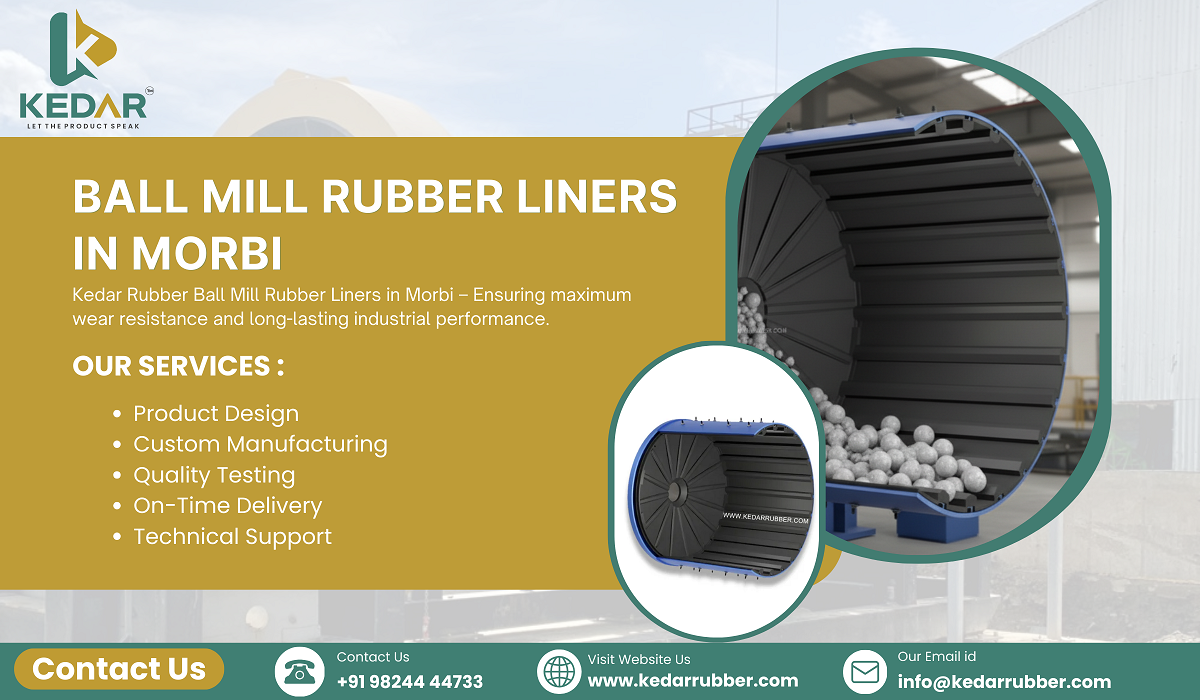
Kedar Rubber Products: Enhance Mill Output with Ball Mill Rubber Liners in Morbi
In sectors such as mining, metalworking, cement production, ceramics, and bulk-material handling, keeping machinery dependable is a constant operational challenge. Consistent mechanical stress, abrasive particles, heavy impact forces, moisture, and varying chemical conditions hasten the deterioration of parts. When wear isn’t managed correctly, it leads to unscheduled stops, safety hazards, and higher lifetime costs. In such demanding settings, Ball Mill Rubber Liners in Morbi are vital for safeguarding grinding machinery and promoting steady, enduring facility performance.
In strenuous industrial settings, wear defense isn’t an optional extra—it’s a fundamental design requirement. Machinery failures stemming from lining wear, corrosion, or structural stress frequently result in unexpected shutdowns, more extended service periods, and reduced output.
Worldwide industrial needs show an increasing focus on boosting operating effectiveness while minimizing interruptions and service requirements. As facilities increase output and operate for extended periods, wear components must deliver consistent performance under severe conditions.
Against this backdrop, Ball Mill Rubber Liners have become a key industrial solution. Conceived to withstand abrasive wear, absorb impact energy, and protect mill casings, rubber linings are crucial for maintaining consistent grinding processes across various sectors.
Industrial Hurdles Driving Demand for Ball Mill Rubber Liners
Abrasion and Material Deterioration
Grinding media and the input materials constantly interact with the mill’s interior surfaces. In mining and metal processing, ores often contain sharp, hard grains that accelerate surface wear. Without adequate lining defense, mill casings degrade quickly.
Impact Forces
Ball mills endure repeated blows from the grinding elements. Metal linings transfer these energies straight to the mill framework, increasing material fatigue. Rubber linings, conversely, distribute and dissipate impact energy more effectively.
Exposure to Corrosion
Many industrial settings involve dampness, slurry handling, or contact with chemicals. Corrosion, along with abrasion, significantly shortens component lifespan, particularly in metal linings.
Outages and Service Frequency
Frequent lining swaps lead to extended stoppages, reliance on heavy-lifting gear, and maintenance that requires significant effort. In high-capacity facilities, even a few hours of downtime can disrupt production schedules.
Climbing Service Expenses
Extra parts, labor, lost production time, and safety oversight during shutdowns collectively inflate operating costs. Experienced facility supervisors often note that the choice of lining directly influences long-term maintenance stability.
These issues are common in major mining zones, cement complexes, ceramic manufacturing areas, and the global metal trades.
What Exactly Is a Ball Mill Rubber Liner?
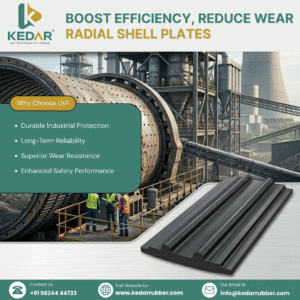
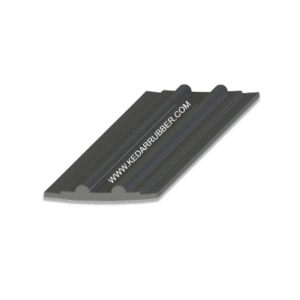
Kedar Rubber engineers ball mill rubber liners to protect grinding mills, shielding the mill casing from wear caused by grinding media and processed materials.
Unlike tough metal linings, manufacturers design rubber linings from specialized flexible compounds to:
- Resist scrubbing/abrasion
- Soak up impact energy
- Lower noise levels
- Facilitate controlled movement of material within the mill
Rubber linings are not meant to stop wear completely. Instead, they manage to wear reliably and predictably while extending the equipment’s service life.
Uses Across Various Industries
- Mining Sector: Deployed in primary and secondary grinding mills handling ores like iron, copper, gold, and bauxite. Rubber linings help manage abrasive feedstock while lessening structural strain.
- Cement Works: In raw material mills and clinker grinding applications, rubber linings minimize impact damage and support sustained grinding performance.
- Metal & Steel Plants: Utilized in slag grinding and mineral preparation lines where abrasive substances are continually processed.
- Ceramic Production: Employed in ball mills grinding ingredients such as feldspar, quartz, and other ceramic precursors, where controlling contamination and maintaining wear stability are crucial.
- Power Stations: Mills for grinding coal benefit from reduced vibration and controlled wear.
- Bulk Material Conveyance: Rubber lining arrangements are also applied to chutes, storage bins, and transfer points to manage surface wear and material impact.
Material Science & Engineering Aspects
The functionality of rubber linings is based on materials science, not just appearance.
Rubber Characteristics
Industrial-grade rubber mixtures are chosen based on:
- Strength under tension
- Resistance to tearing
- Ability to return to original shape (elasticity)
- Suitability with chemicals present
- Impact Dissipation: The viscoelastic nature of rubber allows it to absorb impact energy and release it slowly, reducing the stress transferred to the mill casings.
- Ceramic Integration: In areas subject to high abrasive forces, rubber panels may include ceramic wear pieces. The ceramic’s hardness resists cutting and gouging, while the rubber base absorbs impact.
- Wear Resistance Concepts: Wear arises via rubbing, erosion, and material fatigue. Selecting the correct compound balances hardness with pliability to avoid premature splitting.
Manufacturers with extensive industry background recognize that lining performance hinges as much on how the compound is formulated as on the physical shape of the liner.
Design & Tailoring Needs
Ball mill linings must be engineered specifically for the mill’s configuration.
- Equipment Fit: The liner’s structure must align with the mill’s diameter, rotation speed, and grinding media dimensions.
- Custom Sizing: Segmented lining sets are designed to streamline fitting while ensuring complete casing coverage.
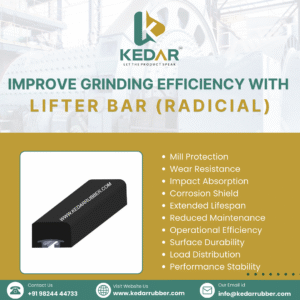
- Application-Specific Layout: The shape of the lifting bars (lifter bars), lining thickness, and fastening methods are chosen based on the input material and operational goals.
Manufacturing Quality & Process Oversight
Accurate manufacturing directly influences how long the liners last and how consistent they are.
- Process Monitoring: Controlled mixing of compounds, molding temperature, and curing times ensures uniform physical properties.
- Quality Checks: Measuring dimensions, testing hardness, and tracking material batches are essential for industrial dependability.
- Consistency Across Batches: Uniform compound mixtures from one batch to the following guarantee predictable wear behavior over extended operation.
Fitting & Servicing Notes
- Simplicity of Installation: Rubber linings are lighter than metal linings, reducing handling risks and the time required for fitting.
- Shorter Outages: Quicker slotting in of new linings supports briefer maintenance windows.
- Service Intervals: Predictable wear patterns enable planned downtime rather than emergency fixes.
Safety & Operational Dependability
Worker safety is enhanced when lining systems reduce handling weight, noise, and impact-related failures. Reliable lining function also safeguards mill casings from significant damage, bolstering overall facility reliability.
Value Over Equipment Lifecycle
Cost-effectiveness is assessed across the equipment’s whole lifespan.
- Longer liner service life decreases replacement frequency
- Less non-operational time enhances production steadiness
- Improved maintenance scheduling reduces operational hazards
The emphasis is on lasting operational worth, not just upfront expenditure.
Global Readiness & International Acceptance
International purchasers anticipate:
- Material certifications
- Precise measurements
- Consistent performance records
- Awareness of worldwide operating environments
Firms ready for export tailor their manufacturing methods to global industry benchmarks.
The Importance of Seasoned Manufacturers
Engineering proficiency, practical application understanding, and consistent production quality are built over time. Manufacturers with decades of industry experience understand liner behavior in actual operating conditions, not just in controlled trials.
About KEDAR RUBBER PRODUCTS PVT LTD
KEDAR RUBBER PRODUCTS PVT LTD is a seasoned Indian producer specializing in wear barriers for ball mills, ceramic protection systems, rubber lining setups, conveyance solutions, and industrial wear elements.
Serving all major areas across India, the firm provides technically tailored solutions to the mining, cement, metal, ceramic, and bulk-material-handling sectors.
Further information is available at 👉 https://www.kedarrubber.com/
Summary
Ball Mill Rubber Liners play a crucial role in safeguarding the vital grinding apparatus, improving operational consistency, and enhancing long-term plant performance. When properly designed, manufactured, and installed, they significantly help minimize downtime and manage maintenance schedules.
For industrial operations that prioritize dependable performance over temporary fixes, engineered wear defense remains a fundamental necessity.
Main Points
- Effective wear management enhances equipment durability
- Rubber linings lessen stress from impacts and reduce noise
- Suitable for mining, cement, metal, ceramic, and energy sectors
- Facilitate predictable upkeep planning
- Recognized in worldwide industrial arenas
Frequently Asked Inquiries
1. What is the usual service life for a ball mill rubber liner?
Service life depends on material toughness, the nature of the material being processed, and the operating conditions.
2. Are rubber liners appropriate for grinding that involves heavy impact?
Yes, rubber liners are specifically engineered to absorb energy from impacts.
3. How seldom do rubber liners need servicing?
Servicing is typically required less often than for metal liners due to their predictable wear pattern.
4. When is ceramic wear protection preferable to using only rubber?
Ceramic pieces are favored in areas with intense abrasion where impact is minimal.
5. Are ball mill rubber liners utilized internationally?
Indeed, they are widely used in mining, cement, and industrial facilities around the globe.
#BallMillRubberLiners #RubberMillLiners #MiningWearProtection #CeramicWearSolutions #IndustrialRubberProducts #GrindingMillSolutions #BulkMaterialHandling #CementPlantEquipment #SteelPlantSolutions #WearResistantLiners #KedarRubberProducts