
Boost Mill Performance Using Smart Lifter Bars from Kedar Rubber Products Pvt. Ltd.
Upgrade Grinding Efficiency with Smart Lifter Bars, as equipment reliability plays a crucial role in determining productivity in heavy-duty industrial environments such as mining, cement, and metal processing. Continuous operations, abrasive materials, and high-impact loads create extremely demanding conditions for grinding mills. As a result, experienced plant engineers frequently encounter wear-related failures and unplanned shutdowns that significantly drive up operational costs.
As various sectors throughout India—spanning Gujarat, Maharashtra, Rajasthan, Tamil Nadu, Karnataka, Odisha, West Bengal, Chhattisgarh, and Jharkhand, alongside major worldwide mining centers—continue to grow, the need for strong and long-lasting wear defense systems is rapidly increasing. In this changing environment, lifter bars have appeared as a crucial element, playing a significant part in boosting grinding effectiveness while shielding vital internal mill parts.
Industry Hurdles Fueling Lifter Bar Demand
In mining and metal refinement tasks, the following issues are often encountered:
- Intense rubbing caused by ores and raw inputs
- Heavy impact forces during grinding cycles
- Corrosive settings in wet processing
- Frequent stoppages due to liner deterioration
- Increasing upkeep expenses
These difficulties are not exclusive to India but are also seen in worldwide activities across Australia, South Africa, and Southeast Asia.
What Exactly Are Lifter Bars?
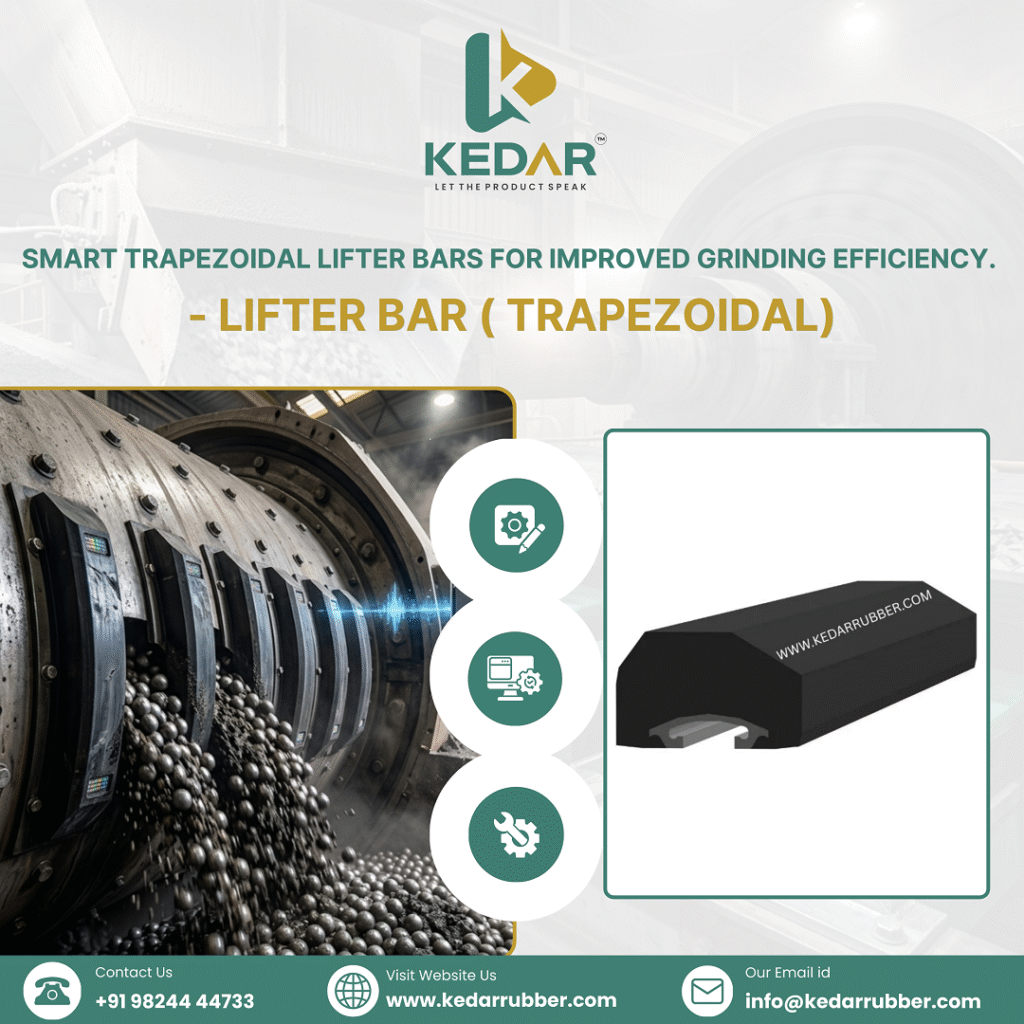
Lifter Bars are specifically designed elements fitted inside grinding mills. Their main purpose is to elevate the grinding media and material to a specific height before letting them fall, thus ensuring proper grinding action. They also shield the mill casing from direct wear.
Uses Across Different Sectors
Lifter Bars find extensive use in:
- Mining: Crushing ores and processing minerals
- Cement Factories: Operations in raw and finish mills
- Metal & Steel Plants: Handling slag and ores
- Ceramic Sector: Grinding fine materials
- Power Plants: Systems for coal pulverization
- Bulk Material Handling: Stages before processing and milling
Material Science & Engineering Aspects
The effectiveness of Lifter Bars hinges on the chosen materials:
- Rubber: Provides pliability, impact dampening, and sound reduction
- Ceramic inserts: Offer great surface hardness and resistance to wear
- Composite builds: Blend structural strength with lasting quality
Wear resistance is achieved through optimal firmness, flexibility, and bonding strength, ensuring a longer operational life under repeated stress.
Design & Customization Needs
Manufacturers’ engineer Lifter Bars based on:
- The mill’s diameter and rate of rotation
- The nature of the material being processed
- Operating conditions (grinding with or without water)
- Tailored dimensions guarantee proper fit and peak performance.
Reports from BBC indicate that industries such as mining and ceramics depend on Lifter Bars for continuous production, as they help improve equipment life and maintain stable operations.
Installation & Servicing Considerations
Thoughtfully designed Lifter Bars allow for:
- Simple setup with minimal operational breaks
- Secure attachment to prevent shifting
- Scheduled servicing periods
According to Harvard Business Review, operational performance improves significantly when reliable wear parts like Lifter Bars are used. Third-party manufacturing also supports better quality control and cost efficiency.
Value Over the Equipment Lifespan
Long-term advantages include:
- Fewer required shutdowns
- Reduced servicing interventions
- Enhanced grinding effectiveness
Insights from Business Insider show that industries are increasingly using Lifter Bars to improve mill efficiency and reduce equipment wear. Research highlights that durable components help minimize downtime and enhance overall productivity.
Why Producer Experience Matters?
Manufacturers with substantial time in the industry grasp actual plant environments, guaranteeing dependable design, material selection, and a steady supply.
Along with regular lifter bars, products like Head Feed Lifter Bar are essential for efficient mill operation. It supports smooth material entry at the feed end, helping improve grinding efficiency while minimizing wear and ensuring consistent performance.
Regarding Kedar Rubber Products
KEDAR RUBBER PRODUCTS PVT LTD is a seasoned producer catering to the entire Indian market and global industrial needs with engineered wear defense solutions. Discover more at 👉 https://www.kedarrubber.com/
In Summary:
Lifter Bars are crucial parts in grinding mills, contributing to both efficiency gains and asset safeguarding. Their precise design and material choice assist industries in maintaining steady production and mitigating long-term issues related to wear.
Contact us today for durable Lifter Bars designed to improve mill efficiency and reduce wear.
Key Takeaways
- Boost wear defense within grinding mills
- Increase operational dependability
- Suitable for numerous heavy industries
- Support sustained performance
- Relevant across worldwide industrial uses
Get in touch with us for reliable Lifter Bar solutions tailored to your industrial requirements.
FAQs
Q1. What is the usual service duration for Lifter Bars?
- This varies based on the material, working conditions, and upkeep methods.
Q2. Where are Lifter Bars frequently employed?
- Mainly in mills for mining, cement, and bulk material processing.
Q3. How often should we carry out upkeep?
- We advise regular checks during scheduled downtimes.
Q4. Rubber versus ceramic Lifter Bars – which performs better?
- Rubber absorbs shocks, whereas ceramic offers superior resistance to surface wear.
Q5. Are Lifter Bars utilized globally?
- Yes, they see broad application in mining and industrial facilities across the globe.
#BallMillRubberLiner #CeramicWearProtection #RubberLining #MiningSolutions #BulkMaterialHandling #ConveyorSolutions #kedarrubberproduct #WearProtection #IndustrialManufacturing