Premium Buffer Liner Manufacturer Serving Mining Plants: Kedar Rubber Products Pvt. Ltd.
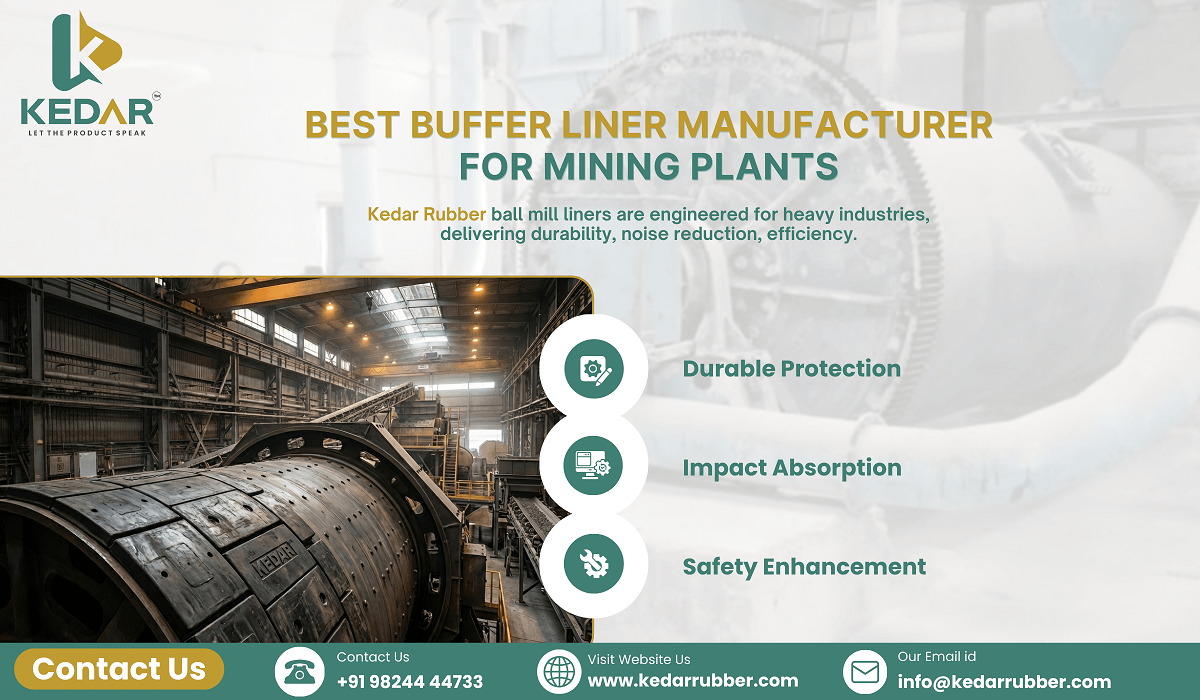
Best Buffer Liner Manufacturer for Mining Plants is a phrase that reflects a core operational need across mining, cement, metal processing, ceramics, and bulk material handling industries. In these sectors, one reality remains constant: equipment is continuously exposed to abrasive materials, high-impact loads, moisture, and chemical conditions. In heavy-duty industrial environments, liners and wear protection systems are not optional add-ons—they are a fundamental part of a plant’s long-term reliability and maintenance strategy.
As the worldwide demand for minerals, steel, cement, and ceramic goods continues to grow, fueled by infrastructure build-out, energy initiatives, and manufacturing expansion, mechanical strain on vital machinery intensifies. Equipment such as tumbling mills, chutes, hoppers, conveyors, and material transfer points operate under harsher conditions and have a longer service life. Seasoned plant personnel recognize that premature failure of protective linings leads to more than just higher upkeep expenses—it can cause fluctuating output, increased hazard levels, and unscheduled stoppages.
In this operational landscape, the Buffer Liner serves as a safeguard against wear and an impact absorber in highly stressed apparatus such as grinding mills, transport chutes, and other areas subject to severe degradation. Used alongside rubber linings for mills, ceramic wear systems, rubber sheeting, and conveyor defense components, buffer linings contribute to better equipment reliability and longer service intervals—without relying on exaggerated or implausible performance promises.
Operational Hurdles Fueling Buffer Liner Demand
The requirement for Buffer Liners stems from genuine functional difficulties observed in industrial settings globally:
- Surface Degradation (Abrasion): In resource extraction and metal processing activities, ores, processed clinker, slag, and aggregates cause continuous surface erosion on linings and chute surfaces.
- Impact Forces: Material descent locations and mill feeding sections endure recurring impact energy, which hastens liner fatigue and structural compromise.
- Material Breakdown (Corrosion): Contact with moisture, slurries, and chemicals in mineral processing and power generation facilities leads to gradual material deterioration.
- Production Halt (Downtime): Unscheduled equipment breaks for liner substitution interrupt manufacturing sequences and affect overall capacity.
- Upkeep Expenditure: Frequent liner swaps increase labor hours, require additional spare parts inventory, and complicate maintenance planning.
Buffer Liners are chosen to address these combined stresses by establishing a regulated boundary between the equipment casing and the handled substance.
What Defines a Buffer Liner?
A Buffer Liner is a protective covering unit fitted into zones of high wear or high impact within industrial apparatus. It usually integrates flexible rubber sections with optional ceramic wear elements, tailored to the specific use case.
From an engineering standpoint, the buffer section is engineered to:
- Soak up impact energy where material drops
- Diminish direct surface rubbing on the metal structure
- Serve as a sacrificial wear stratum replaceable during planned servicing
It isolates as a performance booster; instead, it extends equipment lifespan and ensures steady operation when incorporated into a properly designed wear-defense framework.
Applications Across Diverse Sectors
Buffer Liners find use in numerous industries where wear and impact are unavoidable realities:
- Resource Extraction: Linings for chutes, grinding mill entry points, exit areas, and slurry management gear.
- Cement Production: Transfer points for clinker, inlets for raw material mills, and substance hoppers.
- Metals & Steel: Systems for managing ores, chutes in sinter plants, and material handover points.
- Ceramics: Grinding machinery for raw inputs and feed zones prone to high abrasion.
- Power Generation: Systems for coal transport and ash slurry conveyance lines.
- Bulk Material Movement: Transfer spots on conveyors, loading chutes, and hopper linings.
These uses are present throughout major Indian industrial belts, spanning states such as Maharashtra, Gujarat, and Rajasthan, each with unique material properties, humidity levels, and operating norms that influence liner material selection.
Material Science & Design Considerations
The effectiveness of a Buffer Liner hinges on how its substance behaves under pressure and wear:
- Rubber Characteristics: Rubber provides flexibility, shock absorption, and sound dampening. Selecting the right compound balances firmness with elasticity to avoid tearing or excessive pliancy.
- Ceramic Hardness: Ceramic pieces are deployed in areas of intense abrasion where the hardness of the mineral surpasses the natural resistance of rubber alone.
- Wear Resistance Science: Abrasive wear is affected by particle size, material hardness, sliding speed, and contact angle. Engineers base liner thickness and material layering on these factors.
- Impact Dissipation: The buffer strata disperse kinetic energy, mitigating localized stress on the equipment shell and its fastenings.
Producers with a long history in the industry recognize that liner choice is specific to the application; no single material performs optimally across all operational conditions.
Design & Specification Needs
Industrial machinery rarely adheres to a single standard shape. Effective Buffer Liners necessitate:
- Equipment Conformity: The fit must match the contours and mounting configurations of mills, chutes, and hoppers.
- Bespoke Sizing: Linings are cut or molded to meet site-specific dimensions.
- Application-Tailored Design: The height of the material drop, material density, temperature, and moisture all affect the required thickness and layering of the liner material.
Coordinated design efforts among plant specialists, maintenance crews, and liner producers minimize installation difficulties and ensure predictable wear patterns emerge.
Manufacturing Excellence & Process Control
Uniformity in liner performance relies on control during production:
- Accurate Fabrication: Precision in dimensions guarantees proper seating and force distribution.
- Quality Assurance: The makeup of the rubber mix, the strength of the binding, and the positioning of ceramics are checked during manufacturing.
- Batch Sameness: Successive orders should exhibit similar performance to avoid unexpected maintenance timelines.
Process oversight is vital because even minor variances in rubber resilience or ceramic adherence can alter wear characteristics under constant load.
Fitting & Servicing Implications
From a plant upkeep perspective:
- More straightforward Assembly: Liners designed for modular substitution shorten the time required for mounting.
- Reduced Stoppages: Reliable liner lifespan enables scheduling maintenance during planned downtime rather than reacting to emergencies.
- Maintenance Rhythms: Inspection schedules can be synchronized with general equipment service dates, permitting replacement before total failure.
Knowledgeable plant engineers frequently point out that incorrect fitting causes premature lining damage, regardless of the material’s quality.
Security & Operational Dependability
Wear protection is directly connected to site safety:
- Personnel Protection: Undamaged linings lower the chance of material spills and structural collapse.
- Apparatus Defense: Buffer layers shield the underlying steel structure from stress fatigue and fracturing.
- Plant Trustworthiness: A consistent linear function supports steady output and predictable maintenance scheduling.
In demanding industrial settings, liner failure can expose staff to dangers during urgent repair efforts.
Cost-Effectiveness Across the Equipment Lifespan
Management of lifecycle expenditures centers on:
- Long-Term Savings: Fewer emergency shutdowns translate to reduced production losses.
- Fewer Interruptions: Scheduled liner replacement fits within established maintenance calendars.
- Upkeep Streamlining: Predictable rates of wear enable better inventory planning and staffing assignments.
Financial prudence is realized through operational consistency rather than through opting for cheaper initial material costs.
Export Readiness & Global Acceptance
Industrial purchasers in foreign markets look at:
- Documentation & Standard Adherence: Material specifications, testing endorsements, and quality records inform buying choices.
- Supply Stability: Repeatability is key for long-term servicing plans.
- Application Acumen: International buyers expect manufacturers to understand mining centers, ceramic zones, and the realities of metal processing.
Export readiness reflects organizational maturity more than promotional positioning.
Why Seasoned Producers Matter?
Producers driven by engineering contribute by:
- Transforming site-level issues into workable liner designs
- Supporting extended maintenance approaches
- Delivering uniform quality across production runs
Manufacturers with extensive industry tenure understand that liner success is confirmed over years of facility operation, not during brief pilot runs.
About Kedar Rubber Products
KEDAR RUBBER PRODUCTS PVT LTD is a seasoned industrial fabricator serving Pan India and international industrial arenas with products like rubber liners for grinding mills, ceramic wear defense options, rubber sheeting systems, specialized rubber mill components, and conveyor safeguards. The firm partners with sectors that include mining, cement, metals, ceramics, and bulk material transport, where equipment dependability and wear defense are vital operational objectives.
Further details are accessible at 👉 https://www.kedarrubber.com/
Summary:
Rubber linings for tumbling mills and Buffer Liners serve a practical purpose by boosting equipment reliability across mining, cement, metal, ceramic, and bulk-handling applications. Their value lies in managing surface erosion, impact forces, and material degradation within predictable maintenance timelines. When complemented by ceramic wear-defense structures and rubber sheeting systems, they sustain steady plant operations and safer working environments.
A disciplined approach to selecting, fitting, and planning the lifespan of these linings remains crucial for facilities aiming to enhance operational consistency rather than accept temporary solutions.
Key Takeaways
- Buffer Liners control surface wear and impact in high-degradation zones
- Wear defense underpins equipment dependability and safer site activity
- Suitable for mining, cement, metal, ceramic, power, and bulk handling sectors
- Performance relies on material science principles and correct fitting
- Global industrial relevance stems from consistent manufacturing standards
FAQS
1. What is the typical lifespan of a Buffer Liner?
- Service duration varies depending on the abrasiveness of the material, the intensity of impact energy, and the hours of use. Facilities monitor wear patterns to determine when replacement is due.
2. Are Buffer Liners suitable for wet slurry applications?
- Yes, when rubber compounds and bonding systems are selected for moisture and corrosion resistance.
3. How often should maintenance teams inspect Buffer Liners?
- Inspection usually aligns with scheduled equipment shutdowns and maintenance cycles.
4. How do rubber and ceramic wear solutions differ in application?
- Rubber absorbs impact and vibration, while ceramic provides high abrasion resistance in severe wear zones.
5. Do heavy industries use Buffer Liners globally?
- Mining hubs, cement clusters, and metal processing plants use them where material handling causes continuous wear.
6. What installation factors affect liner performance?
- Surface preparation, correct fastener torque, and alignment influence liner life.
#BallMillRubberLiner #CeramicWearProtection #RubberLining #MiningSolutions #BulkMaterialHandling #ConveyorSolutions #kedarrubberproduct #WearProtection #IndustrialManufactufacturing