Corrugated Rubber Lining in Morbi for Industrial-Grade Protection in Tough Operations: Kedar Rubber Products
Major industries such as mining, metal fabrication, cement production, ceramics, and bulk material handling face extremely harsh mechanical conditions. Constant material movement, rough ores, sharp, hot materials, heavy impacts, wetness, and chemical exposure constantly tax processing machinery.
Throughout these sectors, wear-related breakdowns are a primary source of unexpected stoppages. Delivery chutes, grinders, storage bins, conveyor systems, and transition points experience gradual material loss, reduced efficiency, and frequent maintenance. For facility managers and technicians, maintaining equipment dependability and the expected operational lifespan is critical for safe, budget-conscious work.
Global market demand is shifting towards durable wear protection systems that balance abrasion resistance with shock absorption. As facilities increase output and automation, there’s less tolerance for any downtime.
In this setting, the Corrugated Rubber Liner has become a key defense against wear, mainly where heavy impact, vibrations, and inconsistent material flow occur.
Industrial Demands Driving Use of Corrugated Rubber Liners
In demanding industrial settings, equipment failure usually results from the combined effect of several stresses:
- Abrasive Wear: Constant sliding of complex substances, such as iron ore, limestone, hot cement material, fuel, and ceramic inputs, causes surface breakdown. Over time, this thins the material, exposes the underlying metal, and weakens the structure.
- Impact Forces: Drop points, feed chutes, and crushing mills undergo repeated, high-energy blows. Rigid linings often fracture or chip under these conditions.
- Corrosion: Moisture, slurry handling, and chemical exposure accelerate degradation, particularly in metal-lined systems.
- Stoppages & Repair Expenses: Frequent liner changes lead to shutdowns, increased labor intensity, and lost output—costs that often exceed the price of the liner material.
In mining centers, cement clusters, steel mills, and ceramic manufacturing areas worldwide, these issues favor the use of flexible, energy-dampening lining systems over purely hard-wearing surfaces.
Defining the Corrugated Rubber Liner
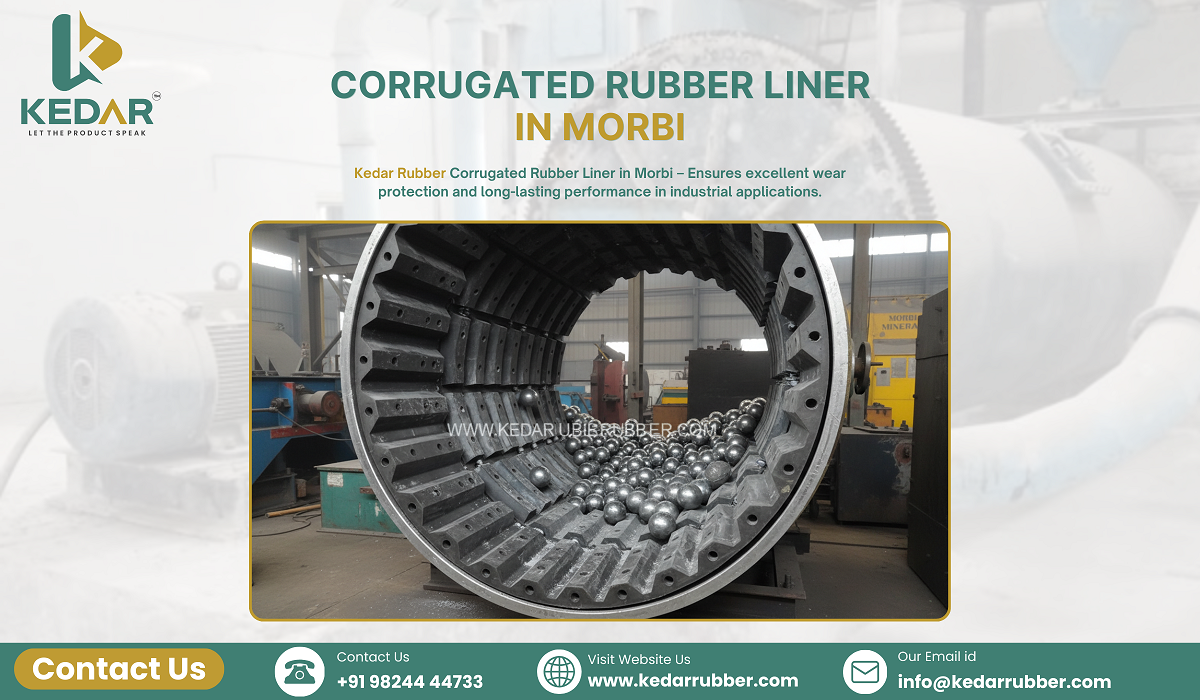
A Corrugated Rubber Liner is a wear-defense system made from specialized rubber compounds that features a wavy or profiled surface.
From an engineering viewpoint, its leading roles are:
- Soaking up impact energy
- Reducing surface wear on equipment bodies
- Dampening transmitted vibration
- Improving how material moves through
Unlike flat rubber sheets, the wavy pattern enhances surface pliability and spreads impact shocks more uniformly. This makes it ideal for machinery exposed to cyclical loading and erratic movement of goods.
The goal is not to achieve “zero wear,” but rather to ensure managed wear with a predictable service duration.
Applications Across Different Sectors
Mining
In mineral extraction and processing, corrugated rubber linings are commonly found in:
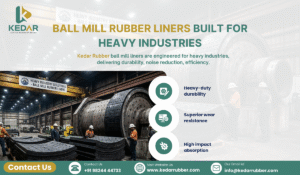
- Grinding and ball mills
- Hoppers and chutes
- Ore transfer stations
Seasoned plant operators frequently report less damage to mill shells and quieter grinding when these rubber linings replace rigid options.
Cement Plants
Uses include:
- Feed chutes for raw materials
- Systems for handling clinker
- Grinding hardware
Rubber linings help manage the combined stress from abrasion and sudden impacts from large clinker pieces.
Metal & Steel Works
In steel and alloy production, linings are utilized in:
- Areas where slag is managed
- Material bunkers
- Conveyor transition housings
The ability to absorb blows without cracking is a significant benefit here.
Ceramic Manufacturing
Ceramic facilities dealing with sharp, hard raw goods benefit from rubber lining in:
- Systems that manage a liquid clay mixture (slip)
- Grinding and mixing gear
- Transfer points
- Power Plants: Facilities that handle coal often depend on rubber linings to handle abrasive coal dust and reduce noise from chutes.
- Bulk Material Movement: Conveyors, feeders, and storage units at ports, warehouses, and processing sites deploy corrugated rubber liners to decrease spills, surface wear, and unwanted shaking.
Material Composition & Engineering Factors
Producers with deep industry experience know that material choice must be specific.
Rubber Characteristics
Industrial rubber mixes are chosen based on:
- Resistance to surface wear
- Ability to spring back (elasticity)
- Strength against tearing
- How well it handles the specific environment
The rubber must stay flexible while resisting gradual breakdown.
Use Alongside Ceramics
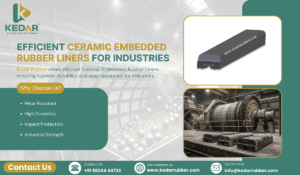
In zones subject to extreme wear, rubber liners might be paired with ceramic wear tiles. Ceramics offer hardness; rubber provides shock absorption. The engineering challenge is to ensure they bond correctly and share the load.
Wear Management Principles
Wear isn’t stopped—it’s controlled. The slight, manageable deformation of the rubber helps release energy that would otherwise harm metal components.
Design & Customization Needs
No two industrial setups are the same. Successful corrugated rubber liners require:
- Matching the shape of the existing machinery
- Adjusted thickness based on the severity of impacts
- Appropriate spacing and depth of the corrugations
Design work frequently requires coordination between the liner supplier and facility engineers to guarantee a precise fit and optimal performance.
Production Quality & Process Control
For industrial dependability, consistency is vital.
Precise manufacturing encompasses:
- Strict control over the rubber mixture formulation
- Accurate shaping or machining
- Consistent heating (curing) procedures
Quality checks usually focus on:
- Exact measurements
- Uniform material firmness
- Soundness of the bond
Ensuring consistency across production batches ensures a predictable linear function across different installations.
Fitting and Servicing
A practical advantage of corrugated rubber liners is their relative ease of handling.
- Lighter than metal linings
- Quicker to install
- Less need for heavy-lifting machinery
Service intervals are generally more extended, and inspections are easier due to visible wear patterns.
Safety And Operational Dependability
Operator well-being is a paramount consideration in choosing liners.
Rubber linings contribute toward:
- Diminished sound levels
- Reduced exposure to oscillatory motion
- Lowered likelihood of liner disintegration
From an operational perspective, steady liner function enhances overall facility dependability.
Cost Efficiency Across Equipment Lifespan
Instead of concentrating on the upfront material expense, seasoned operations groups assess:
- How often do liners need changing
- The length of time the equipment is stopped
- The labor required for upkeep
Over the equipment’s useful life, rubber linings often provide a lower overall acquisition cost by minimizing downtime and safeguarding core machinery.
Export Preparedness & Worldwide Recognition
International industrial purchasers anticipate:
- Evidence of material testing
- Records of process lineage
- Adherence to industry benchmarks
Ribbed rubber linings are widely accepted across extraction zones, cement hubs, and metal fabrication sectors due to their proven performance across varying operational settings.
The Importance of Seasoned Producers
Devising wear countermeasures is not guesswork.
Experienced manufacturers furnish:
- Expertise in specific uses
- Capacity for design innovation
- Consistent and dependable product availability
This specialized skill directly impacts liner utility and facility operational hours.
Regarding KEDAR RUBBER PRODUCTS PVT LTD
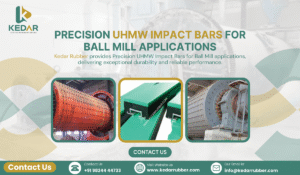
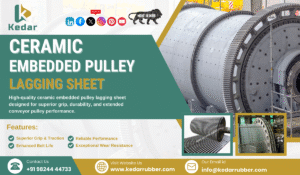
KEDAR RUBBER PRODUCTS PVT LTD is an established industrial fabricator focused on ribbed rubber linings, wear-resistant ceramic solutions, rubber cladding systems, components for ball mills, and conveyance aids.
Supporting operations across all of India—including regions like Gujarat, Maharashtra, Odisha, Chhattisgarh, Rajasthan, Jharkhand, Karnataka, Tamil Nadu, Andhra Pradesh, Telangana, West Bengal, Madhya Pradesh, Uttar Pradesh, Bihar, Punjab, Haryana, Himachal Pradesh, Uttarakhand, Assam, Meghalaya, Arunachal Pradesh, Manipur, Mizoram, Nagaland, Tripura, Sikkim, Kerala, Goa, Delhi, Jammu & Kashmir, and Ladakh—as well as key industrial centers, the firm assists varied heavy industries with solutions tailored to specific applications.
Further insights can be found at 👉 https://www.kedarrubber.com/
Final Summary
Ribbed rubber linings are essential in managing material deterioration, shock, and operational strain in heavy industrial settings. When correctly designed and fitted, they boost machinery safeguarding, elevate safety standards, and support sustained facility effectiveness.
For facility supervisors and operational staff, selecting the appropriate liner system is a critical decision—one that directly affects reliability, maintenance scheduling, and long-term operational outcomes.
Main Points To Note
- Effective surface defense boosts facility operating time
- Corrugated rubber sheeting manages impact and surface friction
- Suitable for mining, cement, metalworking, ceramics, and bulk transport sectors
- Improves operational dependability and worker safety
- A widely acknowledged industrial defense method
Frequently Asked Questions
Q1. What is the typical service life of a corrugated rubber lining?
Lifespan is contingent on the material grade, the intensity of impacts, and the environment. Correct engineering design allows for predictable wear intervals.
Q2. Are ribbed rubber linings appropriate for high-impact areas?
Yes. Their flexible nature helps absorb impact energy and shield the underlying equipment structure.
Q3. How frequently do rubber liners necessitate attention?
Maintenance frequency is typically less than for metal linings, though routine visual checks are suggested.
Q4. Rubber liner versus ceramic liner—what distinguishes them?
Rubber dampens shock; ceramic provides superior surface rigidity. Many installations employ a hybrid approach for balanced protection against wear.
Q5. Are these liners utilized on a global scale?
Indeed. They are widely deployed in the mining, cement, steel, and material-handling industries worldwide.
#BallMillRubberLiner #CeramicWearProtection #RubberLining #MiningSolutions #BulkMaterialHandling #ConveyorSolutions #kedarrubberproduct #WearProtection #IndustrialManufacturing