Efficient Ceramic Embedded Rubber Liners for Industries High-Performance Solutions by Kedar Rubber Products Pvt. Ltd.
In heavy-duty industrial environments, plant operators and engineers constantly face challenges in maintaining equipment reliability and sustaining operational efficiency. Efficient Ceramic Embedded Rubber Liners for Industries have become essential in overcoming issues such as severe abrasion, high impact loads, corrosion, and unexpected downtime. Sectors including mining, metal and steel processing, cement manufacturing, ceramics, and bulk material handling operate under extreme conditions that accelerate equipment wear and increase maintenance costs. As industrial activity continues to expand across Pan India—covering key regions like Rajasthan, Gujarat, Jharkhand, Chhattisgarh, Maharashtra, and Tamil Nadu—the demand for durable, long-lasting wear protection solutions that extend equipment life and reduce maintenance frequency has grown significantly.
Rubber Liners with Embedded Ceramics are proving to be a reliable, high-performing choice for demanding applications. By merging the shock-absorbing pliability of rubber with the excellent abrasion resistance of modern ceramic tiles, these linings effectively shield high-wear areas in processing machinery. This mixed construction allows facility supervisors and maintenance crews to achieve superior shielding, greater operational consistency, and lower overall operating costs, positioning ceramic-infused rubber linings as a favoured option for contemporary industrial wear defence systems.
Industrial Hurdles Fueling the Need for Rubber Liners with Embedded Ceramics
Industrial facilities encounter numerous difficulties that hasten deterioration and shorten machine lifespans:
- Friction Wear: Material transport setups in excavation and cement operations handle very abrasive particles, which can quickly erode metal surfaces, necessitating frequent swaps and service.
- Impact Forces: Rapid material conveyance, especially in crushers, chutes, and feeders, results in repeated blows that cause surface fracturing and equipment distortion.
- Chemical Attack: Processing environments often involve moisture, chemicals, or acidic agents that can harm standard metal linings.
- Outages: Equipment failures cause costly production stoppages, affecting project timelines and supply chains.
- Servicing Expenses: Frequent repairs or replacements of worn parts drive up operating expenses.
Seasoned facility engineers frequently note that preemptively tackling these problems through material selection and defensive measures can significantly boost plant operational time and effectiveness.
What Are Rubber Liners with Embedded Ceramics?
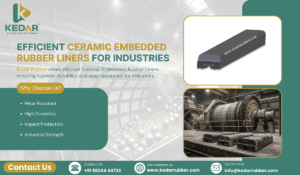
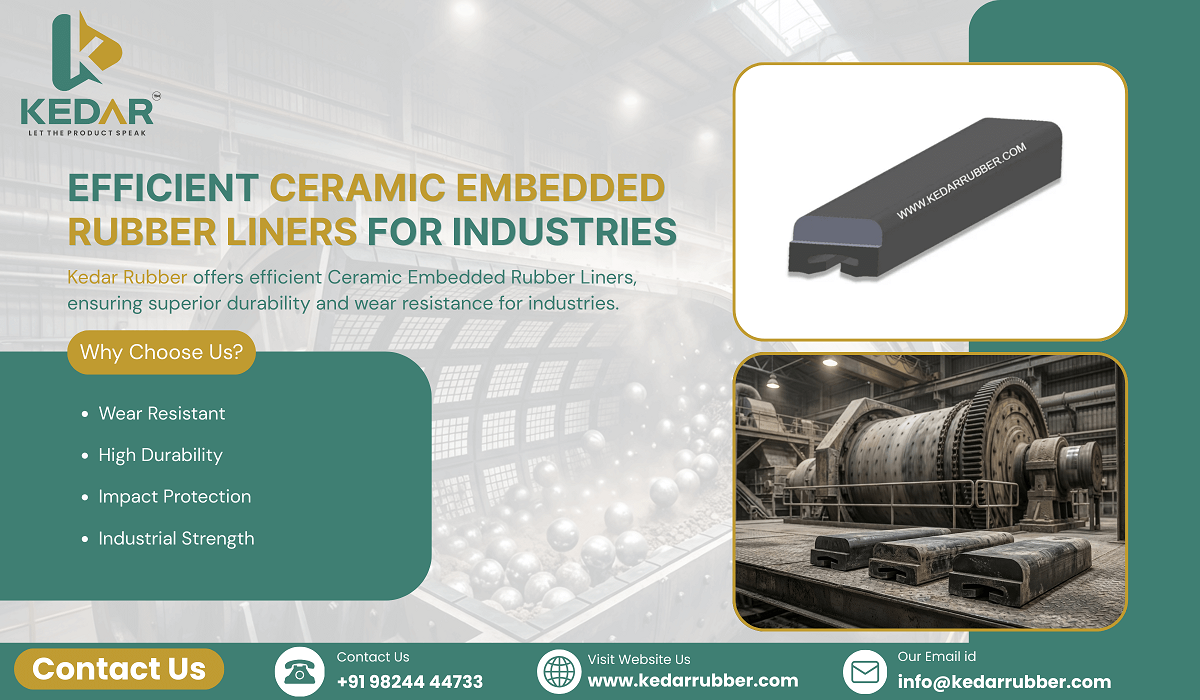
Rubber Liners with Embedded Ceramics are specially made components that incorporate ceramic pieces or inlays within a rubber foundation. In mining and metal refining operations, these linings are fitted in areas subject to intense wear, such as grinding mills, chutes, feeders, hoppers, and conveyor systems. The rubber part dampens shocks and reduces noise and vibration, while the set-in ceramics resist wear and maintain structural soundness.
In contrast to typical linings, these remedies balance rigidity and suppleness. The ceramic firmness protects cutting, gouging, and surface wear, while the rubber ensures energy dissipation and minimises stress on supporting machinery.
Uses Across Various Sectors
Rubber Liners with Embedded Ceramics are adaptable and have been adopted across numerous industrial sectors:
- Mining: Shielding grinding mills, crushers, and ore chutes from highly abrasive rock and cutting down time during upkeep.
- Cement Facilities: Linings in clinker transport systems, crushers, and preheater ducts to resist abrasive and corrosive feedstocks.
- Metal & Steel: Protecting hoppers, chutes, and conveyors from metallic debris and slag abrasion.
- Ceramic Production: Safeguarding kilns, blenders, and material transport setups from ceramic fragments and powders.
- Power Plants: Protecting coal feeders, ash conveyance systems, and pulveriser hoppers.
- Bulk Material Conveyance: Improving wear life in conveyors, transfer points, and storage containers handling grains, chemicals, or aggregates.
Material Science & Engineering Aspects
Developing successful Rubber Liners with Embedded Ceramics demands careful thought regarding material traits:
- Rubber Qualities: The rubber needs to show high flexibility, resistance to tearing, and durability across varying heat and chemical exposure.
- Ceramic Firmness: Top-grade ceramic inserts are selected based on Mohs hardness to withstand abrasion from minerals, ores, and raw inputs.
- Wear Defence Concepts: Strategic positioning of ceramic inlays in high-wear zones ensures extended surface life and even wear distribution.
- Shock Absorption: Rubber acts as a buffer, absorbing energy from movement, preventing early lining failure and protecting the underlying support metal.
Producers with extensive industry background recognise that balancing these traits requires precise design and practical site knowledge.
Design & Customisation Needs
Every facility and equipment setup possesses distinct needs:
- Machinery Fit: Linings must align with the measurements, curves, and fixing methods of specific mills, chutes, or conveyors.
- Bespoke Sizing: Tailored sections or tiles guarantee full coverage and effective defence in intricate shapes.
- Application-Specific Layout: Factors such as impact angle, particle size, flow speed, and environmental conditions influence the lining structure and the placement of the ceramic.
Manufacturing Excellence & Process Monitoring
Creating premium Rubber Liners with Embedded Ceramics requires exactness and strict quality oversight:
- Accurate Production: Rubber and ceramic parts are engineered for uniform thickness, strong bonding, and adherence to limits.
- Inspections: Every lot is checked for hardness, adhesion, and impact toughness to guarantee dependability.
- Batch Uniformity: Consistent material characteristics across production runs prevent sudden wear problems and maintain predictable service duration.
Fitting & Servicing Notes
Correct setup and upkeep maximise lining performance:
- Simple Assembly: Segmented panels and pre-drilled bolt holes shorten downtime during replacement.
- Minimised Stoppages: Quicker mounting reduces production interruptions.
- Service Intervals: Planned checks and minor surface touch-ups extend useful life without major overhauls.
Safety & Operational Dependability
In intense industrial settings, worker protection and facility trustworthiness are paramount:
- Worker Well-being: Diminished sound and movement from rubber-lined surfaces lowers workplace risks.
- Equipment Protection: High-impact zones are cushioned to avert structural harm.
- Facility Trustworthiness: Uninterrupted defence reduces unexpected halts, improving operational predictability.
Cost Effectiveness Across the Machine’s Life
While the initial outlay might exceed that of standard linings, Rubber Liners with Embedded Ceramics offer long-term savings:
- Durable Cost Benefits: Extended operational time reduces the frequency of replacements.
- Fewer Interruptions: Reduced downtime translates to higher production yield.
- Maintenance Streamlining: Lower labour and repair expenses enhance overall fiscal prudence.
Export Preparedness & Global Acceptance
For makers targeting worldwide industrial sectors, export readiness is vital:
- Industrial Export Standards: Products must meet international norms and specifications.
- Documentation & Standard Awareness: Adherence to ISO, ASTM, and other quality benchmarks secures worldwide approval.
- Global Buyer Requests: Precise technical details, fitting guides, and certifications ease overseas purchasing and deployment.
Why Seasoned Producers Count?
Experienced manufacturers bring design understanding and operational familiarity essential for site-level tasks:
- Design Proficiency: Accurate material choice and lining layout prevent early failure.
- Sector Acumen: Knowing facility-specific wear patterns ensures peak defence.
- Stable Sourcing: Reliable availability of replacement sections minimises operational risk.
About Kedar Rubber Products
KEDAR RUBBER PRODUCTS PVT LTD possesses decades of history fabricating top-tier industrial linings and wear defence remedies. Serving both all of India—including Maharashtra, Gujarat, Rajasthan, Jharkhand, Chhattisgarh, Tamil Nadu, Karnataka, and Odisha—and international industrial sectors, the firm provides tough remedies for mining, cement, metal, ceramic, and bulk material handling operations. Discover more at their official site: 👉 https://www.kedarrubber.com/.
In Summary:
Rubber Liners with Embedded Ceramics play a crucial role in boosting machine reliability, reducing maintenance downtime, and improving operational efficiency in heavy-duty industrial settings. For facility designers, upkeep personnel, and purchasing directors, selecting premium, precisely engineered linings assures lasting performance and operational security.
Principal Learnings
- Wear Defence Advantages: Merges ceramic firmness with rubber shock absorption.
- Operational Dependability: Reduces outages and machine malfunctions.
- Sector Suitability: Usable across mining, cement, metal, ceramic, and bulk handling sectors.
- Long-Term Results: Extends useful life and optimises maintenance schedules.
- Global Industrial Relevance: Complies with local and international norms.
FAQs
Q1: What is the usual service duration of Rubber Liners with Embedded Ceramics?
- A1: Service duration depends on material wear, impact intensity, and maintenance frequency; in heavy use, linings often last for multiple years.
Q2: Are these linings appropriate for all types of grinding mills and conveyors?
- A2: Seasoned facility engineers frequently observe that linings need adaptation for machinery compatibility, but most mills and conveyors can be effectively shielded.
Q3: How frequently should these linings be checked or serviced?
- A3: Routine checking every 3–6 months is advised to spot worn spots and exchange sections before failure.
Q4: How do rubber and ceramic wear solutions vary?
- A4: Rubber offers shock damping and vibration control, while ceramic provides superior friction protection; the blend ensures balanced protection.
Q5: Are Rubber Liners with Embedded Ceramics employed worldwide?
- A5: Yes, they are extensively utilised in mining, metal, and bulk material sectors in nations with significant industrial activity, including the USA, Europe, and Southeast Asia.
#BallMillRubberLiner #CeramicWearProtection #RubberLining #MiningSolutions #BulkMaterialHandling #ConveyorSolutions #kedarrubberproduct #WearProtection #IndustrialManufacturing