Trusted High-Performance Rubber Liners Manufacturer in Ahmedabad: Kedar Rubber Products Pvt. Ltd.
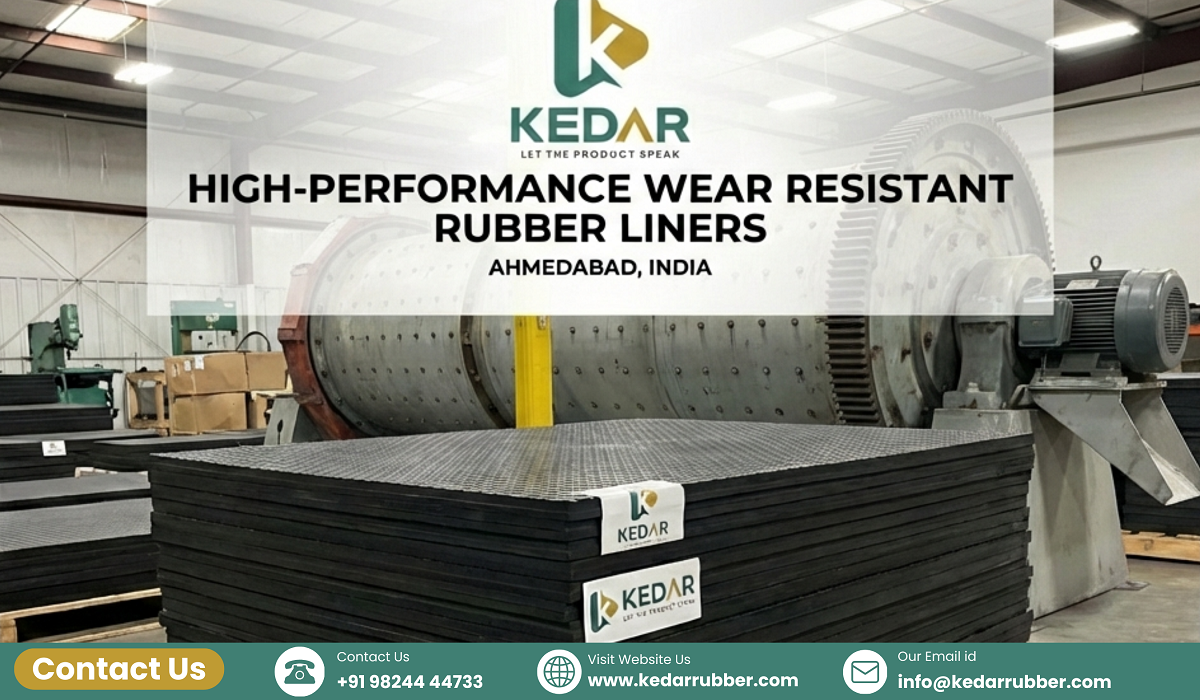
Across mining, metal processing, cement production, ceramics manufacturing, and bulk material handling industries, equipment is subjected to relentless mechanical stress. Abrasive materials, heavy impact loads, corrosive conditions, and continuous operations steadily wear down critical assets. For plant engineers and maintenance teams, the priority extends beyond uninterrupted operation to ensuring reliability, predictability, and safety. This is where High-Performance Wear Resistant Rubber Liners from Ahmedabad play a vital role, delivering superior protection, extended equipment life, and consistent performance in demanding industrial environments.
Durable Rubber Linings have emerged as a vital answer to these difficulties. By combining shock absorption with managed resistance to rubbing, rubber-based protection systems help prolong apparatus service life, standardize maintenance schedules, and enhance overall facility reliability across global industrial operations.
Industrial Difficulties Prompting the Need for Tough Rubber Linings
Manufacturing complexes function in settings where material degradation is inevitable. The true hurdle involves handling this efficiently.
- Friction/Rubbing: The constant sliding of ores, cement clinker, and bulk materials causes metal sections to erode. In extractive and metal-refining activities, ores rich in silica accelerate this deterioration.
- Shock Loads: The falling of sizable material chunks during processing, crushing, and transport generates impulse forces—exposed metal surfaces frequently fracture or warp when struck repeatedly.
- Deterioration from Moisture: Dampness, chemicals, and sludge environments in processing facilities lead to corrosion, weakening structural soundness and accelerating wear.
- Production Halts: Recurring lining swaps and fixes interrupt manufacturing timelines. Seasoned facility supervisors often note that the cost of lost production far exceeds the price of the wear components themselves.
- Upkeep Expenditures: Unforeseen wear patterns inflate reserves of spare parts and labour, straining maintenance planning.
Globally, sectors in major resource extraction areas, cement centers, pottery production zones, and metal processing regions are moving towards custom-designed lining systems that deliver consistent performance instead of temporary fixes.
What Are Durable Rubber Linings?
Durable Rubber Linings are specially designed protective coverings made from specially formulated rubber mixes, sometimes augmented with ceramic or metallic elements. These coverings are intended to shield equipment surfaces subject to rubbing, sudden impact, and material flow.
Unlike plain metal liners, rubber coverings use elastic flexing to absorb shock energy. Instead of cracking or denting, the rubber bends and rebounds, lessening harm to both the lining and the underlying equipment.
Based on the specific use case, these linings might be:
- Exclusively rubber coverings
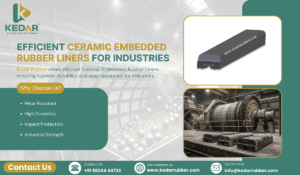
- Rubber-ceramic combined coverings
- Rubber sheathing affixed to metal support panels
Their purpose is not to eliminate deterioration, but to manage it in a predictable, controllable manner.
Applications Across Various Sectors
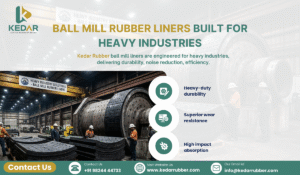
- Resource Extraction Sector: Heavily employed in grinding drums (ball mills), chute facings, storage bins, slurry conduits, and conveyor transfer points to manage rough ores and stones.
- Cement Mills: Used in raw mixture processors, coal grinders, cooled clinker transport setups, separation cones, and material chutes where both impact and rubbing occur concurrently.
- Metal & Steel Facilities: Positioned in sintering units, material storage containers, ash removal setups, and transport lines dealing with slag and fine metallic residue.
- Pottery Production: Safeguards machinery handling quartz, feldspar, and other highly abrasive ceramic feedstocks.
- Power Generation Sites: Utilized in coal handling facilities, ash containment bins, and slurry discharge systems.
Material Science & Design Considerations
The effectiveness of rubber linings heavily depends on the material’s composition and structural blueprint.
- Rubber Characteristics
- High flexibility for shock attenuation
- Adjusted firmness for resistance to surface rubbing
- Tear resilience to avoid premature failure
Ceramic Toughness
In hybrid linings, ceramic pieces provide high resilience against rubbing, while the rubber absorbs impact forces.
- Wear Management Principles: Rubber resists deterioration not just through firmness. Its capacity to change shape reduces the cutting and gouging caused by sharp particles.
- Impact Dampening: Energy dispersal via elastic flexing minimizes the stress transferred to the equipment structure.
- Providers with extensive industry backgrounds recognize that operational realities, not generalized specifications, must drive material selection.
Design & Personalization Needs
No two facilities operate under identical conditions. Successful lining systems must be custom-tailored for specific tasks.
- Suitability with equipment contours
- Personalized thickness and profiles
- Bolt-on, adhesive-bonded, or segmented setup designs
- Optimization of material flow to lessen turbulence and wear hotspots
Customization ensures liners integrate smoothly with existing facility layouts without the risk of required modifications.
Manufacturing Quality & Process Governance
Uniformity in lining performance starts at the fabrication phase.
- Accurate moulding and regulated curing phases
- Testing of material batches
- Verification of exact dimensions
- Confirmation of bond strength in composite linings
Trustworthy makers adhere to documented quality protocols to ensure repeatable results across production runs.
Setup & Servicing Points
- Simplicity of mounting directly impacts downtime duration.
- Lighter rubber coverings reduce handling hazards
- Segmented designs permit partial exchange
- Decreased need for high-heat work during assembly
Maintenance crews benefit from consistent wear patterns and extended time between inspections, which improves overall maintenance scheduling.
Safety & Operational Stability
- Well-being remains a paramount concern in industrial settings.
- Reduced lining breakage minimizes dangers from falling fragments
- Quieter operation compared to metal linings
- Enhanced equipment protection curtails major system failures
- Stable lining performance supports consistent facility operations and safer work environments.
Value Over the Equipment’s Service Span
Though rubber linings might not always offer the cheapest initial outlay, their actual value lies in their lifecycle performance.
- Fewer interruptions to production
- Lower manpower is required for upkeep
- Prolonged equipment operational existence
Financial prudence is achieved through continuous operations rather than immediate cost-cutting.
Export Preparedness & Global Acknowledgment
International industrial purchasers anticipate:
- Material origin tracking
- Technical support paperwork
- Adherence to global industry benchmarks
Indian manufacturers operating in global markets are increasingly aligning their practices with international quality and export standards.
Why Experienced Suppliers Are Key?
Wear defence is not a standard stock item. It necessitates:
- Grasp of the specific use case
- Sound engineering assessment
- Dependable supply capabilities
Seasoned suppliers partner with facility teams to deliver remedies matched to real operational circumstances.
About Kedar Rubber Products Pvt. Ltd.
Kedar Rubber Products Pvt. Ltd. is an established industrial fabricator specializing in wear-defence solutions, including durable rubber lining defences, rubber sheathing systems, ceramic wear defence, ball mill rubber linings, conveyor support systems, marine buffers, and related factory goods.
Serving all of India’s industrial areas—including all central states and industrial zones such as Maharashtra, Gujarat, Rajasthan, Odisha, Jharkhand, Chhattisgarh, Karnataka, Tamil Nadu, Andhra Pradesh, Telangana, West Bengal, Madhya Pradesh, Uttar Pradesh, Punjab, Haryana, Delhi NCR, Bihar, Assam, Kerala, Goa, Himachal Pradesh, Uttarakhand, Jammu & Kashmir, and all Federal Territories—Kedar Rubber Products supports enterprises across primary industrial centers like Ahmedabad, Surat, Mumbai, Pune, Nagpur, Raipur, Bhilai, Rourkela, Jamshedpur, Durgapur, Chennai, Coimbatore, Salem, Bengaluru, Hyderabad, Visakhapatnam, Jaipur, Kota, Udaipur, and beyond.
Further details are accessible at 👉 https://www.kedarrubber.com/
Summary:
Durable Rubber Linings play an essential role in safeguarding industrial apparatus operating under harsh, corrosive conditions. By mitigating impact, reducing friction, and standardizing maintenance schedules, they directly improve facility productivity and operational dependability.
For industries prioritizing lasting performance and predictable workflows, custom-engineered wear-protection systems remain a crucial component of contemporary facility design and maintenance planning.
Core Takeaways
- Effective wear defence boosts apparatus dependability
- Rubber coverings manage impact and friction reliably
- Suitable for mining, cement, metal, ceramic, and bulk material handling sectors
- Supports optimization of long-term upkeep
- Widely embraced across international industrial arenas
FAQS
1. What is the usual service duration for tough rubber linings?
- Service duration depends on the material being processed, the impact force, and the operating environment. In managed settings, rubber linings frequently surpass traditional metal liners.
2. Are rubber linings appropriate for high-heat operations?
- Rubber linings function well within defined temperature boundaries. Selecting the material based on the specific application is crucial.
3. How often do rubber linings require attention?
- Maintenance frequency is generally less than for metal linings due to their predictable wear behaviour.
4. Rubber versus ceramic wear solutions – which is superior?
- Rubber excels at absorbing shocks, while ceramics provide better resistance to surface rubbing. Composite options combine the strengths of both.
#BallMillRubberLiner #CeramicWearProtection #RubberLining #MiningSolutions #BulkMaterialHandling #ConveyorSolutions #kedarrubberproduct #WearProtection #IndustrialManufacturing