
Kedar Rubber Products: Boost Mill Productivity with Corrugated Rubber Liners
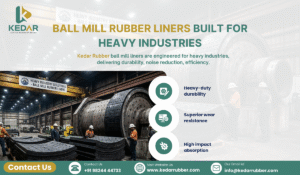
In heavy-duty industrial environments like mining, metal processing, cement manufacturing, and bulk material handling, equipment is constantly exposed to abrasion, impact, and corrosion. Even minor material wear can cause unexpected downtime, increased maintenance costs, and safety hazards. This is where Corrugated Rubber Liners play a vital role. By reducing wear and enhancing material flow, they significantly contribute to how corrugated rubber liners improve mill efficiency, ensuring longer equipment life and smoother, more reliable operations.
Worldwide industrial need for dependable anti-wear solutions is increasing. Nations with substantial mining operations, metal fabrication centers, ceramic manufacturing hubs, and facilities for moving large volumes of material—such as India, Australia, South Africa, the United States, and certain European countries—require robust safeguards for their machinery to withstand harsh operating environments. Within India, key manufacturing regions such as Maharashtra, Gujarat, Rajasthan, Madhya Pradesh, Chhattisgarh, Odisha, Jharkhand, Karnataka, and Tamil Nadu contain sites where wear-resistant technologies are crucial.
Precisely manufactured Corrugated Rubber Liners provide a practical way to reduce equipment deterioration, increase plant operational availability, and streamline maintenance schedules.
Industrial Hurdles Fueling Demand for Corrugated Rubber Liners
In mining and metal processing activities, equipment faces extreme operational pressures. Some of the main difficulties include:
- Friction/Abrasion: Dense substances such as iron ore, bauxite, and cement clinker continuously rub against equipment surfaces. Over time, this grinding wears down the metal, eventually causing failure. Corrugated rubber barriers absorb this friction, minimizing direct contact between metal parts and abrasive aggregate.
- Shock Loads: Crushing, grinding, and material transfer processes generate substantial impact forces. Any place where material drops—like in ball mills, storage bins, or chutes—is especially vulnerable. Corrugated pads function as shock absorbers, diffusing impact forces and extending machinery life.
- Corrosion: Exposure to chemicals in cement factories or metal production settings hastens material breakdown. Rubber-based shields resist chemical degradation better than bare metal, preserving structural soundness over their service term.
- Stoppages: Frequent servicing necessitated by wear leads to unscheduled halts. In demanding industrial settings, lost production time can cost thousands of dollars per hour, depending on facility size and material throughput.
- Servicing Expenditures: Seasoned plant managers observe that frequent replacement of worn components inflates costs for labor, spare parts inventory, and procurement. By implementing rigid liners, facilities can reduce the frequency and cost of maintenance tasks.
What Constitutes Corrugated Rubber Liners?
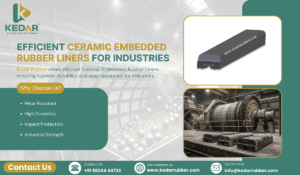
Corrugated Rubber Liners are specially engineered protective sheets meant to line the interiors of industrial apparatus. They integrate the flexibility of rubber with a rippled profile that enhances adherence and kinetic energy absorption. Unlike generic coverings, these are manufactured with industrial precision to withstand abrasion, impact, and chemical degradation.
Fundamentally, they act as a protective cushion sandwiched between the metal machinery and abrasive substances. Their stepped surface pattern not only aids material flow but also maximizes the lifespan of components prone to wear.
Uses Across Different Sectors
Corrugated rubber protection is widely employed in heavy industry. Practical deployments include:
1. Mining
- Ball mills, SAG mills, and shaking screens
- Chutes and material bunkers
- Transfer junctions where ore and aggregates cause significant wear
2. Cement Production
- Kiln inlet chutes and raw mill linings
- Clinker conveyance systems
- Material storage and transfer zones
3. Metal & Steel
- Sinter plants, blast furnace bins, and conveyor systems
- Handling areas for slag and scrap metal
- High-rubbing sections in grinding circuits
4. Ceramic Production
- Raw material handling units
- Pulverizers and grinding mills
- Kiln feeding arrangements
5. Power Generation
- Coal movement apparatus and ash removal systems
- Feed chutes and pulverizers
6. Bulk Material Conveyance
- Conveyor belts, transfer points, and storage hoppers
- Loading and unloading mechanisms
In all these instances, knowledgeable engineers concur that optimized rubber shielding substantially reduces material degradation and extends operational life.
Design & Customization Needs
Corrugated rubber materials are not universal solutions. Engineering teams must address:
- Machine Suitability: Ensuring liners fit mills, hoppers, chutes, or conveyors exactly
- Bespoke Sizing: Liners configured for specific radii, lengths, or intricate shaping
- Application-Focused Design: Profiles and rubber qualities adjusted for impact zones, high-wear spots, or chemical exposure
Skilled Original Equipment Manufacturers (OEMs) and Engineering, Procurement, and Construction (EPC) firms frequently partner with producers to develop liners meeting exact operational parameters.
Manufacturing Excellence & Process Oversight
Dependable performance begins with precise fabrication:
- Precision Fabrication: CNC cutting, mold pressing, and curing guarantee even thickness and corrugation
- Quality Assurance: Tests on hardness, tensile strength, and abrasion resistance for every production run
- Uniformity Across Batches: Ensures predictable service life and consistent performance across numerous equipment installations
Mounting & Servicing Guidelines
Correct assembly and upkeep procedures are vital:
- Ease of Fitting: Sectional designs and pre-cut panels cut down on installation duration
- Minimized Outages: Rapid mounting helps limit facility shutdowns
- Service Intervals: Routine checks of the liners guarantee peak effectiveness without sudden failures
In mining and metalworking operations, routine evaluations by maintenance personnel avert expensive surprises.
Safety & Operational Dependability
Personnel well-being and facility reliability are linked to wear safeguarding:
- Shields workers from metal shards or sharp edges
- Lowers the chance of equipment malfunction that might cause dangerous incidents
- Improves site availability, facilitating steadier work schedules
- Fiscal Efficiency Across the Equipment Lifespan
- Long-range planning favors corrugated rubber barriers:
- Reduces deterioration on high-cost metal apparatus
- Lengthens the time between necessary shutdowns
- Optimizes maintenance expenditure across the equipment’s total service life
Experienced facility engineers often stress that the return on investment for robust wear defense is realized not in immediate cost reductions, but in predictable functional efficiency.
Export Readiness & Worldwide Acceptance
Global industrial purchasers anticipate:
- Adherence to international benchmarks for material quality
- Appropriate paperwork for cross-border movement and certifications
- Manufacturing consistency for large-scale projects
Producers supplying mining centers in Australia, metal facilities in the USA, or ceramic facilities in Europe must meet demanding industry standards.
Why Expert Producers Are Important?
Choosing the correct associate secures operational soundness:
- Engineering competence to advise on suitable liner profiles
- Sector familiarity to foresee operational hurdles
- A stable supply chain for prompt replacements and installations
About Kedar Rubber Products
Kedar Rubber Products Pvt Ltd is a respected fabricator of Corrugated Rubber Liners, supporting industrial activities across India—including Maharashtra, Gujarat, Rajasthan, Madhya Pradesh, Chhattisgarh, Odisha, Jharkhand, Karnataka, and Tamil Nadu—as well as international industrial markets. With years of experience in rubber lining solutions, ceramic wear defense, and conveyor systems, Kedar Rubber Products delivers technically supported solutions for the mining, cement, metal, and bulk material conveying sectors. Discover more on their official webpage: https://www.kedarrubber.com/.
Summary
In demanding industrial settings, wear defense is mandatory for productive operation, safety, and budgetary control. Corrugated Rubber Liners provide a reliable solution to combat friction, impact, and chemical erosion challenges across the mining, cement, metal, ceramic, and bulk material handling industries. By combining materials science, precise engineering, and fabrication expertise, these liners significantly enhance plant accessibility, safety, and long-term equipment performance.
Key Takeaways
- Corrugated rubber barriers offer superior anti-wear defense in abrasive and high-impact uses.
- Boost operational reliability and decrease unexpected pauses
- Appropriate for mining, cement, metal, ceramic, power, and bulk material handling sectors
- Engineered for longevity with foreseeable upkeep cycles
- Acknowledged for international relevance in heavy-duty settings
FAQS
1. What is the usual service duration for corrugated rubber liners?
- Depending on the material grade and use case, barriers generally last 2–5 years in heavy-duty roles, with scheduled reviews extending their service time.
2. Are corrugated rubber shields suitable for areas with significant impact?
- Yes. Their ribbed structure absorbs kinetic energy from impacts, safeguarding the base metal in mills, chutes, and transfer points.
3. How frequently should liners be checked or serviced?
- Knowledgeable plant engineers suggest reviewing them every quarter, with more frequent checks in zones subject to intense rubbing.
4. How do rubber liners compare to ceramic wear solutions?
- Rubber provides better shock absorption and pliability, while ceramics excel where high-speed abrasion is the primary concern. Hybrid systems frequently combine both.
#BallMillRubberLiner #CeramicWearProtection #RubberLining #MiningSolutions #BulkMaterialHandling #ConveyorSolutions #kedarrubberproduct #WearProtection #IndustrialManufacturing