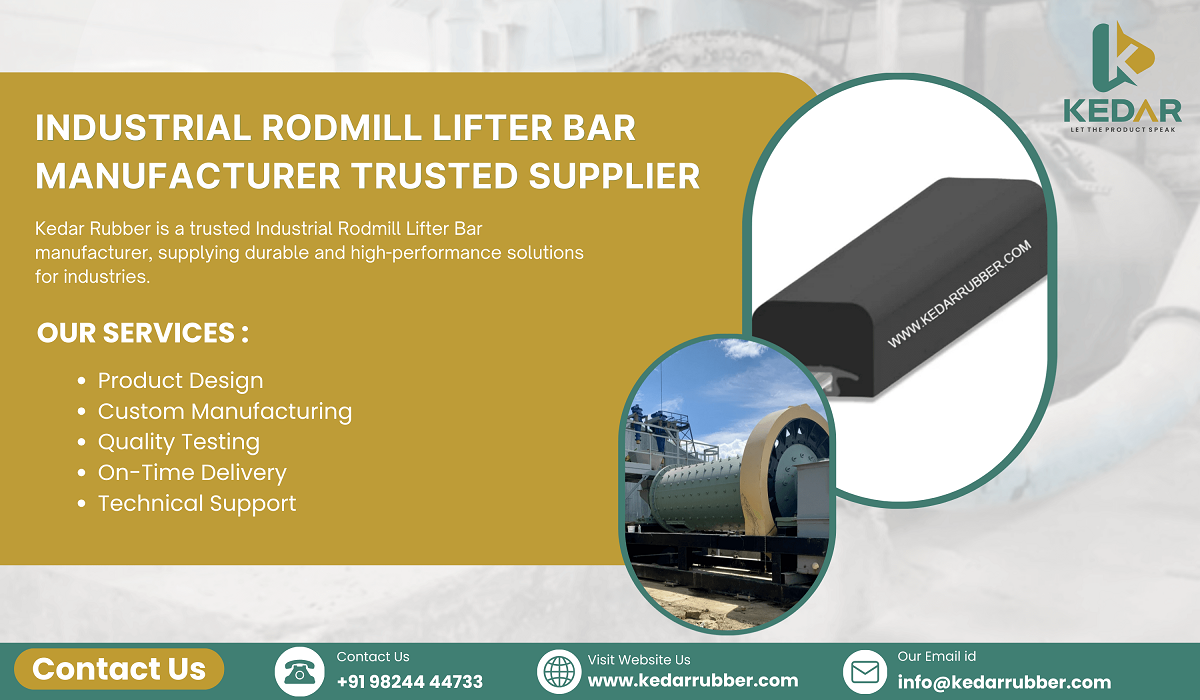
High-Quality Industrial Rodmill Lifter Bars by Kedar Rubber Products Pvt. Ltd.: Trusted Supplier
Industrial Rodmill Lifter Bar Manufacturer Trusted Supplier – Across mining, cement, metal processing, ceramic manufacturing, and bulk material handling industries, equipment reliability is not just a theoretical concern—it directly affects plant uptime, safety, and operating costs. In heavy-duty industrial environments, continuous exposure to abrasion, impact loading, corrosive materials, and high operational temperatures accelerates wear on rotating equipment.
Grinding mills, rod mills, and material handling systems are particularly vulnerable. Even minor wear-related failures can cause unplanned shutdowns, production loss, and costly corrective maintenance. As global industrial demand grows—driven by infrastructure development, mineral extraction, energy transition, and manufacturing expansion—plants face pressure to operate longer, safer, and more efficiently.
In this scenario, Rodmill Lifter Bars play a critical yet often overlooked role. They are not simple consumables but precisely engineered wear components designed to absorb impact forces, enhance grinding efficiency, and protect mill internals under extreme operating conditions.
Industrial Challenges That Drive Demand for Rodmill Lifter Bar
Experienced plant engineers often observe that wear problems rarely stem from a single cause. Instead, multiple stress factors act simultaneously:
- Abrasion: In mining and metal processing operations, continuous contact with ore, clinker, slag, or ceramic media leads to surface degradation. Poorly designed lifter bars wear unevenly, affecting mill performance.
- Impact Loads: Rod mills operate under repetitive impact conditions. Lifter bars must withstand heavy falling loads without cracking, delaminating, or deforming.
- Corrosion: Moisture, chemical additives, and slurry environments introduce corrosion risks, particularly in wet grinding applications.
- Downtime & Maintenance Cost: Frequent replacement cycles increase labor cost and reduce equipment availability. Plants seek components that balance wear life with ease of maintenance.
These challenges are common across global industrial environments—from iron ore belts and cement clusters to ceramic manufacturing hubs—making wear protection a universal operational priority.
What Is a Rodmill Lifter Bar?
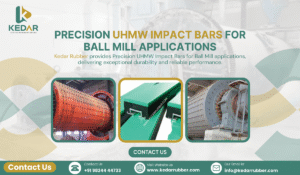
A Rodmill Lifter Bar is a wear-resistant component installed inside rod mills to lift and cascade grinding rods during mill rotation. Its function is mechanical and process-critical:
- Lifting grinding media to an optimal height
- Controlling impact energy distribution
- Protecting mill shell from direct contact
- Ensuring consistent grinding action
Unlike generic liners, lifter bars directly influence grinding efficiency and wear patterns. Their design must align with mill diameter, rotational speed, material characteristics, and process objectives.
Applications Across Industries
- Mining Industry: Used in rod mills for primary grinding of ores such as iron, copper, gold, and bauxite. Consistent lifter performance helps maintain throughput and particle size distribution.
- Cement Plants: Rod mills are employed in raw material preparation. Lifter bars must tolerate abrasive limestone and additives while minimizing vibration and liner damage.
- Metal & Steel Plants: In sinter plants and beneficiation units, rodmill lifter bars support continuous processing under high mechanical stress.
- Ceramic Manufacturing: Ceramic raw material grinding demands controlled wear behavior to avoid contamination and maintain product quality.
- Power Plants: Coal and ash handling systems using grinding equipment rely on wear-resistant internals for operational stability.
Design & Customization Requirements
No two mills operate identically. Proper lifter bar design considers:
- Mill diameter and liner configuration
- Rod size and charge volume
- Operating speed and duty cycle
- Slurry density or dry material behavior
Custom sizing, hole alignment, and profile geometry are critical to ensure compatibility with existing mill hardware and safe installation.
Manufacturing Quality & Process Control
Precision manufacturing directly influences field performance. Industrial-grade lifter bars require:
- Controlled rubber compounding
- Accurate moulding tolerances
- Batch-wise material traceability
- Dimensional and hardness testing
Consistency across production batches ensures predictable wear behavior over long operating periods.
Safety & Operational Reliability
Equipment failures pose serious safety risks. Proper wear protection contributes to:
- Reduced liner breakage
- Lower risk of internal mill damage
- Safer working conditions during maintenance
In heavy-duty industrial environments, reliability is inseparable from worker safety.
Why Experienced Manufacturers Matter?
Rodmill lifter bars are not generic rubber products. Engineering experience ensures:
- Application-specific design decisions
- Material selection based on field data
- Reliable supply continuity
Manufacturers with practical plant exposure anticipate challenges before they arise.
About Kedar Rubber Products Pvt. Ltd.
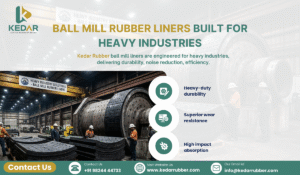
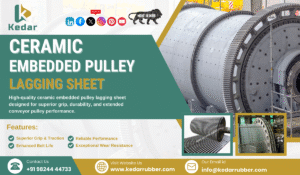
Kedar Rubber Products, associated with KEDAR RUBBER PRODUCTS PVT LTD, is an experienced manufacturer specializing in industrial rubber lining systems, ball mill rubber liners, ceramic wear protection solutions, conveyor solutions, and rodmill wear components.
Serving Pan India industrial markets across all major states and industrial cities—including Gujarat, Maharashtra, Rajasthan, Odisha, Chhattisgarh, Jharkhand, West Bengal, Karnataka, Tamil Nadu, Andhra Pradesh, Telangana, Madhya Pradesh, Uttar Pradesh, Punjab, Haryana, Delhi NCR, Himachal Pradesh, Uttarakhand, Bihar, Assam, Meghalaya, Kerala, Goa, and more—supports mining belts, cement clusters, steel plants, ceramic hubs, and bulk material handling facilities nationwide.
More information is available at 👉 https://www.kedarrubber.com/
Conclusion:
Rodmill lifter bars play a foundational role in grinding efficiency, equipment protection, and operational reliability. When designed and manufactured with real industrial understanding, they help plants reduce downtime, manage wear effectively, and maintain consistent performance.
Selecting the right lifter bar is less about marketing claims and more about engineering alignment with actual operating conditions.
Key Takeaways
- Rodmill lifter bars protect mills from impact and abrasion
- Proper design improves grinding efficiency
- Material selection affects wear behavior and safety
- Suitable across mining, cement, metal, and ceramic industries
- Long-term reliability supports global industrial operations
FAQS
1. What is the typical lifespan of a rodmill lifter bar?
- Lifespan depends on material, operating conditions, and mill parameters. Properly engineered lifter bars generally last multiple operating cycles.
2. Are rodmill lifter bars suitable for wet grinding applications?
- Yes, rubber-based lifter bars perform well in wet and corrosive environments.
3. How often do lifter bars require maintenance?
- Maintenance frequency aligns with scheduled mill shutdowns and wear inspections.
4. Rubber vs ceramic wear solutions—what’s the difference?
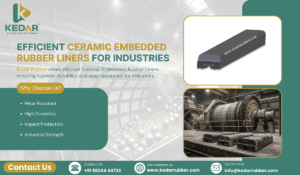
- Rubber offers impact absorption, while ceramics provide higher abrasion resistance in specific zones.
#BallMillRubberLiner #CeramicWearProtection #RubberLining #MiningSolutions #BulkMaterialHandling #ConveyorSolutions #kedarrubberproduct #WearProtection #IndustrialManufacturing