
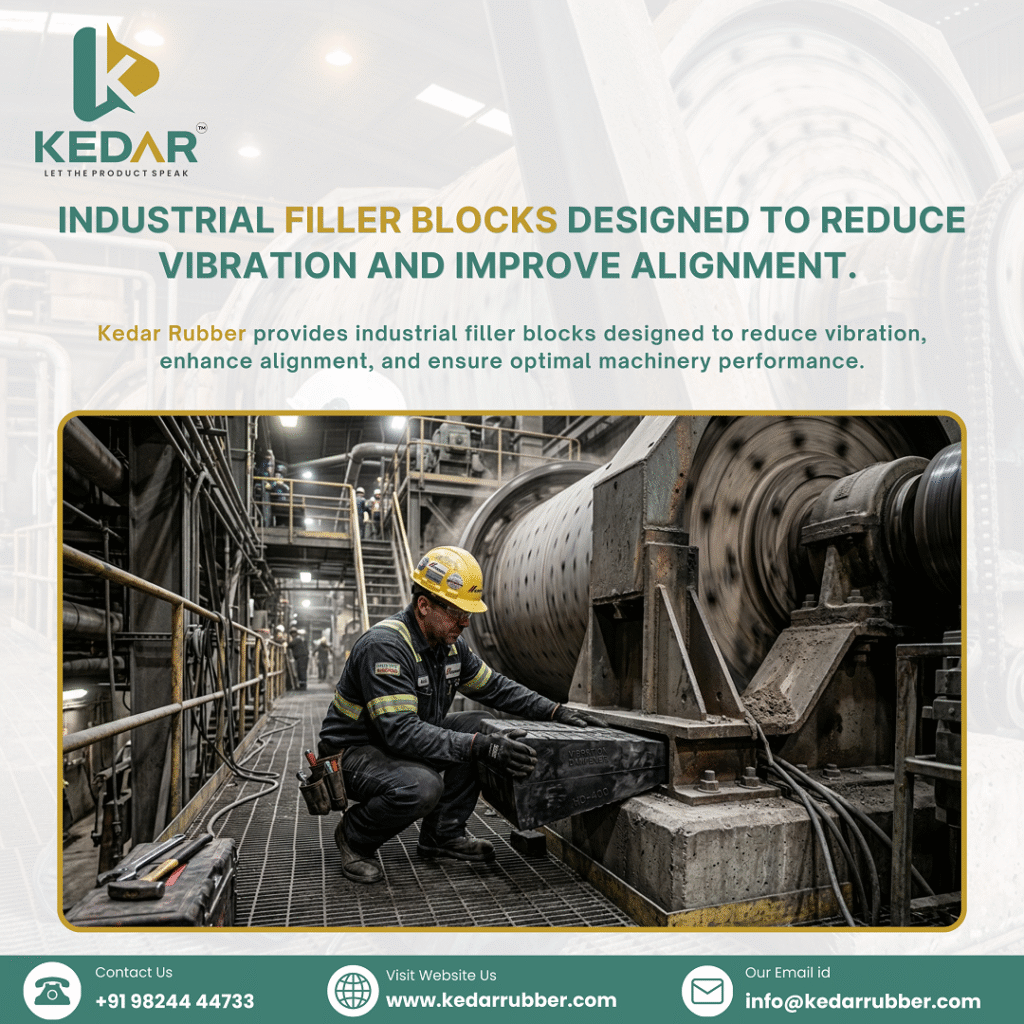
Boost Machine Accuracy With Advanced Filler Blocks. In heavy-duty industrial environments such as mining, cement, and bulk material handling, equipment constantly faces abrasive materials, high-impact forces, and corrosive conditions. These factors directly influence equipment reliability, increase maintenance cycles, and affect overall plant efficiency. Across key industrial hubs—from Gujarat, Maharashtra, Rajasthan, Tamil Nadu, Karnataka, Odisha, West Bengal, Jharkhand, and Chhattisgarh to major cities like Ahmedabad, Mumbai, Chennai, Kolkata, and Bhubaneswar—plants are prioritizing durable wear protection solutions.
Advanced Support Blocks serve a vital yet secondary function in not only lessening jarring and misalignment but also elevating machine precision, prolonging equipment life, and ensuring steady operational output.
Industrial Hurdles Fueling the Need for Support Blocks
Throughout various sectors, several continuous difficulties drive the rising demand for dependable protective wear elements:
- Friction: Constant contact with rough substances like ore, clinker, coal, or silica causes surface deterioration. In time, this diminishes equipment effectiveness and necessitates more frequent upkeep.
- Shock Loads: In mining and bulk material transport setups, descending masses generate intense impact forces. These forces can harm protective layers, chutes, and structural elements if not properly absorbed.
- Deterioration: Chemical exposure, dampness, and environmental circumstances lead to corrosion, especially in processing facilities and waterside industrial areas.
- Interruption: Unforeseen stoppages upset manufacturing timetables and affect financial returns. Even minor part failures can halt entire processing lines.
- Upkeep Expenses: Regular swapping of worn-out pieces raises operating costs, particularly when factoring in lost time and labor charges.
In the mining and metal production sectors across India and international arenas, these issues are interconnected, demanding holistic remedies rather than temporary fixes.
What Are Support Blocks?
Filler Blocks are specifically engineered parts meant to fill voids, brace protective linings, and shield equipment surfaces in industrial setups. Usually made from robust materials like rubber, ceramic, or combined composites, they are employed to guarantee proper positioning and steadfastness within equipment groupings.
Their core purposes include:
- Serving as a cushion between structural parts
- Reinforcing wear liners and holding their place
- Dampening shock and reducing areas of concentrated stress
- Stopping material build-up in empty spaces
Distinct from primary wear linings, support blocks aren’t always directly exposed to the greatest attrition zones, but they fulfil a crucial backing duty in sustaining the system’s overall efficacy.
Uses Across Various Sectors
Filler Blocks find application in numerous industrial fields where equipment durability and functioning are paramount.
- Mining Sector: In mining activities, support blocks are utilized in chutes, storage bins, and mill assemblies to keep liners aligned and absorb impacts from sizable ore fragments.
- Cement Factories: In clinker handling systems and grinding mills, support blocks aid in stabilizing linings and minimizing wear in hot and abrasive settings.
- Metal & Steel Works: Steel processing units incorporate support blocks in material conveyance setups, where heavy loads and constant operation demand dependable bracing elements.
- Ceramic Sector: In ceramic manufacturing, where fine abrasive materials are handled, support blocks help avert uneven wear and maintain equipment exactness.
- Energy Plants: Coal handling arrangements in thermal power stations depend on support blocks to lessen wear and manage impact at conveyor and transfer points.
- Bulk Material Handling: Conveyor networks, loading locations, and transfer chutes benefit from support blocks by improving material flow and reducing structural strain.
Material Science & Engineering Factors
From an engineering viewpoint, the performance of support blocks heavily relies on material selection and configuration.
- Rubber Characteristics: Rubber is widely adopted for its pliability, shock absorption, and resilience against friction. It can give way under pressure, lessening stress on adjacent parts.
- Ceramic Firmness: Ceramic substances offer excellent hardness and resistance to wear. They suit highly abrasive sections but need appropriate bracing to avoid cracking under impact.
- Wear Resistance Principles: Wear arises from rubbing, striking, or chemical interaction. Blending materials—like ceramic backed by rubber—assists in balancing rigidity with flexibility.
- Impact Attenuation: Rubber-based support blocks are particularly adept at absorbing sudden jolts, lowering the chance of fractures or structural harm.
Producers with extensive industry background recognize that no single material suits every situation. The choice hinges on operating conditions, material traits, and equipment design.
Design & Customization Necessities
Filler blocks are not a universal component. Their usefulness is contingent on exact design and tailoring.
- Equipment Synergy: Every industrial arrangement has distinct dimensions and operational needs. Support blocks must integrate flawlessly into existing setups.
- Bespoke Sizing: Measurements are often modified to suit particular gaps, lining arrangements, or structural braces.
- Application-Specific Layout: Factors like load levels, material movement, and environmental exposure influence the design strategy.
- Correct design ensures that support blocks perform their intended role without introducing extra strain or inefficiencies.
Manufacturing Excellence & Process Oversight
Uniform quality is crucial for industrial parts, especially those in sensitive roles.
- Accurate Fabrication: Precise molding or construction guarantees a correct fit and efficacy.
- Quality Scrutiny: Material analysis, size verification, and performance confirmation are vital stages in the making cycle.
- Batch Uniformity: Consistency across production runs ensures predictable results and simplifies upkeep scheduling.
In industrial settings, even slight variances can lead to operational troubles, making process control a paramount consideration.
Mounting & Servicing Points
Simplicity of fitting and upkeep directly affects plant productivity.
- Straightforward Mounting: Support blocks are usually conceived for simple attachment, minimizing lost time during scheduled service breaks.
- Decreased Outage: Quick substitution and minimal adjustments help maintain continuous operation.
- Maintenance Schedules: With suitable material choice, support blocks can align with planned service intervals, reducing the need for frequent checks.
- Seasoned plant personnel often favor solutions that blend easily with established upkeep routines without needing specialized instruments or methods.
Seasoned plant personnel often favor solutions that blend easily with established upkeep routines without needing specialized instruments or methods. For application-specific guidance or technical support, you can connect with the engineering team at Kedar Rubber Products through their official website.
Safety & Operational Dependability
Safety remains a fundamental focus in industrial endeavors.
- Personnel Well-being: Properly fitted support blocks lessen the risk of equipment malfunction, safeguarding staff working near machinery.
- Component Protection: By absorbing impacts and preventing misalignment, support blocks add to the lifespan of key elements.
- Facility Dependability: Steady equipment functioning reduces unforeseen breakdowns and enhances overall system reliability.
Fiscal Efficiency Across Equipment Lifespan
Though support blocks might form a small segment of the total system, their effect on long-term cost-effectiveness is considerable.
- Long-Term Savings: Reduced wear on primary parts lowers the frequency of replacement.
- Fewer Stoppages: Limiting unexpected failures helps maintain production timelines.
- Maintenance Streamlining: Predictable performance allows for superior planning and resource allocation.
- Rather than prioritizing initial outlay, industries increasingly assess components based on lifetime worth.
Export Readiness & Universal Acceptance
Industrial buyers in global markets anticipate consistent quality and adherence to norms.
- Documentation & Standards: Material specifications, test results, and quality credentials are vital for worldwide approval.
- Industry Demands: Global sectors call for dependability, traceability, and consistent performance.
- Market Significance: Support blocks are widely employed in mining zones, steel mills, and bulk handling facilities globally, making them a universally pertinent answer.
Ball Mill Rubber Liners: Performance, Protection, and Operational Efficiency
In mining and mineral processing industries, ball mills operate under extremely demanding conditions, handling abrasive materials, heavy loads, and continuous rotational motion. In such environments, Ball Mill Rubber Liners play a critical role in protecting the mill shell while optimizing grinding efficiency.
Rubber liners are specifically engineered to reduce wear caused by constant impact and abrasion from grinding media and processed materials. Unlike traditional metal liners, rubber offers higher elasticity, which helps absorb shock loads and minimize stress on the mill structure. This not only extends the lifespan of the mill but also reduces the risk of structural damage.
Experienced plant engineers often observe that rubber liners contribute to quieter mill operation due to their vibration-dampening properties. Additionally, their lighter weight compared to steel liners simplifies handling during installation and replacement, improving safety and reducing downtime during maintenance shutdowns.
From a performance perspective, rubber liners can be designed with customized lifter profiles to enhance material movement inside the mill. Properly designed liners improve cascading action, ensuring efficient grinding and uniform particle size distribution. This is particularly important in cement plants, mining operations, and mineral beneficiation processes where consistent output quality is essential.
Material selection also plays a key role. High-grade rubber compounds are formulated to withstand abrasion, chemical exposure, and varying temperature conditions. In some applications, composite liners combining rubber with ceramic inserts are used to achieve a balance between impact resistance and wear durability.
In mining and metal processing operations, selecting the right liner design and material is not just a maintenance decision—it directly influences productivity, energy efficiency, and overall plant reliability.
Why Experienced Fabricators Are Key?
Choosing the appropriate fabricator is as crucial as selecting the right item.
- Design Acumen: Grasping real-world uses assures superior product design.
- Sector Insight: Knowledge gained from cross-industry engagement aids in tackling complex difficulties.
- Stable Provision: Reliable availability of parts supports uninterrupted workflow.
- Producers with long-standing industry involvement comprehend the subtleties of industrial uses and can offer remedies that go beyond standard offerings.
About Kedar Rubber Products
KEDAR RUBBER PRODUCTS PVT LTD is a seasoned fabricator focusing on industrial wear defense solutions, including rubber linings for grinding mills, ceramic wear defense systems, rubber coating solutions, and conveyor parts.
Serving manufacturing sectors across India—including Gujarat, Maharashtra, Rajasthan, Tamil Nadu, Karnataka, West Bengal, Odisha, Chhattisgarh, Jharkhand, Andhra Pradesh, Telangana, Uttar Pradesh, Madhya Pradesh, Punjab, Haryana, and further afield—the firm supports a broad spectrum of industrial deployments. It also serves international markets where durable and trustworthy wear solutions are indispensable.
For further details, browse: 👉 https://www.kedarrubber.com/
Summary:
Filler Blocks might not always be the most visible part in industrial setups, but their function is indispensable. By bracing linings, taking on impacts, and maintaining structural soundness, they contribute markedly to equipment performance and facility efficiency.
In mining, cement, metal, and bulk material transport activities, where interruptions and wear are constant struggles, thoughtfully designed support blocks help guarantee steady and dependable operations.
For facility designers and upkeep crews, investing in the right supplementary components is a pragmatic stride towards boosting overall system output.
Key Takeaways
- Filler blocks play a critical role in supporting wear protection systems
- They help improve operational reliability and reduce equipment stress
- Suitable for mining, cement, steel, ceramic, and bulk handling industries
- Contribute to long-term performance and reduced maintenance frequency
- Widely relevant in both Indian and global industrial environments
FAQs
1. What is the typical lifespan of filler blocks?
- The lifespan depends on operating conditions, material type, and load exposure. In controlled environments, they can last through multiple maintenance cycles.
2. Are filler blocks suitable for high-impact applications?
- Yes, especially when made from rubber or composite materials designed for impact absorption.
3. How often should filler blocks be inspected or replaced?
- Inspection is usually aligned with routine maintenance schedules. Replacement depends on wear levels and operational demands.
4. What is the difference between rubber and ceramic filler solutions?
- Rubber provides flexibility and impact resistance, while ceramic offers superior abrasion resistance. The choice depends on application conditions.
5. Are filler blocks used globally in industrial operations?
- Yes, they are widely used in mining, cement, and bulk handling industries across major industrial regions worldwide.
#BallMillRubberLiner #CeramicWearProtection #RubberLining #MiningSolutions #BulkMaterialHandling #ConveyorSolutions #kedarrubberproduct #WearProtection #IndustrialManufacturing