Lifter Bar (Radicial) in Morbi: A Vital Component for Protecting Against Wear in Heavy Industrial Machinery by Kedar Rubber Products
Operations such as mining, metal refinement, cement making, ceramic production, and the movement of large volumes of materials all confront severe mechanical stresses. Equipment is routinely subjected to rubbing, repeated blows, dampness, slurry movement, and variable load patterns. Over time, these elements cause faster deterioration, lower operational effectiveness, and frequent stoppages, making solutions like the Lifter Bar (Radicial) in Morbi crucial for preserving equipment dependability.
In demanding industrial settings, defense against wear isn’t an optional enhancement—it’s a core necessity for plant reliability. Equipment inactivity disrupts production timelines, safety records, and upkeep budgets. As worldwide industrial demand grows across mining centers, cement hubs, and metal processing areas, plants face pressure to prolong equipment lifespan without sacrificing operational stability.
One element that plays a key role within grinding and material conveyance systems is the Lifter Bar (Radicial). Often unnoticed outside of technical teams, these bars directly impact grinding efficiency, load handling, force distribution, and the life of liners inside mills and processing units.
Industrial Hurdles Driving Demand for Lifter Bar (Radicial)
Seasoned plant technicians often note that internal deterioration components fail well before the main equipment casing shows strain. The reasons are similar across sectors:
- Rubbing: In mining and metal processing, constant contact with rock, clinker, slag, or ceramic media causes gradual material loss.
- Impact Forces: Irregular feed size and turning motion cause strong impacts on internal mill parts, notably the lifter bars.
- Deterioration & Chemical Contact: Moisture, slurry composition, and process additives speed up the breakdown of standard metal parts.
- Unexpected Stoppages: Failure of internal coverings or bars results in shutdowns that interrupt entire production lines.
- Increasing Upkeep Costs: Frequent covering replacement raises labor involvement, spare inventory expense, and lost production periods.
These issues are not confined to one region. Similar operating circumstances are found in Indian mining regions, cement factories in Southeast Asia, steel hubs in the Middle East, and ceramic processing zones throughout Asia-Pacific.
What is a Lifter Bar (Radicial)?
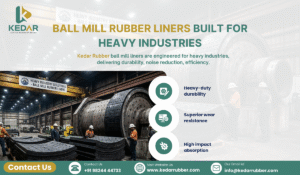
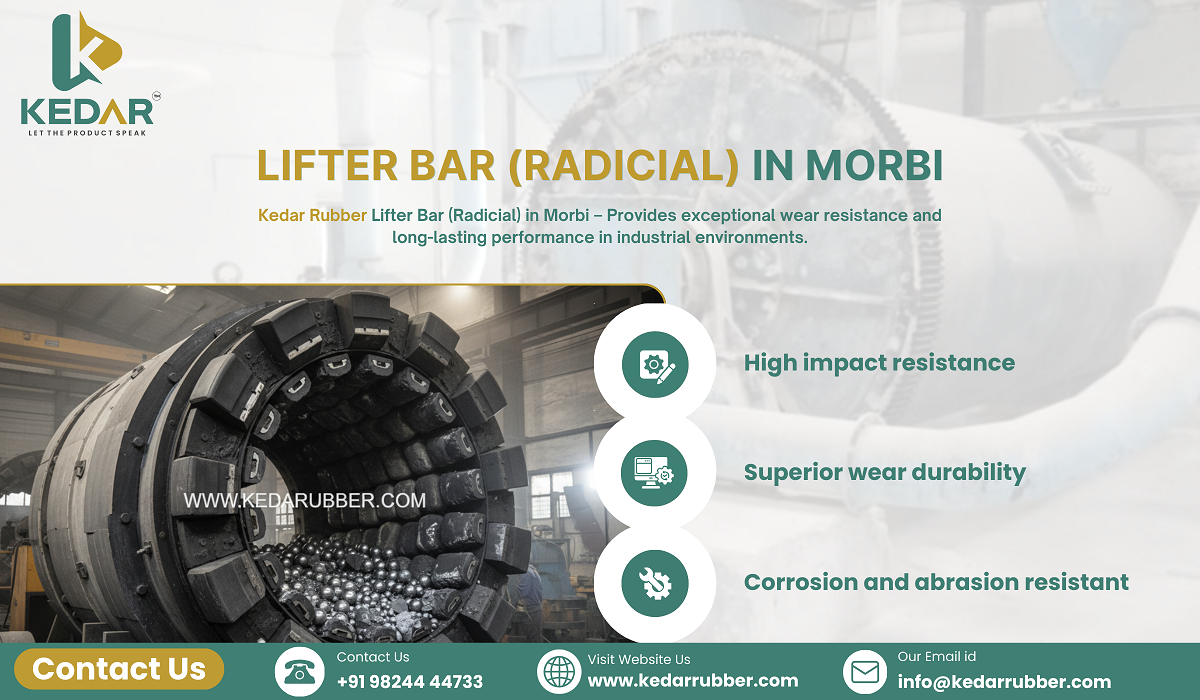
A Lifter Bar (Radicial) is a deterioration-resistant internal part fitted inside ball mills and comparable rotating machinery. Its main job is to elevate, cascade, and manage the movement of grinding media and material during rotation.
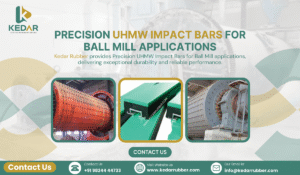
Instead of letting material passively glide, the bar creates a managed lifting action. This boosts grinding effectiveness while spreading impact forces more uniformly across the liners.
Engineers design these bars to absorb wear, protecting the main equipment structure from damage. Industries widely use rubber-based bars to dampen impact, reduce noise, and control wear profiles.
Applications Across Sectors
- Mining Sector: In mining tasks, these bars support effective ore grinding while lessening casing deterioration. Rubber bars are especially useful in wet grinding settings where corrosion and impact happen simultaneously.
- Cement Facilities: Cement mills depend on steady material flow and regulated grinding action. The bars help maintain stable mill performance while reducing shaking and liner damage.
- Metal & Steel Facilities: In slag grinding and mineral handling units, the bars manage high-density material motion and impact loads.
- Ceramic Production: Grinding ceramic raw materials needs controlled impact to prevent contamination and excess fine material. Wear-resistant rubber bars provide predictable operation.
- Power Plants: Coal managing and ash processing systems benefit from wear protection methods that lower upkeep frequency and dust creation.
- Bulk Material Handling: In rotating equipment and material transfer setups, these bars contribute to smoother running and reduced mechanical tension.
Material Science & Engineering Aspects
Producers with extensive industry background understand that material choice dictates performance more than just design.
- Rubber Characteristics: Industrial rubber mixes are engineered for flexibility, rubbing resistance, and impact absorption. Correct composition ensures managed wear rather than brittle breaking.
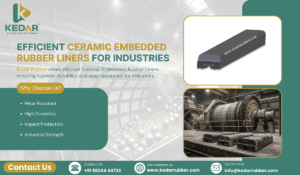
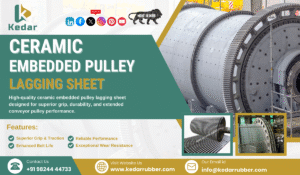
- Ceramic Inclusion: In areas with high rubbing, ceramic pieces might be joined with rubber to extend wear life while keeping shock absorption.
- Wear Resistance Principles: Effective protection doesn’t aim to eliminate wear entirely. Rather, it manages wear in a predictable way over time.
- Impact Damping: Rubber bars lessen peak impact forces, safeguarding both liners and mill casings.
This equilibrium between firmness and pliability is what sets engineered rubber products apart from standard metal components.
Design & Tailoring Needs
No two facilities operate under exactly the same circumstances. The bars must be designed based on:
- Mill size and turning speed
- Feed size and material weight
- Wet or dry grinding environments
- Compatibility with the existing liner system
Custom sizing, shape profiles, and attachment methods are vital to ensure proper load lifting without undue strain.
Manufacturing Excellence & Process Control
Precise manufacturing is crucial for internal mill parts. Accuracy in dimensions ensures even load distribution and lowers concentrated stress.
Quality checks usually involve:
- Checking incoming materials
- Ensuring mix uniformity
- Verifying dimensions
- Tracking batches
Consistent production reduces performance variation between replacement cycles, a point maintenance crews highly value.
Fitting & Servicing Notes
From a maintenance viewpoint, rubber bars offer:
- Lighter handling weight
- Quicker fitting times
- Safer working situations
Planned replacement schedules help avoid unexpected stoppages. Correct tightening and alignment of fastenings are crucial for a long service duration.
Safety & Operational Dependability
Personnel wellbeing is closely tied to machinery condition. Worn or compromised internal parts lead to increased shaking, noise, and hazards during repair tasks.
Thoughtfully engineered lifter bars enhance:
- Machine steadfastness
- Foreseeable wear patterns
- Diminished hazard of liner coming loose
This directly aids in more secure facility processes.
Value Over the Equipment’s Service Span
While the initial expense of components is just one consideration, efficiency throughout the entire service duration is more significant.
Advantages encompass:
- Prolonged liner usage
- Fewer necessary stoppages
- Streamlined upkeep scheduling
Avoiding unscheduled repairs yields savings over time without sacrificing output.
Preparedness for Shipment & Worldwide Approval
Buyers of industrial goods internationally anticipate:
- Uniform quality documentation
- Material verification
- Application engineering backing
Providers serving overseas venues must grasp the varied operating benchmarks and regulatory demands across different areas.
The Importance of Experienced Fabricators
Producing components for wear resistance is not a process of trial and error. Engineering skill, time in the field, and process rigor dictate dependability.
Manufacturers with extensive real-world application knowledge understand failure points, setup obstacles, and the actual limitations within processing plants.
About KEDAR RUBBER PRODUCTS PVT LTD
KEDAR RUBBER PRODUCTS PVT LTD is a seasoned industrial fabricator specializing in Lifter Bars (Radicial), ceramic wear defense systems, rubber lining setups, ball mill rubber goods, and conveyor systems.
Serving all of India across [List States/UTs], the firm supports the mining, cement, metallurgy, ceramic, and bulk material handling sectors.
Further specifics are reachable at 👉 https://www.kedarrubber.com/
Summary
The Lifter Bar (Radicial) holds a vital function in grinding effectiveness, wear control, and facility trustworthiness. When correctly designed, fabricated, and fitted, it safeguards machinery, boosts operational balance, and facilitates planned maintenance schedules.
For industrial sites prioritizing sustained performance over quick fixes, well-engineered wear defense remains a crucial investment.
Chief Points to Note
- Lifter bars manage strikes and surface rubbing within mills
- Rubber remedies improve security and lessen vibration
- Appropriate for mining, cement, metal, ceramic, and power sectors
- Predictable wear supports maintenance scheduling
- Recognized in international industrial settings
Current Frequently Asked Questions
1. What is the usual service period for a rubber lifter bar?
Its working life is contingent upon the material, feed size, and operating environment, not fixed durations.
2. Are lifter bars suitable for wet milling processes?
Yes, rubber lifter bars perform suitably in damp and slurry-based conditions.
3. How often should lifter bars be checked?
Regular inspection during planned downtime is advised.
4. Rubber versus ceramic wear defenses – which is superior?
Rubber excels at shock absorption; ceramic excels at surface friction resistance. The choice depends on the specific need.
5. Are lifter bars widely used in mining globally?
Yes, they are frequently employed in mining centers around the globe.
#BallMillRubberLiner #CeramicWearProtection #RubberLining #MiningSolutions #BulkMaterialHandling #ConveyorSolutions #kedarrubberproduct #WearProtection #IndustrialManufacturing