Lifter Bar (Trapezoidal) in Morbi: A Practical Wear Defense Solution for Demanding Industrial Processes by Kedar Rubber Products
Across sectors such as mining, cement production, metalworking, ceramics, and bulk-material handling, ensuring equipment reliability is a key operational hurdle. In strenuous industrial settings, machinery endures constant rubbing, repeated heavy forces, material deterioration due to chemical action, and inconsistent material feeding. These circumstances hasten wear, diminish equipment effectiveness, and increase the need for upkeep, stressing the value of solutions like the Lifter Bar (Trapezoidal) in Morbi for safeguarding gear and maintaining operational output.
Halts in plant operation—whether scheduled or unscheduled—incur significant operational expenditure. Maintenance personnel face ongoing pressure to extend equipment lifespans while maintaining production rates and safety standards. As production volumes rise and the nature of incoming materials fluctuates, the need for reliable wear mitigation solutions becomes even more crucial.
Viewed in this light, Lifter Bar (Trapezoidal) assemblies have emerged as a vital element in crushing mills and material processing machinery. Their function is not solely mechanical but also process-oriented—aiding material transit, boosting grinding efficacy, and shielding internal mill components from premature deterioration.
Industrial Hurdles Driving Demand for Lifter Bar (Trapezoidal)
Seasoned plant engineers frequently note that wear difficulties seldom arise from just one cause. Instead, numerous stress factors act concurrently:
- Abrasion: Constant contact with hard minerals, cement clinker, metallurgical slag, or ceramic feedstocks leads to surface breakdown.
- Impact Loads: Larger material chunks generate significant impact forces during the mill’s rotation.
- Corrosion: Wet conditions, chemical exposure, and slurry environments accelerate material degradation.
- Downtime Pressure: Frequent liner exchanges interrupt production schedules.
- Maintenance Expenses: Recurring maintenance increases expenditures for labor and spare parts inventory.
In mining and metal processing ventures, these difficulties are magnified by extended operational periods and varying input sizes. Comparable situations occur in cement facilities, ceramic complexes, and power stations that handle coal and fly ash.
Around the world, industrial settings—from Indian mining areas to international cement and steel centers—are gravitating towards engineered wear defenses that balance longevity with process efficiency.
What Is a Lifter Bar (Trapezoidal)?
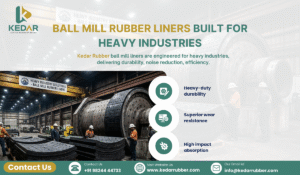
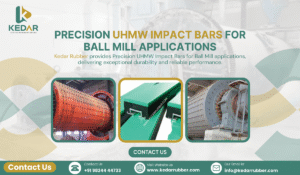
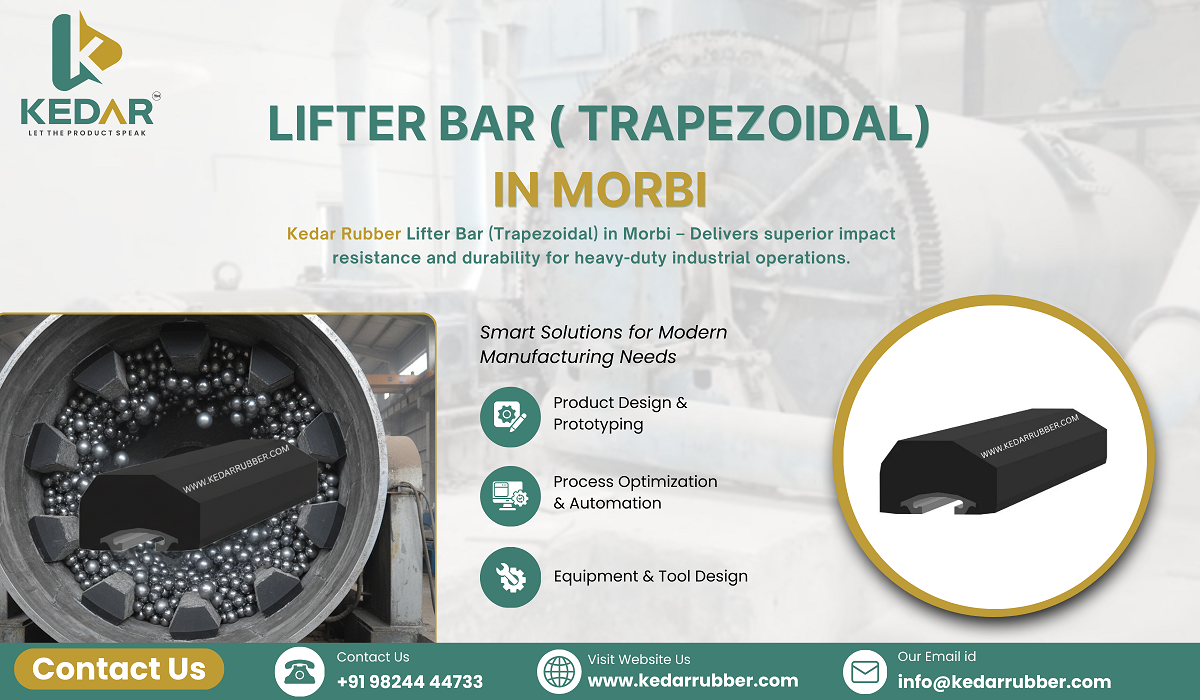
A Lifter Bar (Trapezoidal) serves as a component for wear protection and material lifting, installed inside ball mills and other grinding apparatus. Its cross-section, shaped like a trapezoid, is engineered to elevate grinding media and material during the mill’s turn and release them along a controlled arc.
Unlike simple flat liners, trapezoidal lifter bars actively shape grinding dynamics. Their specific form promotes:
- Regulated media cascading action
- Minimized internal material slide
- Even dispersal of impact energies
From an engineering viewpoint, lifter bars are more than just replaceable parts—they are process components that directly influence grinding performance and the durability of other liners.
Applications Across Various Sectors
- Mining Sector: In mineral extraction, trapezoidal lifter bars are commonly used in ball mills processing ores such as iron, copper, bauxite, limestone, and coal. Their contour assists in effective ore lifting while limiting liner damage.
- Cement Plants: Grinding mills in the cement industry utilize lifter bars to sustain steady movement of clinker, supporting consistent output and controlled wear on the inner mill casing.
- Metal & Steel Plants: Steel facilities processing slag and sintered materials benefit from lifter bars that withstand impact-heavy environments and abrasive byproducts.
- Ceramic Manufacturing: Grinding ceramic feedstocks requires controlled particle flow. Trapezoidal lifter bars help maintain product uniformity while protecting the mill’s interior structures.
- Power Plants: Mills handling coal and ash depend on lifter assemblies that can manage variable feed sizes and moisture levels.
- Bulk Material Handling: Industries that manage aggregates, minerals, and fine industrial powders use lifter bars to enhance process reliability in continuous operations.
Material Science & Engineering Considerations
Producers with extensive industry background recognize that the choice of material often dictates performance more significantly than the geometric form alone.
- Rubber Characteristics: Premium rubber offers pliability, shock dampening, and noise suppression. It excels in environments with moderate abrasion coupled with high impact forces.
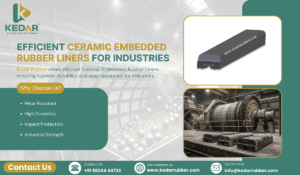
- Ceramic Attributes: Ceramic wear elements offer superior abrasion resistance when fine-particle erosion is the primary concern.
- Wear Resistance Principles: Degradation occurs through rubbing, erosion, and material fatigue. Effective lifter bars achieve a balance between firmness and resilience.
- Impact Dissipation: Systems incorporating rubber backing absorb sudden shock loads, thereby protecting mill shells and lessening structural strain.
Engineering choices are invariably dependent on the specific task. There is no single universal material fix—only optimized blends informed by operational metrics.
Design & Customization Needs
The effectiveness of a lifter bar is highly reliant on a design that aligns precisely with the equipment’s specifications:
- Equipment Compatibility: Mill diameter, rotation speed, and the layout of existing liners must be accounted for.
- Tailored Sizing: The bar’s length, height, and the degree of its trapezoidal angle influence how it lifts material.
- Application-Specific Geometry: Ore density, grinding media size, and required throughput all impact the optimal lifter shape.
Customization is not about adding unnecessary complexity—it’s about ensuring predictable wear patterns and operational steadiness.
Manufacturing Excellence & Process Oversight
Precise fabrication directly impacts real-world performance. Reputable manufacturers concentrate on:
- Careful sourcing of raw materials
- Accurate molding and curing procedures
- Uniformity of dimensions across different product batches
- Mandatory in-process checks and final quality verification
Consistency between batches assures that replacement lifter bars function predictably over time, minimizing variations in mill performance.
Fitting & Servicing Notes
From a maintenance viewpoint, trapezoidal lifter bars are favored when:
- The procedures for fitting are uncomplicated
- The fastening mechanisms are strong and readily accessible
- Replacement schedules fit in with planned facility shutdowns
Correct installation mitigates issues like misalignment, uneven material wear, and premature failure. Maintenance crews often prize solutions that reduce the time spent on handling and improve workplace safety.
Safety & Operational Dependability
In industrial plants, safety is intrinsically tied to equipment reliability.
- Fewer liner failures lessen the chance of abrupt equipment stoppages
- Lifter bars that absorb impact minimize vibration and noise levels
- Stable mill functioning protects both the operators and the service team
Well-conceived wear protection systems contribute to a safer working environment and more dependable plant performance.
Cost Efficiency Across the Equipment Lifecycle
While the initial purchase price is a consideration, seasoned operations teams assess solutions based on performance over their entire lifespan:
- Longer component life means fewer replacements are needed.
- Reduced unplanned outages boost overall plant uptime.
- Predictable wear patterns streamline scheduling of maintenance tasks.
Over time, well-designed lifter bar systems help manage maintenance expenditures without sacrificing output.
Export Preparedness & Worldwide Acceptance
Buyers in international industrial sectors typically require:
- Thorough technical guides
- Records for material provenance and quality assurance
- Familiarity with international operational benchmarks
Manufacturers preparing for export understand the necessary compliance rules and packaging specifications for key markets in the mining, cement, and metals sectors worldwide.
The Value of Experienced Manufacturers
Lifter bars operate under highly demanding conditions. Manufacturers with extensive industry background offer:
- Expertise in application engineering
- Incorporation of on-site performance data
- Dependable consistency in product delivery
This wealth of experience helps connect theoretical design specifications with the realities of plant operation.
About KEDAR RUBBER PRODUCTS PVT LTD
KEDAR RUBBER PRODUCTS PVT LTD is a seasoned industrial producer specializing in rubber-based wear defense systems, ceramic wear options, mill rubber components, and conveyance solutions. Serving all of India—including major industrial hubs and states within mining regions, cement operations, ceramic production, and steel facilities—the firm supports both national and international industrial demands.
Focusing on engineering dependability and uniform production methods, KEDAR RUBBER PRODUCTS PVT LTD delivers wear solutions tailored to actual plant operating situations.
Official website: 👉 https://www.kedarrubber.com/
Summary
The Trapezoidal Lifter Bar serves a vital role in maintaining grinding efficiency, safeguarding internal mill structures, and ensuring steady plant operation. In rigorous industrial settings, its contribution goes beyond simple wear resistance to encompass overall process trustworthiness.
When properly engineered and consistently manufactured, trapezoidal lifter bars help facilities balance productivity targets, maintenance scheduling, and long-term equipment integrity. For operations that prioritize dependability over quick fixes, these solutions remain a crucial element of contemporary industrial infrastructure.
Main Points to Remember
- Trapezoidal lifter bars improve material flow and grinding efficacy.
- Effective wear resistance boosts operational reliability.
- Suitable for use in the mining, cement, metal, ceramic, and bulk material handling sectors.
- Careful material selection supports sustained performance.
- Widely accepted in heavy-duty industrial environments worldwide.
Frequently Asked Questions
1. What is the usual service life for a trapezoidal lifter bar?
Its operational duration depends on the material grade, working environment, and mill settings, rather than fixed time periods.
2. Are trapezoidal lifter bars viable for high-impact scenarios?
Yes, particularly when formulated using rubber compounds designed to absorb shock.
3. How frequently do lifter bars need servicing?
Inspection typically coincides with scheduled downtime to assess wear progression.
4. How do rubber lifter bars measure up against ceramic wear solutions?
Rubber performs better in mitigating impact forces, while ceramic excels in abrasion resistance when processing fine materials.
5. Are these lifter bars utilized across the globe?
Indeed, they are widely used in the mining, cement, and metal processing industries worldwide.
#BallMillRubberLiner #CeramicWearProtection #RubberLining #MiningSolutions #BulkMaterialHandling #ConveyorSolutions #kedarrubberproduct #WearProtection #IndustrialManufacturing