- 903, SKD Surya Icon, Naranpura, Ahmedabad
- +91-9712925573
- info@kedarrubber.com
Certified Company
ISO 9001:2015
Leading Manufacturer
of Rubber Products

Industry Services
BROCHURES
Download your Free Report: What every business owner must know
Download Brochures PDF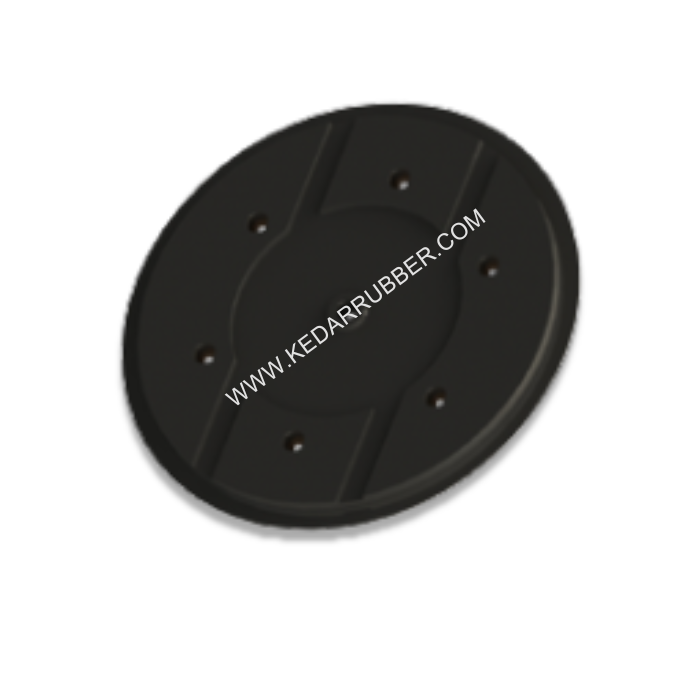
Price 13000 INR/ Piece (All Size Available)
Minimum Order Quantity – 15 Pieces
Supply Ability – 20 Pieces Per Week
Delivery Time – 7 Days
Main Domestic Market – All India
Main Export Market(s) – Asia, Australia, Central America, South America
Ball Mill Center Circle Rubber Specification
| Attribute | Details |
|---|---|
| Feature | Good Quality |
| Color | Black |
| Product Type | Ball Mill Center Circle Rubber |
| Style | Plain |
| Natural Rubber | Rubber |
| Hardness | 40 to 90 A |
Ball Mill Center Circle Rubber Trade Information
| Trade Information | Details |
|---|---|
| Minimum Order Quantity | 15 Pieces |
| Payment Terms | Cheque |
| Supply Ability | 20 Pieces Per Week |
| Delivery Time | 7 Days |
About Ball Mill Center Circle Rubber
Properties:
- – High elasticity and flexibility
- – Resistance to abrasion, impact, and compression
Functions:
- – Reduces vibration and noise
- – Prevents damage to the ball mill shell
Dimensions:
- – Outer diameter: varies depending on the ball mill size (typically ranges from 100 mm to 500 mm)
The Center Circle in Gujarat is a precision-engineered, solution-driven component designed to enhance structural stability and optimize load distribution in grinding mills used across mining, cement, and mineral processing industries. Kedar Rubber’s Center Circle in Gujarat is manufactured using high-quality, wear-resistant rubber compounds that effectively absorb impact, reduce stress concentration, and improve overall mill efficiency. Its robust design ensures proper alignment of internal mill components, minimizes wear and tear, and helps maintain consistent performance under heavy-duty operating conditions. By reducing downtime and extending equipment life, the Center Circle from Kedar Rubber Products delivers a reliable and cost-effective solution for long-term mill optimization.
Contact Kedar Rubber today to get premium quality Center Circle components and customized solutions that improve your mill performance, durability, and operational efficiency!
Why Choose Us?
Dedicated Team
True Partners
Global Know-How
Focus On Innovation
FAQ
What is a Center Circle in a grinding mill?
A Center Circle is a key internal component in grinding mills that helps maintain structural alignment and supports proper load distribution. It plays an important role in ensuring smooth and efficient mill operation.
What are the benefits of using a high-quality Center Circle?
A high-quality Center Circle improves stability, reduces stress on mill components, minimizes wear, and enhances overall performance. It also helps in reducing maintenance frequency and extending equipment life.
Which industries use Center Circle components?
Center Circle components are widely used in mining, cement plants, mineral processing units, and other heavy industries where grinding mills operate under high load conditions.
Center Circle ka use kya hota hai?
Center Circle ka use mill ke andar alignment maintain karne aur load ko evenly distribute karne ke liye hota hai, jisse machine smooth aur efficient tarike se chalti hai.
Rubber Center Circle better kyun hota hai?
Rubber Center Circle impact ko absorb karta hai, vibration kam karta hai aur wear resistance provide karta hai. Isse mill ki life badhti hai aur performance stable rehti hai.
Kedar Rubber Center Circle ki life kitni hoti hai?
Kedar Rubber Products ke Center Circle high-quality rubber se bane hote hain jo tough industrial conditions me bhi long-lasting performance dete hain. Proper maintenance ke sath inki durability aur badh jati hai.
How to choose the right Center Circle?
The right Center Circle depends on mill size, load conditions, and application type. For best results, it is recommended to choose a customized solution from experts like Kedar Rubber to ensure maximum efficiency and durability.