Ahmedabad’s Trusted Rubber Screen Manufacturing Company: Kedar Rubber Products Pvt. Ltd.
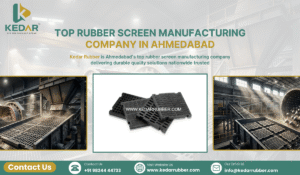
Top Rubber Screen Manufacturing Company in Ahmedabad. In mining, metal processing, cement production, ceramic manufacturing, and bulk material handling, equipment operates under constant mechanical stress. Material transfer points, screening decks, chutes, and mills are continuously exposed to abrasive ores, sharp-edged aggregates, moisture, high temperatures, and corrosive slurries. Over time, this demanding environment results in surface wear, structural deformation, and unplanned shutdowns that impact productivity.
In demanding industrial settings, guarding against wear is paramount—it directly impacts facility dependability, steady output flow, and sensible upkeep scheduling. Throughout key industrial territories of India, spanning mining zones in Odisha and Chhattisgarh to cement centres in Rajasthan and ceramic production areas in Gujarat and Tamil Nadu, operators encounter similar hurdles: minimising interruptions due to wear while sustaining consistent equipment function.
This difficulty is recognised globally. From mineral refinement sites in Australia to European metal fabrication facilities and cement works across Southeast Asia, managing wear remains vital for operational success. Within this landscape, Rubber Screen decks have risen as a key answer for sifting and material transfer duties facing high kinetic energy loads, intense surface deterioration, and the need for noise mitigation.
Industrial Difficulties Fueling Demand for Rubber Screens
Industrial sorting and separation methods are subject to several forms of breakdown:
- Surface Erosion: Constant shearing contact with pointed and jagged feedstock causes gradual thinning of the surface layer.
- Kinetic Loads: Large chunks of rock or clinker striking the screens result in localised damage and stress fractures in rigid elements.
- Chemical Attack: Wetness, chemical agents, and sludge conditions hasten the decay of metal parts.
- Process Stoppages: Screen failures halt activities both before and after the screening stage, impacting crushing trains, mill effectiveness, and material movement.
- Repair Expenses: Frequent changing of liners or screens raises labour hours and the frequency of facility shutdowns.
In mining and metal refinement sectors, seasoned facility engineers frequently note that standard metal screens wear out too quickly in high-force zones. Comparable patterns emerge in cement mills where handling hot clinker faces both grinding and thermal stress. Worldwide industrial landscapes share these issues, making robust screening media a practical necessity rather than a negotiable enhancement.
What Constitutes a Rubber Screen?
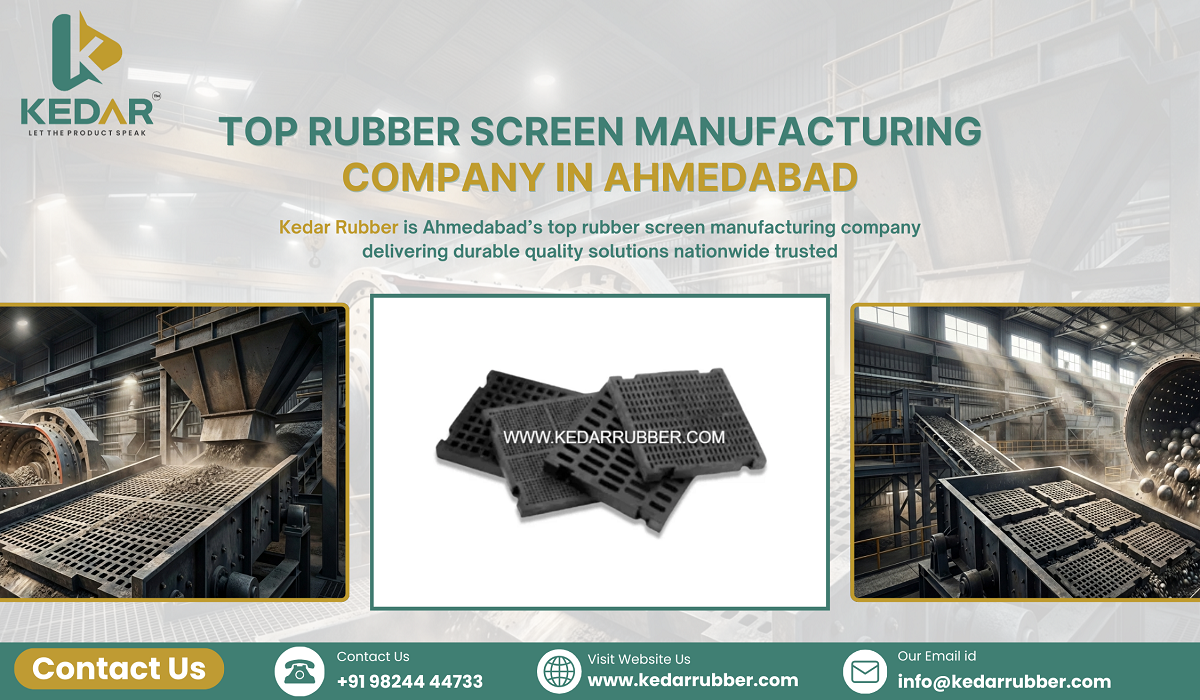
A Rubber Screen is a durable screening surface fabricated using specialised elastomer mixtures. It’s engineered to divide materials by size while dampening impact forces and resisting surface grinding. Unlike rigid steel meshes, rubber-based screening panels flex slightly under stress, enabling them to disperse energy from descending material and lower concentrated stress points.
From an industrial engineering viewpoint, rubber screens are chosen when the screening task involves:
- Significant impact forces
- Varied feedstock dimensions
- Wet or slurry compositions
- Environments sensitive to sound
Its role is simple: to execute size separation while extending operational intervals in scenarios where rigid materials are prone to cracking or rapid deterioration.
Deployment Across Sectors
Rubber Screen assemblies find use across various heavy industries where sizing is part of material preparation or segregation:
- Mining: Utilised in initial and intermediate ore screening, lessening metal fatigue in high-impact areas.
- Cement: Deployed for clinker and limestone sorting, where both abrasive wear and temperature fluctuations occur.
- Metal & Steel: Employed in sinter preparation works and raw material handling to manage sharply edged feed.
- Ceramic Production: Supports the screening of base materials like feldspar and quartz, where fine, abrasive dust can degrade steel elements.
- Power Generation: Applied in coal conveyance and ash reuse systems where dampness and impact loads coincide.
- Bulk Material Transit: Used at conveyor merge points and sorting stages to stabilise material progression and minimise spills.
These deployment scenarios reflect tangible onsite requirements rather than theoretical performance gains.
Material Science & Engineering Aspects
Rubber screens depend on elastomer expertise over pure structural stiffness. Primary engineering considerations include:
- Elastomer Attributes: Polymers display high elasticity, permitting flex under load and recovery post-impact. This trait curbs the start of fissures.
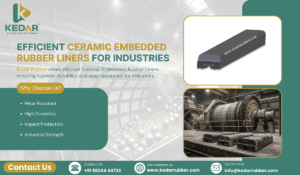
- Ceramic Hardness (in hybrid setups): In some wear defence mechanisms, ceramic inlays are fused with rubber bases. Ceramic elements give superior surface resistance, while rubber handles kinetic energy absorption.
- Wear Resistance Principles: Abrasive degradation is governed by particle hardness, edge shape, and speed of sliding. Rubber compounds are tailored to balance tear strength with flexibility.
- Kinetic Energy Damping: Rubber diffuses kinetic energy, lessening force transmission to screen frames and support structures.
Producers with extensive sector history grasp that compound tuning must align with the distinct material traits of each facility, be it fine iron ore, cement clinker, or ceramic feedstocks.
Design & Customisation Necessities
Industrial screening mechanisms vary widely in deck layout, hole geometry, and fastening methods. Thus, Rubber Screen design necessitates:
- Equipment Suitability: Panels must interface with existing screen frames without alteration.
- Bespoke Sizing: Opening measurements are selected based on material granularity and desired throughput volumes.
- Application-Specific Forms: Areas of high impact may mandate thicker profiles, while fine sorting sections may prioritise the percentage of open area.
Design choices are frequently guided by site evaluations and wear history noted by maintenance personnel.
Production Excellence & Process Oversight
Precise fabrication directly impacts field functionality. Industrial procurement teams anticipate:
- Controlled pressing techniques to maintain precise measurements
- Uniformity of the elastomer mix across production runs
- Verification testing for yield strength, stretch, and tear resilience
- Tracking capability for production batches
Markets focused on export frequently demand established process controls and adherence to recognised quality administration frameworks.
Erection & Servicing Points
From a site upkeep perspective, rubber screens offer practical advantages:
- Simpler Mounting: Lighter panels minimise manual handling hazards and shorten setup durations.
- Quicker Turnaround: Faster exchanges translate to reduced shutdown windows.
- Service Intervals: Extended operational life allows for more predictable maintenance scheduling and spare parts management.
In strenuous industrial settings, upkeep effectiveness often holds equal weight to material capabilities.
Safety & Operational Firmness
Worker protection and equipment preservation are linked. Rubber screening assemblies contribute by:
- Reducing sharp metal edges at points of failure
- Decreasing ambient noise levels in sifting areas
- Limiting vibration transmission to the supporting framework
These factors enhance overall plant stability and lessen wear-based structural weakening over time.
Fiscal Performance Over the Asset’s Lifespan
Lifecycle merit is assessed over years of operation, not isolated project phases. Rubber screens facilitate:
- Long-term savings via extended usability
- Fewer interruptions in critical sorting lines
- Maintenance optimisation by synchronising replacements with scheduled downtime
Facility administrators often judge wear defence materials based on production continuity rather than initial purchase terms.
Export Readiness & Global Acknowledgment
Industrial export territories expect:
- Validated material specifications
- Familiarity with worldwide benchmarks
- Consistent manufacturing methods
- Dependable supply chain and packaging
Global buyers across mining centres, ceramic hubs, and metal sectors value technical documentation and replicability over promotional assertions.
Why Experienced Producers Are Crucial?
Manufacturers with deep sector immersion comprehend:
- How sifting results influence upstream crushing and downstream milling
- The critical role of compound choice for specific ore or material types
- The practical realities of scheduling upkeep and shutdown planning
Engineering depth and supply dependability outweigh nominal performance figures in functioning facilities.
About Kedar Rubber Products
KEDAR RUBBER PRODUCTS PVT LTD is a seasoned producer serving industrial sectors across India and international destinations. With a background in mining belts in Jharkhand, Odisha, and Karnataka, cement facilities in Rajasthan and Madhya Pradesh, ceramic manufacturing zones in Gujarat and Morbi, and metal industries throughout Maharashtra, Tamil Nadu, Telangana, and West Bengal, the firm has gathered practical knowledge regarding the wear defence obstacles faced by Indian and worldwide plants.
Their offerings encompass Ball Mill Rubber Liners, Ceramic Wear Defence Systems, Rubber Lining Assemblies, Ball Mill Rubber Components, Conveyance Solutions, and Rubber Screen units engineered for rigorous sorting environments. Further technical specifics are available at 👉 https://www.kedarrubber.com/
Summary:
Ball Mill Rubber Liners and Rubber Screen units work together to boost facility efficiency by cutting down on wear-attributed failures across the crushing, grinding, and sorting circuits. In mining, metal refinement outfits, cement plants, and bulk material transfer sites, consistent wear defence boosts equipment reliability and stabilises output planning.
For facility engineers and project advisors, selecting wear defence solutions based on material reaction, impact conditions, and upkeep restrictions supports enduring operational steadiness over fleeting performance upticks.
Key Points
- Wear defence directly sustains equipment dependability in heavy-duty plants.
- Rubber-based options absorb impact and lessen structural stress
- Appropriate for mining, cement, metal, ceramic, power, and bulk transit sectors
- Aids steady maintenance schedules and uninterrupted operation
- Relevant across both Indian and global industrial arenas
FAQS
Q1. What is the typical lifespan of a Rubber Screen in industrial screening?
- Service life depends on material abrasiveness, impact energy, and feed rate. In high-impact mining environments, inspection-based replacement planning is recommended.
Q2. Are Rubber Screens suitable for wet screening applications?
- Yes. Rubber performs well in wet or slurry environments where corrosion affects metallic screens.
Q3. How often should you inspect rubber screens?
- Maintenance teams usually align inspection intervals with plant shutdown schedules or conduct them monthly during continuous operations.
Q4. How do rubber wear solutions compare with ceramic wear protection?
- Rubber offers impact absorption and flexibility, while ceramic provides higher abrasion resistance. Hybrid systems combine both properties for specific zones.
Q5. Are heavy industries around the world using rubber screens?
- Yes. They are widely applied in mining, cement, and bulk material handling operations across global industrial regions.
#BallMillRubberLiner #CeramicWearProtection #RubberLining #MiningSolutions #BulkMaterialHandling #ConveyorSolutions #kedarrubberproduct #WearProtection #IndustrialManufactufacturing