Triangle Head Plate Liner in Morbi: Enhancing Wear Protection and Operational Reliability in Heavy-Duty Industrial Systems
Introduction
In sectors like mining, cement making, metal refinement, ceramics production, and handling large volumes of goods, machinery faces some of the toughest mechanical stresses. The constant movement of gritty substances, heavy impacts, and demanding operational cycles puts immense strain on machinery parts. Over time, this leads to material loss, structural weakening, and reduced operational performance. In Morbi, Gujarat, the local offering of Triangle Head Plate Liners in Morbi provides specialized safeguarding for crushing mills and material conveyance gear, ensuring longer service life, less upkeep, and better operational effectiveness in severe industrial settings.
In demanding industrial settings, even the failure of a small part can trigger expensive stoppages. Production halts not only interrupt output but also drive up repair expenditures, strain supply chains, and compromise site safety. For facility managers and maintenance crews, maintaining equipment dependability is therefore a continuous focus.
Industrial producers like KEDAR RUBBER PRODUCTS PVT LTD have created specialized rubber and ceramic systems for wear protection to support rigorous uses throughout industrial zones across India.
Industrial Hurdles Fueling the Need for Triangle Head Plate Liners
Machinery in mining, cement, and metal processing plants often runs non-stop. These settings present several obstacles that increase the requirement for effective components that resist wear.
Friction/Abrasion
Gritty substances such as ores, limestone, coal, clinker, silica, and ceramic raw materials constantly rub against processing machinery. Over time, these materials grind against metal surfaces, progressively removing material and compromising structural elements.
Seasoned facility engineers often note that abrasion is the primary driver of equipment deterioration in grinding mills and material transfer arrangements.
Impact Forces
Large chunks of ore, stones, or clinker frequently drop into mills or conveyors with significant velocity. These recurring heavy impacts can cause fracturing, warping, or surface weakening in machinery components.
Without suitable protective coverings, the structural elements of machinery may deteriorate more rapidly.
Chemical Exposure and Rusting
Certain industrial materials contain moisture, chemical agents, or corrosive compounds. In mining and mineral refinement operations, this can cause exposed metal surfaces to rust.
Protective covering systems function to shield equipment from these harsh environmental factors.
Equipment Standstill Time
Loss of operational time remains one of the most financially damaging issues in heavy industry. When worn parts unexpectedly give out, work stops until repairs are finished.
Reducing idle time is vital for sustaining uninterrupted production flows.
Maintenance Outlay
Frequent replacement of parts and unplanned shutdowns significantly elevate operating expenses. Components engineered for wear resistance help extend the time between servicing and allow for better maintenance scheduling.
These industrial difficulties clarify why engineered systems for wear protection, such as Triangle Head Plate Liners, have grown in significance in modern facility design.
Defining the Triangle Head Plate Liner
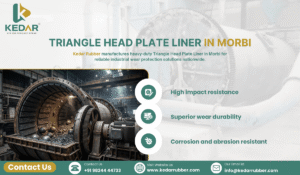
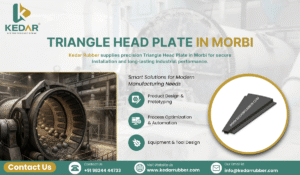
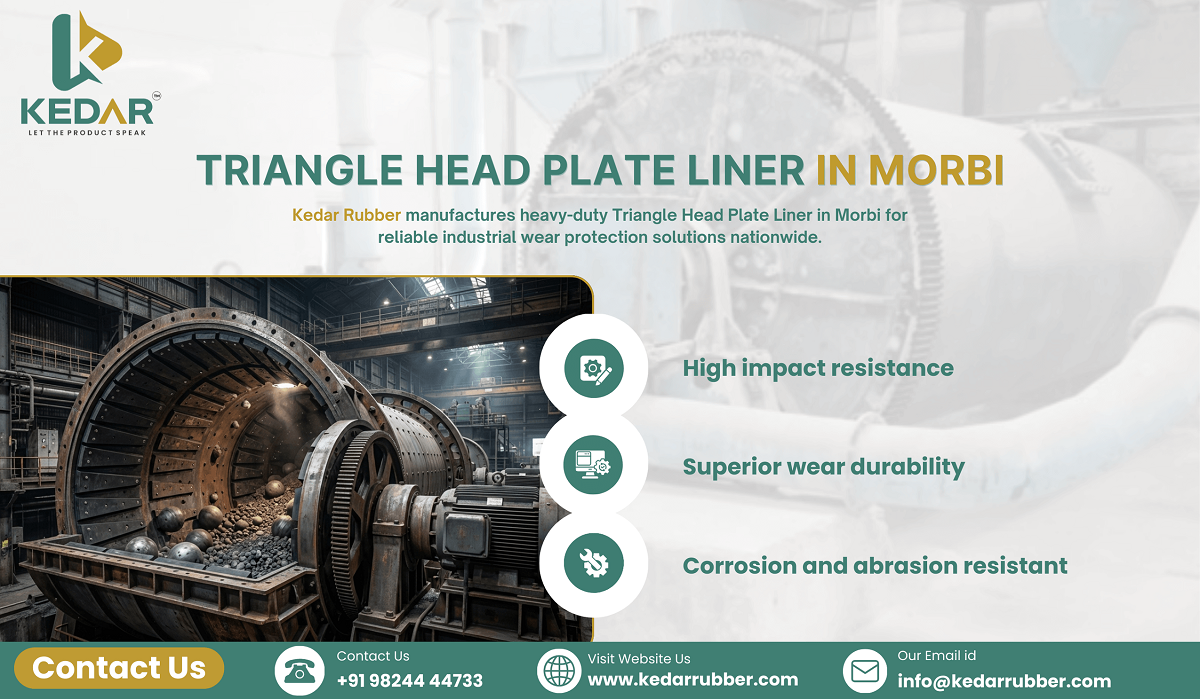
A Triangle Head Plate Liner is a specifically engineered component for wear defense, intended for machinery subjected to heavy grinding and forceful impacts.
It is commonly fitted in critical zones within grinding mills, exit points, or material transport systems where material flow generates concentrated areas of wear.
The liner typically features:
- A triangular front profile that improves structural anchoring
- Materials resistant to wear, such as rubber or composites
- Tailored shapes designed to fit specific equipment contours
The triangular structure allows the liner to spread out impact energy better while remaining firmly fixed during operation.
Unlike basic metal sheets, liners based on rubber offer both resistance to wear and the capacity to cushion shocks. This combination helps safeguard the underlying steel framework from repeated mechanical stress.
Uses Across Different Industries
Triangle Head Plate Liners are used in various industrial sectors where material handling setups encounter abrasive conditions.
Mining Sector
Mining activities involve processing hard minerals such as iron ore, bauxite, copper, and limestone. Grinding mills and material chutes endure constant grinding from these substances.
Triangle Head Plate Liners are frequently employed in:
- Interior spaces of grinding mills
- Ore exit zones
- Material transfer chutes
- Areas subject to impact
Cement Factories
Cement production necessitates handling substantial quantities of clinker, limestone, gypsum, and coal. These materials cause considerable wear in the processing equipment.
Applications include:
- Ball mills
- Raw material mills
- Clinker handling arrangements
- Conveyor transition points
Metal & Steel Works
Steel facilities manage heavy bulk items, including iron ore, pellets, and coke. Wear liners are utilized to lessen deterioration in processing and transport machinery.
Common areas include:
- Ore processing equipment
- Bulk storage installations
- Material transfer chutes
- Ceramics Manufacturing
Ceramic facilities process silica, clay, feldspar, and other minerals that are highly abrasive.
Wear liners help safeguard:
- Grinding mills
- Slurry processing setups
- Material feeding equipment
- Power Generation Sites
Facilities reliant on coal require dependable bulk handling systems to move coal from storage areas to the boilers.
Triangle Head Plate Liners help protect:
- Coal handling chutes
- Transition stations
- Conveyor impact points
- Large-Scale Material Handling Systems
Industries that move vast amounts of material via conveyors, Lid Plug, Lid-Plug-Discharge And Man Hole Frame feeders, and hoppers depend on wear defense to sustain dependable operations.
Material Science & Engineering Aspects
The effectiveness of wear liners is significantly shaped by the choice of materials and the engineering design.
Qualities of Rubber
Rubber is widely utilized for wear protection due to its distinct mechanical attributes.
Key characteristics include:
- High flexibility
- Impact damping
- Resistance to abrasion
- Noise dampening
- Protection from corrosion
These traits enable rubber liners to absorb mechanical jolts while resisting slow surface deterioration.
Hardness of Ceramics
In certain scenarios, ceramic wear elements are integrated to boost rigidity and resistance to abrasion.
Ceramic substances offer:
- Exceptionally high levels of hardness
- Superior defense against abrasive rubbing action
- Extended service life in environments with fine particles
Principles of Wear Resistance
Wear occurs through several processes:
- Sliding friction
- Wear from impacts
- Erosion caused by flowing particles
Effective liner systems achieve a balance between rigidity and pliability to address these forms of wear.
Shock Dissipation
Rubber-based liners aid in spreading out impact energy. This lessens built-up stress on structural steel members and extends equipment lifespan.
Design & Customization Demands
Industrial machinery exhibits considerable variation in size, form, and operational setting. Consequently, wear liners must often be custom-made.
Primary design considerations involve:
- Compatibility with existing equipment
- Liner thickness and profile configuration
- The mix of materials used
- The method of attachment
- Characteristics of material flow
Manufacturers with extensive industry background recognize that liners must be engineered to suit specific working conditions rather than relying on generic templates.
Manufacturing Excellence & Process Oversight
The functional success of a Triangle Head Plate Liner heavily relies on manufacturing quality.
Precise production workflows help guarantee:
- Accurate measurements
- Uniform rubber density
- Proper adherence between different materials
- Structural soundness
Quality assurance usually involves:
- Checking incoming raw materials
- Verifying final dimensions
- Testing mechanical properties
- Monitoring consistency across production batches
Dependable manufacturing processes ensure that liners perform uniformly across various installations.
Setup and Upkeep Notes
A correct setup is vital for getting the best out of liner performance.
Main setup points to note:
- Exact positioning against machinery surfaces
- Firm securing methods
- Suitability with current liner setups
Maintenance staff usually favor linear configurations that permit easy swapping during scheduled downtimes.
Worker Well-being and Dependable Operation
Systems preventing wear add greatly to facility safety.
Damaged machine surfaces can result in:
- Structural breakdowns
- Material leaks
- Hazardous work settings
Protective liners lessen the chance of sudden machine failure. This boosts operational dependability and fosters secure workspaces for upkeep crews and facility operators.
Economy Across the Equipment Lifespan
When looking at the entire life of equipment, wear defense methods offer several financial advantages.
These comprise:
- Lengthened equipment service life
- Less frequent replacement needs
- Reduced upkeep labor demands
- Fewer unscheduled stops
Rather than focusing on initial part expense, many facility managers assess wear protection by its capability to lessen long-term operational interruptions.
Preparedness for Export and Worldwide Acceptance
Buyers in international sectors anticipate uniform production standards and dependable paperwork.
Industrial parts ready for export usually require:
- Trackable material specifics
- Uniform production procedures
- Evidence of quality
- Adherence to international shipping rules
Wear protection setups intended for worldwide use must satisfy these expectations while sustaining consistent product functionality.
The Value of Seasoned Manufacturers
Choosing the appropriate maker is a key choice for industrial purchasing departments.
Manufacturers with an extensive background in the sector grasp:
- Issues faced in actual facilities
- Needs for equipment matching
- How materials perform under stress
- Installation and care factors
Trustworthy suppliers also keep steady production capability and technical assistance for industrial clientele.
Regarding KEDAR RUBBER PRODUCTS PVT LTD
KEDAR RUBBER PRODUCTS PVT LTD is a seasoned industrial maker focusing on wear defense and material movement systems.
The firm creates specialized items such as:
- Grinding Mill Rubber Linings
- Ceramic Wear Defense Assemblies
- Rubber Coating Solutions
- Rubber Parts for Grinding Mills
- Conveyor System Offerings
Serving industrial users across India and in global territories, the company supports mineral extraction, cement works, metal processing, ceramic creation, and bulk material handling sites.
More details on their engineering skills and product portfolio are available at:👉 https://www.kedarrubber.com/
Summary
In industries where grinding materials and heavy mechanical force are routine, safeguarding equipment becomes a basic necessity.
Triangle Head Plate Liners offer a practical answer for cutting down wear in crucial zones of grinding equipment and material transport networks. By merging shock absorption with resistance to abrasion, these parts help shield primary machine structures and enhance operational consistency.
For facility engineers and purchasing groups assessing wear defense plans, picking expertly designed liner setups continues to be a significant element in sustaining stable, long-term operation.
Key Learnings
- Triangle Head Plate Liners furnish necessary wear defense in abrasive industrial settings.
- Liner setups based on rubber aid in soaking up impact force and lessening equipment strain.
- These liners see wide use in mining, cement, metal, ceramic, and bulk material handling sectors.
- Careful material selection boosts resilience to rubbing and mechanical wear.
- Dependable manufacturing and correct setup support sustained equipment results.
Trending FAQs
1. What is the typical lifespan of a Triangle Head Plate Liner?
- The lifespan depends on factors such as material type, operating conditions, and abrasion levels.
2. Are Triangle Head Plate Liners suitable for mining applications?
- Yes. They are commonly used in mining operations where equipment is exposed to heavy abrasion from ores, minerals, and rock materials.
3. How often should wear liners be inspected?
- Plant engineers typically inspect wear liners during scheduled maintenance shutdowns.
4. What is the difference between rubber and ceramic wear protection?
- Rubber liners provide excellent impact absorption and flexibility, while ceramic liners offer extremely high hardness and abrasion resistance.
5. Can Triangle Head Plate Liners be customized for specific equipment?
- Yes. Most liners are designed based on equipment geometry, material flow conditions, and operational requirements.
#BallMillRubberLiner #CeramicWearProtection #RubberLining #MiningSolutions #BulkMaterialHandling #ConveyorSolutions #kedarrubberproduct #WearProtection #IndustrialManufacturing