
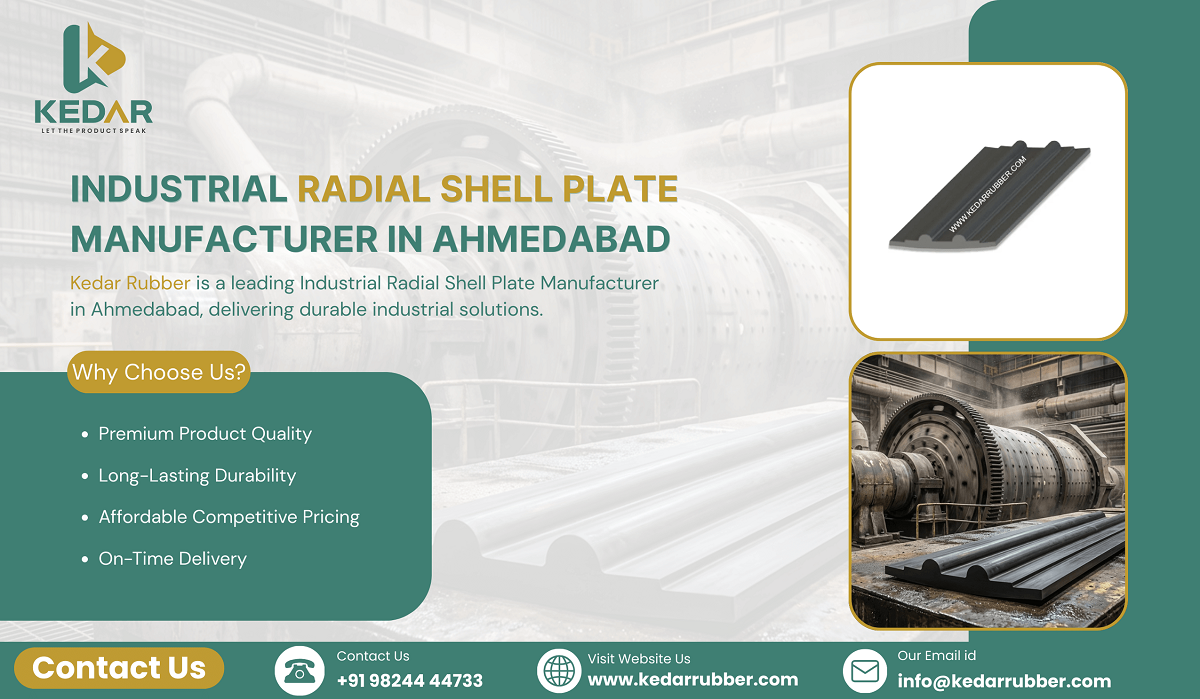
Ahmedabad’s Premier Industrial Radial Shell Plate Manufacturer: Kedar Rubber Products Pvt. Ltd.
In heavy-duty industrial environments, an Industrial Radial Shell Plate Manufacturer in Ahmedabad plays a crucial role in supplying durable solutions for mining, metal processing, cement production, and ceramic manufacturing plants, all of which face constant challenges from abrasive materials, high-impact operations, and extreme working conditions. Plant downtime caused by equipment wear, corrosion, or mechanical failure can lead to significant production losses and increased operational costs.
Safeguarding equipment and ensuring its reliability are vital concerns for industrial supervisors, plant engineers, and purchasing departments to achieve efficient operations and lasting viability. Sophisticated safeguards against wear, such as the Radial Shell Plate, have become crucial for efficiently tackling these issues.
Throughout India, various industrial sectors—including mining centres in Jharkhand, Odisha, and Chhattisgarh; steel production hubs in Maharashtra; cement facilities across Rajasthan and Gujarat; and ceramic makers in West Bengal and Tamil Nadu—are showing a growing need for durable wear-defence measures. Radial Shell Plates are widely adopted in these contexts to extend machinery life, reduce maintenance intervals, and enhance safety during operation.
Industrial Hurdles Fueling the Demand for Radial Shell Plates**.
Demanding industrial activities subject machinery to several significant strains:
- Friction: In ore extraction and processing, abrasive minerals and feedstocks continually rub against equipment surfaces, causing rapid deterioration. Standard metal linings often fail too soon under these conditions.
- Impact Forces: Ball mills, transport systems, and rotating machinery face forceful collisions as materials drop or travel quickly. Repeated striking can lead to metal fatigue, cracking, and eventual breakdown of unprotected surfaces.
- Deterioration: Industries that handle damp materials, chemical additives, or salty inputs often experience corrosion. Even premium steels need extra defence to maintain durability over time.
- Stoppages & Repair Costs: Frequent halts for repairs or part swaps disrupt output schedules. In mining, steel, and cement operations, lost time directly equates to lost revenue and higher running expenses.
- Global Industrial Contexts: From the cement works of Andhra Pradesh to the steel mills of Chhattisgarh, industries globally face comparable operational pressures. Manufacturers with extensive industry experience recognise the need for robust, consistent solutions such as Radial Shell Plates to mitigate these hazards.
What Constitutes a Radial Shell Plate?
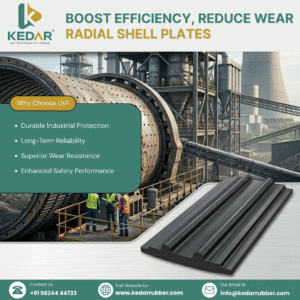
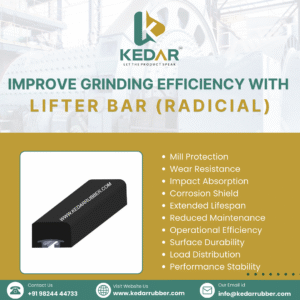
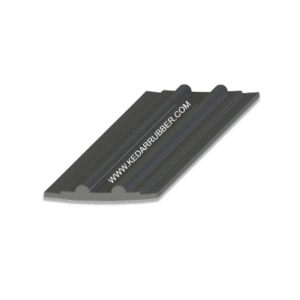
A Radial Shell Plate is a specifically engineered, wear-resistant panel intended to line the inner surfaces of ball mills, rotating drums, and other high-capacity processing machinery. Made from top-tier rubber, ceramic, or composite materials, these plates absorb shock, lessen grinding wear, and extend the functional lifetime of industrial gear.
Seasoned plant engineers frequently observe that radial shell plates not only shield the equipment but also enhance process efficiency by maintaining steady material flow and minimising production disruptions. Unlike common linings, these panels are shaped to precisely match the equipment’s contours and operational demands, delivering tangible protection over theoretical performance assurances.
Applications Across Diverse Sectors
Radial Shell Plates find widespread use in numerous industrial areas:
- Mining: Safeguarding ball mills and crushers processing ores like iron, bauxite, and coal. Results in less frequent liner replacement and improved material throughput.
- Cement: Lining rotary kilns, grinding mills, and material transfer lines to resist abrasive kiln clinker and raw ingredients.
- Metal & Steel: Protecting grinding and forming machinery from metal residue, surface scale, and heavy impacts.
- Ceramic: Shielding grinding mills and pulverisers handling complex ceramic feedstocks.
- Power Generation: Minimising wear in systems that handle fly ash and coal pulverisers.
- Bulk Material Movement: Transport lines, chutes, and storage bins benefit from increased wear resistance and reduced material loss.
In demanding industrial settings, deploying Radial Shell Plates ensures operational continuity and reduces the frequency of maintenance involvement.
Material Science & Engineering Aspects
Creating effective radial shell plates hinges on understanding how materials behave under industrial stresses:
- Rubber Characteristics: Premium industrial rubber provides superb shock absorption, flexibility, and rebound. Rubber backing reduces the transfer of mechanical strain to the underlying structure, helping prevent stress fractures and metal fatigue.
- Ceramic Density: Ceramic inserts offer outstanding toughness and abrasion resistance. In severely wearing areas, ceramic-enhanced radial shell plates increase service life where rubber alone might be inadequate.
- Wear Resistance Principles: Deterioration stems from a mix of rubbing, particle impact, and chemical exposure. Engineers select materials with ideal Shore hardness, elasticity, and fracture toughness to balance defence against grinding and effects.
- Impact Buffering: Composite rubber-ceramic liners combine the cushioning of rubber with the rigidity of ceramics, offering both shock damping and abrasion defence protection—perfect for heavy-duty grinding mills and transport lines.
Design & Customisation Requirements
Knowledgeable manufacturers realise that no two industrial setups are the same. Key design factors include:
- Machine Fit: Radial shell plates must align with the mill or drum’s specific dimensions to avoid misalignment and uneven wear distribution.
- Bespoke Sizing: Industrial facilities often need unique shapes to suit the mill’s diameter, length, and rotational velocity.
- Application-Specific Layout: Areas prone to high impact, particle flow paths, and load distribution are assessed to optimise plate thickness, material choice, and tile arrangement.
Customisation guarantees that the radial shell plates deliver maximum operational advantage without compromising machine integrity.
Manufacturing Quality & Process Control
Producing high-calibre radial shell plates demands precise fabrication:
- Accurate Fabrication: CNC cutting, forming, and casting ensure precise measurements for a proper fit and performance.
- Quality Vetting: Every batch undergoes hardness checks, impact-resistance testing, and visual inspection for defects.
- Batch Uniformity: Standardised production methods ensure consistent performance in industrial settings, minimising unexpected failures.
Manufacturers with deep industry background know that consistent quality is vital for plant reliability and client confidence.
Fitting & Servicing Guidelines
Installation of radial shell plates should be simple to minimise operational halts:
- Simple Mounting: Modular designs allow quick replacement without extensive disassembly.
- Reduced Outage Time: Correctly fitted plates limit work interruptions.
- Service Intervals: Plates can be checked during planned maintenance windows, avoiding emergency shutdowns and ensuring safe practices.
Seasoned plant engineers often note that a straightforward setup, coupled with predictable wear patterns, enhances overall operational effectiveness.
Safety & Operational Dependability
Protecting workers and machinery are primary concerns in industrial settings:
- Personnel Safety: Correctly mounted radial shell plates reduce the risk of material release or equipment failure that could lead to accidents.
- Asset Protection: Impact- and abrasion-resistant liners extend the working life of essential machinery.
- Facility Reliability: Predictable equipment function reduces unplanned downtime, supporting continuous output.
In mining and metal processing operations, dependable wear protection is directly linked to overall site safety and productivity.
Cost Effectiveness Over the Asset’s Lifespan
Although the initial outlay for radial shell plates may be notable, the long-term operational benefits are considerable:
- Sustained Savings: Less frequent liner replacements and equipment maintenance lower operating expenses.
- Fewer Stoppages: Minimising unexpected breaks helps maintain production quotas.
- Maintenance Streamlining: An extended service life allows for better scheduling of servicing, reducing labour and material expenditures.
Manufacturers with industrial specialisation often emphasise lifecycle value over the initial material cost.
Export Readiness & Worldwide Acceptance
India’s wear defence merchandise is increasingly sent to global mining and metal processing centres, necessitating adherence to international benchmarks:
- Export Benchmarks: Materials must satisfy ISO, ASTM, and EN criteria for wear resistance and safety.
- Documentation Acumen: Proper technical specifications, material certifications, and test records are crucial for global approval.
- Global Buyer Needs: Original Equipment Manufacturers (OEMs) and Engineering, Procurement, and Construction (EPC) contractors require uniform quality and verifiable production history.
Kedar Rubber Products adheres to global manufacturing and documentation standards to ensure international reliability.
Why Manufacturer Experience Counts?
Opting for an experienced producer influences both machine performance and workplace safety:
- Engineering Prowess: Thorough understanding of wear dynamics and material composition ensures optimal product selection.
- Domain Knowledge: Grasping sector-specific hurdles, such as abrasive mining compounds or ceramic rigidity, enables practical remedies.
- Reliable Provision: Consistent production timelines and quality assurance reduce operational risk for facilities.
Producers with a long history in heavy-duty industrial settings offer both product assurance and process certainty.
About Kedar Rubber Products
Kedar Rubber Products Pvt. Ltd. has been a relied-upon fabricator of industrial wear solutions across India and in international marketplaces. With expertise in ball mill rubber linings, ceramic wear-resistant inserts, rubber sheeting systems, and conveyance solutions, the firm supports mining areas in Jharkhand, Odisha, and Chhattisgarh, steel mills in Maharashtra, cement facilities in Rajasthan and Gujarat, ceramic plants in West Bengal and Tamil Nadu, and other bulk material handling enterprises.
Kedar Rubber Products combines precision manufacturing, material science expertise, and industrial experience to deliver reliable solutions for plant engineers, maintenance teams, and procurement managers. Learn more about their solutions at 👉 https://www.kedarrubber.com/.
Conclusion:
In heavy-duty industrial environments, Radial Shell Plates play a pivotal role in extending machinery life, reducing maintenance, and enhancing operational reliability. By protecting ball mills, conveyors, and rotary equipment from abrasion, impact, and corrosion, these solutions support efficient plant operations across mining, metal, cement, ceramic, and bulk material handling industries.
For industrial professionals aiming to enhance plant efficiency and operational safety, adopting tailored radial shell plates is a technically sound and practical approach.
Key Takeaways
- Wear protection benefits reduce abrasion and impact-related damage
- Enhances operational reliability and minimises downtime
- Suitable across mining, cement, metal, ceramic, and bulk handling industries
- Optimised for long-term performance and lifecycle efficiency
- Globally relevant for industrial operations with export-ready quality
FAQs
1. What is the typical lifespan of a radial shell plate?
- Depends on the material, impact load, and operating conditions. High-grade rubber-ceramic hybrids can last multiple years under heavy-duty usage.
2. Can radial shell plates be used for all types of ball mills?
- Yes, when customised to fit mill diameter, length, and operational load patterns.
3. How often should radial shell plates be inspected or maintained?
- Routine inspections are recommended during scheduled maintenance cycles, typically every 6–12 months, depending on operational intensity.
4. Rubber vs. ceramic wear solutions – which is better?
- Rubber provides impact absorption and noise reduction, while ceramic offers high abrasion resistance. Hybrid solutions often combine the benefits of both.
#BallMillRubberLiner #CeramicWearProtection #RubberLining #MiningSolutions #BulkMaterialHandling #ConveyorSolutions #kedarrubberproduct #WearProtection #IndustrialManufacturing