

Kedar Rubber Products: Boosting Wear Defense with Impact-Resistant Rubber Liner in Morbi
In demanding industrial settings, how long equipment lasts hinges not just on its build specifications but also on how well its vital surfaces withstand constant rubbing, repeated impacts, chemical exposure, and varying operational stresses. Operations in mining, metal and steel fabrication, cement production in Morbi, and facilities that move large volumes of material all face similar issues—faster material degradation, unexpected stoppages, and increasing maintenance costs. In these environments, Impact Resistant Rubber Liner in Morbi serves a practical function in safeguarding equipment faces and maintaining steady plant output.
Across global industrial markets, there’s a movement toward tougher, impact-damping wear protection systems that prolong equipment lifespan without compromising operational safety or process efficiency. This trend is especially notable in mining centers, ceramic areas, and metal processing zones where machinery endures constant mechanical stress.
Against this backdrop, the Impact Resistant Rubber Liner has emerged as a key industrial remedy. It tackles not just surface wear but also the broader challenge of shielding core equipment while maintaining plant availability and dependable maintenance schedules.
Industrial Hurdles Driving Demand for Impact-Resistant Rubber Liner
Seasoned plant supervisors often notice that most equipment failures stem not from sudden, massive overloads, but from gradual material breakdown. Key issues include:
- Friction: Constant sliding of ore, processed stone, minerals, or bulk goods wears away metal surfaces.
- Impact Forces: Heavy particle drops in grinders, slides, and bins generate repetitive stress waves.
- Chemical Attack: Moisture, wet mixtures, chemicals, and changing acidity levels speed up surface decay.
- Unscheduled Outages: Liner failures frequently result in unplanned shutdowns.
- Soaring Maintenance Bills: Frequent swaps of metal linings drive up labor and spare part stock expenses.
These difficulties are typical across mining belts in Odisha and Chhattisgarh, cement works in Rajasthan and Andhra Pradesh, ceramic hubs in Gujarat, and steel mills throughout eastern and southern India, as well as in comparable settings worldwide.
What is an Impact Resistant Rubber Liner?
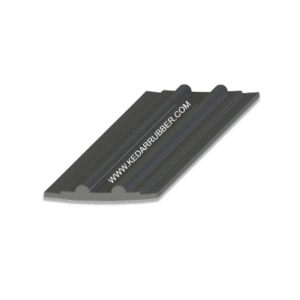
An Impact Resistant Rubber Liner is a protective covering system made from specially developed flexible material blends designed to absorb energy, resist abrasion, and shield the machinery surfaces beneath.
Unlike metal linings, which rely solely on toughness, rubber linings function through controlled flexing. When an impact occurs, the rubber absorbs and distributes the energy, reducing stress on equipment casings, frameworks, and structural elements.
In industrial terms, the lining acts as:
- A shield against wear
- A shock diffuser
- A means to mute sound and vibration
It isn’t a one-size-fits-all solution for every wear situation, but in uses involving both rubbing and striking, rubber linings are frequently the technically sound choice.
Uses Across Sectors
Mining Activities
In mineral extraction and refinement, Impact Resistant Rubber Liners are broadly employed in:
- Grinding mills
- Slides and transition zones
- Feed boxes
- Wet material transport lines
They help manage high-energy ore strikes while minimizing liner shattering.
Cement Factories
In cement creation, linings are put on:
- Material grinding units
- Coal mills
- Transfer chutes
Rubber lining reduces noise, protects steel shells, and allows longer service intervals.
Metal & Steel Works
Steel facilities utilize rubber linings in:
- Ore moving systems
- Sifting gear
- Slurry piping
They offer both corrosion resistance and impact protection.
Ceramic Production
Ceramic complexes dealing with quartz, feldspar, and other hard materials benefit from rubber linings in:
- Crushing mills
- Material holding containers
- Controlled wear behavior promotes steadier processing.
Energy Plants & Mass Material Handling
Systems for moving coal, ash disposal units, conveyor belts, and storage silos depend on rubber linings to reduce spills, impact damage, and belt deterioration.
Material Science & Engineering Factors
Producers with extensive industry background know that a liner’s effectiveness relies heavily on its compound makeup and how it’s engineered for the specific job.
Key material aspects include:
- Elasticity Rating: Dictates the capacity to absorb shock.
- Tear Tolerance: Resists crack propagation under repeated stress.
- Rub Resistance: Balanced firmness prevents rapid wearing down.
- Adhesion Qualities: Guarantees the lining sticks firmly to the metal structure.
- Optional Ceramic Inclusion: In areas of intense rubbing, ceramic-rubber mixes are used to blend hardness with impact cushioning.
Wear defense is achieved not just by being hard, but by spreading out energy and offering a flexible reaction, where rubber excels.
Design & Tailoring Needs
Industrial machinery rarely conforms to a single standard. Effective rubber lining setups demand:
- Shapes unique to the equipment
- Selection of appropriate thickness
- Designs that bolt on or are adhesively fixed
- Consideration of force paths and impact spots
An incorrect lining shape can cause uneven wear or material buildup, underscoring the need for engineering-guided customization.
Manufacturing Excellence & Process Oversight
Precise production is vital for liner trustworthiness. Manufacturers focused on quality employees:
- Regulated rubber mixing
- Pressing or pouring mold techniques
- Size verification checks
- Tracking of each production run
- Physical testing for wear and pulling strength
Uniformity across manufacturing lots assures expected performance once linings are installed in active plants.
Fitting & Upkeep Notes
From a service viewpoint, rubber linings provide several operational upsides:
- Quicker setup time due to modular construction
- Less handling hazard compared to heavy metal linings
- Predictable wear patterns
- Simpler checking during downtime
Correct fitting tension, bonding techniques, and alignment remain crucial to achieving the anticipated operational lifespan.
Safety & Operational Dependability
Operator well-being is directly tied to equipment fitness. Highly durable rubber linings contribute to:
- Reduced sound and tremor
- Decreased likelihood of lining disintegration
- Enhanced structural safeguarding of machinery
- Safer servicing procedures
In demanding high-energy industrial settings, these aspects significantly impact operational trustworthiness.
Economic Advantage Across Equipment Lifespan
Instead of concentrating on initial material outlay, facility supervisors assess linings based on overall life-cycle performance. Rubber linings promote:
- Prolonged service life for equipment casings
- Less frequent requirement for operational halts
- Reduced exposure of maintenance personnel to hazards
- Optimized inventory control for spares
Over extended periods of use, these elements result in demonstrable financial savings.
Export Readiness & Worldwide Acceptance
International industrial purchasers anticipate suppliers to demonstrate:
- Uniform material characteristics
- Detailed installation documentation
- Verification of manufacturing quality
- Knowledge of global operating settings
Impact-resistant rubber coverings enjoy broad endorsement throughout the mineral extraction and processing sectors due to their proven functional dependability across varied locales.
The Importance of Seasoned Manufacturers
Manufacturers driven by engineering principles bring value through:
- In-depth application understanding
- Proficiency in material selection
- Comprehensive process comprehension
- Dependable consistency in supply
In the field of industrial wear mitigation, firsthand experience directly affects product suitability and sustained functionality.
About KEDAR RUBBER PRODUCTS PVT LTD
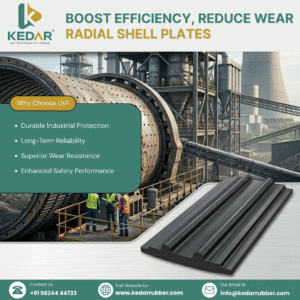
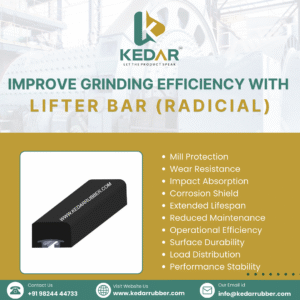
KEDAR RUBBER PRODUCTS PVT LTD is an established industrial producer specializing in rubber linings for ball mills, ceramic wear defenses, rubber lining frameworks, ball mill rubber goods, and conveyance systems. Supporting industrial clients throughout India—spanning regions like Gujarat (Ahmedabad, Morbi, Surat), Maharashtra (Mumbai, Pune), Rajasthan (Jaipur, Kota), Odisha (Keonjhar), Chhattisgarh (Raipur), Jharkhand (Jamshedpur), Karnataka (Bellary), Tamil Nadu (Coimbatore), Andhra Pradesh (Visakhapatnam), Telangana (Hyderabad), West Bengal (Durgapur), Madhya Pradesh (Indore), Uttar Pradesh (Noida), Haryana (Faridabad), Punjab (Ludhiana), Bihar (Patna), Assam (Guwahati), Kerala (Kochi), Goa, Himachal Pradesh, Uttarakhand, Jammu & Kashmir, Ladakh, Delhi, Chandigarh, Dadra & Nagar Haveli and Daman & Diu, Andaman & Nicobar Islands, Lakshadweep, and Puducherry—the firm provides application-oriented solutions to numerous industrial segments.
Further specifics are accessible at 👉 https://www.kedarrubber.com/
Summary
Robust rubber linings are essential for boosting equipment dependability across the mining, cement, metalwork, ceramic, and bulk material handling sectors. By mitigating both surface wear and physical shock simultaneously, they facilitate safer work practices, more predictable maintenance schedules, and sustained facility efficiency. When correctly designed and installed, these linings become a cornerstone of sustainable industrial output.
Core Insights
- Effective wear defense enhances facility dependability.
- Rubber linings absorb impacts and resist material abrasion
- Suitable for a range of heavy-duty industries
- Promotes long-term operational performance
- A widely accepted solution for industrial wear challenges
Frequently Asked Questions
Q1. Generally, how long do impact-resistant rubber liners last?
The operational duration relies on material movement, force of impact, and how they are used.
Q2. Can rubber linings withstand high-heat environments?
They function well up to specific temperature thresholds determined by the chosen rubber mix.
Q3. How frequently do these rubber linings need upkeep?
Checks are scheduled to coincide with planned maintenance downtimes.
Q4. When deciding between rubber and ceramic wear protection, what is the guide?
Rubber performs best where impacts are the main concern; ceramics are better for areas facing severe rubbing wear.
Q5. Are these liners commonly utilized in mining sites around the world?
Indeed, they are widely used across various mining and mineral processing settings.
#ImpactResistantRubberLiner #RubberLinerSolutions #WearResistantRubber #IndustrialRubberLining #BallMillRubberLiner #CeramicWearProtection #MiningWearSolutions #IndustrialWearProtection #RubberLiningSystems #KedarRubberProducts