
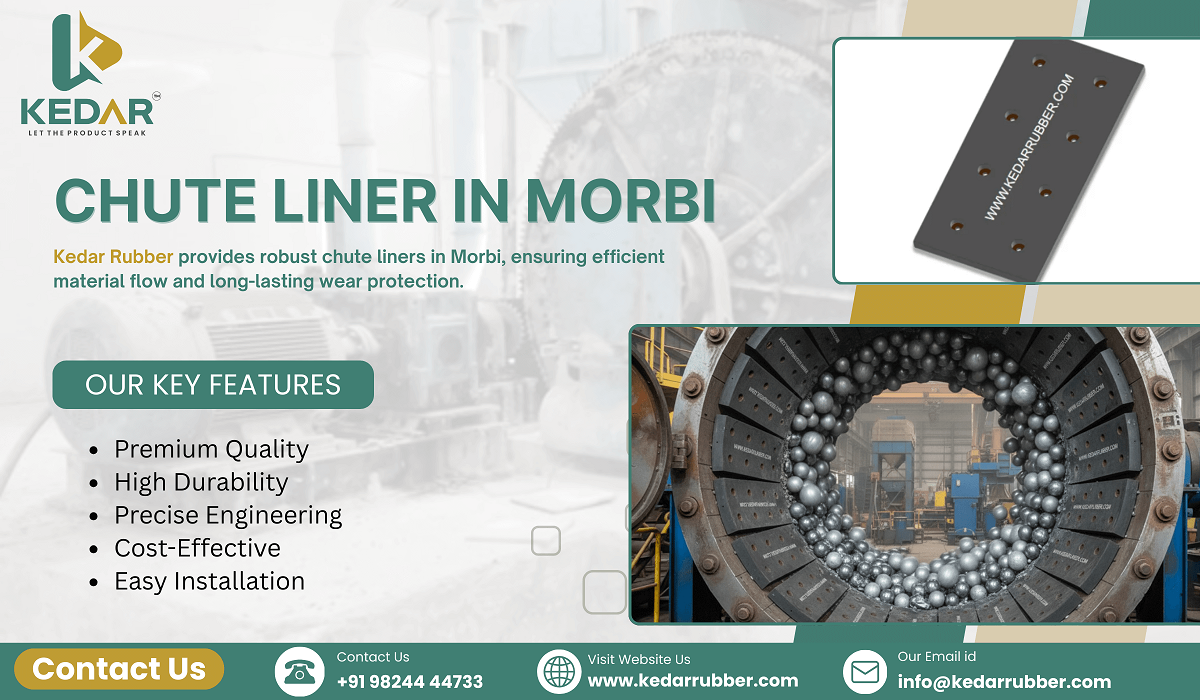
Chute Liner in Morbi: A Critical Wear Protection Solution for Modern Industrial Operations
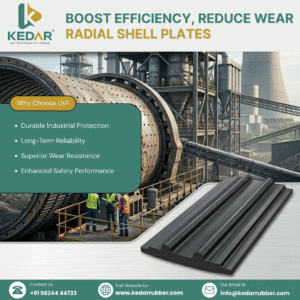
In demanding industrial settings, moving materials is often the roughest and least forgiving part of plant operations. Mining firms, metal and steel operations, cement factories, ceramic makers in Morbi, and bulk-handling sites constantly handle sharp, abrasive, and high-force materials using slides, bins, and transfer points. Chute Liners in Morbi are vital for safeguarding these high-wear zones, reducing structural damage, promoting smoother material flow, minimising unexpected stoppages, and ensuring reliable, safe operations in ceramic and mineral processing facilities.
These areas are subject to constant wear from sliding friction, impact from free-falling contents, moisture exposure, and chemical attack. When wear protection is lacking, equipment deterioration speeds up, material movement becomes irregular, and unplanned outages increase. For facility engineers and maintenance personnel, this directly results in greater operational hazards and reduced plant reliability.
Worldwide, sectors are transitioning their focus from fixing things after they break to protecting equipment based on its expected lifespan. As output volumes rise in mining centres, ceramic clusters, cement corridors, and metal processing territories, the need for robust, engineered wear solutions has grown significantly.
In this context, Chute Liner systems have emerged as a key industrial remedy. Created to shield material transfer points from wear and impact, chute liners directly contribute to extending equipment life, maintaining flow efficiency, and supporting safe, predictable plant operations.
Industrial Hurdles Driving the Need for Chute Liners
Across global industrial settings, the operational difficulties show remarkable uniformity.
- Abrasion: Bulk materials such as iron ore, coal, limestone, clinker, bauxite, and ceramic feedstocks cause continuous surface wear. Over time, exposed steel surfaces become thinner, warp, or fail.
- Impact Forces: Material drop distances and uneven feeding conditions generate repeated impacts, increasing energy. Slides without correct lining crack, dent, or give way too soon.
- Corrosion and Dampness: Wet materials, cleaning routines, and harmful byproducts hasten metal breakdown, particularly in seaside, damp, or chemically harsh settings.
- Outages and Repair Expenses: Frequent liner swaps, weld fixes, and structural strengthening lead to output losses and increased labour needs.
In mining and metal processing endeavours, even a brief halt at a transfer spot can interrupt the entire material transport sequence. These realities have made engineered chute liners a requirement rather than an optional enhancement.
What is a Chute Liner?
A Chute Liner is a protective covering system fitted onto the inner surfaces of slides, hoppers, containers, and transfer points where bulk material moves.
Its primary purpose is to:
- Shield the underlying structure from wear and impact
- Keep material flow steady
- Lower sound, dust, and shaking
- Lengthen the service life of handling gear
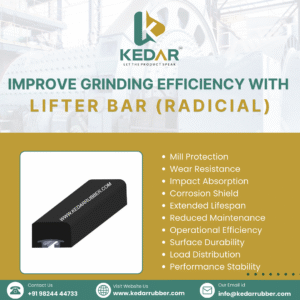
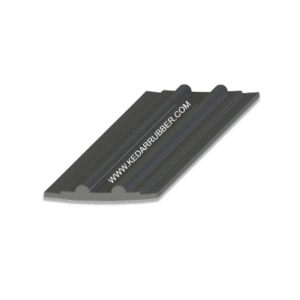
Chute liners are typically made from rubber, ceramic, or a combination of materials, chosen based on material traits and operating circumstances. Unlike the structural steel itself, liner systems are designed to be used up—they absorb the wear so the leading equipment stays sound.
Uses Across Sectors
- Mining Sector: Chute liners protect ore transfer spots, crusher output slides, and screen feed zones where impact and friction are severe.
- Cement Facilities: Used in clinker chutes, raw material transfer points, and coal handling setups to manage abrasive flow and heat shifts.
- Metal & Steel Plants: Installed in sinter plants, coke handling systems, and slag transfer chutes to endure high heat and aggressive material characteristics.
- Ceramic Production: Handling sharp, angular ceramic raw materials requires liner systems to avoid rapid wear and material tainting.
- Power Plants: Coal-handling slides rely on liner systems to manage erosion, reduce dust generation, and maintain consistent feed rates.
- Bulk Material Handling Sites: Ports, storage areas, and processing plants depend on chute liners to manage various materials under changing flow conditions.
Material Science & Engineering Factors
Experienced facility engineers often note that liner performance depends more on material selection than on thickness alone.
- Rubber Characteristics: Industrial rubber provides excellent impact cushioning, noise dampening, and resistance to sliding friction. Its flexibility helps disperse energy from falling items.
- Ceramic Durability: Ceramic components offer superior wear resistance, especially against fine, fast-moving particles. Their toughness significantly slows surface deterioration.
- Wear Resistance Concepts: Abrasion happens via cutting, gouging, and surface fatigue. Effective liners blend hardness and flexibility to combat multiple wear types simultaneously.
- Impact Management: Pure hardness without flexibility often results in fracturing. Composite liner designs balance ceramic wear defence with a rubber base for impact control.
Design & Customisation Needs
No two slides operate under the same conditions. Effective liner systems must account for:
- Slide shape and inner contours
- Drop height and material speed
- Particle size makeup
- Dampness level and tendency to stick
- Maintenance access and replacement strategy
Tailored dimensions, modular configurations, and use-case-specific attachment methods guarantee fit with existing gear and ease future upkeep.
Manufacturing Quality & Process Oversight
Producers with extensive industry backgrounds realise that liner failure often stems from inconsistent manufacturing practices.
Quality-focused production involves:
- Managed selection of raw materials
- Precise moulding and bonding methods
- Checks for dimensional accuracy
- Consistency testing for each batch
Process rigour ensures that liner performance remains predictable across multiple installations and operating cycles.
Installation & Maintenance Factors
- Chute liners must be designed for practical plant realities.
- Easy setup shortens downtime.
- Modular liners allow for the replacement of only worn sections
- Secure fixing prevents liner shifting under load
Well-conceived systems minimise the need for hot work, reduce time spent in enclosed spaces, and support safer maintenance routines.
Safety & Operational Dependability
Unlined or degraded slides pose serious safety hazards, including structural failure, material spills, and dust release.
Appropriate liner systems:
- Safeguard structural soundness
- Lessen the frequency of maintenance tasks
- Promote stable material throughput
Improved dependability directly translates to safer work environments and more predictable plant output.
Lifecycle Cost Savings
Although chute linings require an upfront outlay, their true worth emerges across the equipment’s operational lifespan.
Advantages include:
- Extended lifespan for chutes and hoppers
- Minimising unexpected downtime
- Lower expenses for repairs and fabrication
- More effective maintenance scheduling
A lifecycle perspective consistently shows that expert wear mitigation reduces overall operating costs without sacrificing output.
Global Export Standards
Industrial procurers in worldwide markets anticipate:
- Uniform quality benchmarks
- Necessary technical documentation
- Accountability and clear procedural insights
Producers ready for export harmonise their offerings with international norms while tailoring designs to specific regional operating environments.
The Value of Seasoned Producers
The actual performance of a chute liner is proven in its field use, not just in marketing materials.
Manufacturers with experience provide:
- Broad knowledge across various sectors
- Insight into genuine failure scenarios
- Dependable supply and backing for technical queries
This expertise directly impacts a facility’s long-term success.
About KEDAR RUBBER PRODUCTS PVT LTD
KEDAR RUBBER PRODUCTS PVT LTD is an established industrial manufacturer specialising in wear defence solutions for the mining, cement, metal, ceramic, power, and bulk material handling sectors.
Serving all of India across states and cities, the firm aids industrial endeavours with engineered rubber linings, ceramic wear systems, conveyor solutions, and bespoke lining configurations suited for real-world usage.
Further information is accessible at 👉 https://www.kedarrubber.com/
Summary
Chute linings serve a vital function in safeguarding machinery, maintaining stable material movement, and supporting safe, efficient plant operations. In challenging industrial settings, their contribution extends beyond just resisting wear to ensuring overall operational dependability.
Selecting the correct lining system—one engineered, produced, and fitted with technical precision—helps facilities maintain steady functionality over long service intervals.
Essential Points
- Chute linings guard vital material transfer points
- Effective wear defence boosts plant dependability
- Rubber and ceramic materials address distinct wear challenges
- Correct engineering lowers the need for maintenance
- Sustained performance supports long-term cost effectiveness
- These solutions are relevant across numerous industrial fields globally
Frequently Asked Questions
Q1. What is a typical service life for a chute liner?
Service duration depends on the material used, the flow rate, the impact force, and the maintenance methods, rather than on fixed timelines.
Q2. Are chute liners suitable for areas with heavy impact?
Yes, provided they are engineered with suitable rubber thickness and built-in cushioning for impacts.
Q3. How frequently do chute liners need attention?
Periodic inspection schedules vary by specific use case, but expertly designed linings decrease the need for intervention.
Q4. Which should I choose: rubber or ceramic chute liners?
Rubber is best for zones subjected to high impacts, whereas ceramic performs exceptionally well where abrasion is high but impact forces are low.
Q5. Are chute liners utilised worldwide across industries?
Yes, they are standard provisions for wear protection in mining, cement, power, and bulk-handling operations worldwide.
#ChuteLiner #BallMillRubberLiner #CeramicWearProtection #RubberLiningSystems #BallMillRubberProducts #ConveyorSolutions #WearProtectionSolutions #BulkMaterialHandling #MiningEquipment #IndustrialWearSolutions