
Kedar Rubber Products Pvt Ltd: Supplies High-Quality Manhole Covers in Morbi Sector
In demanding industrial settings such as mining, metalworking, cement production, and bulk-material handling, keeping machinery reliable and operating efficiently is crucial. Plant supervisors and upkeep crews in Morbi frequently struggle with wear from rubbing, impacts from heavy loads, rust, and sudden breakdowns, making robust Manhole Covers in Morbi a necessity. These problems negatively affect output and lead to substantial maintenance costs throughout a machine’s service life.
Globally, the need for tough wear-resistant solutions is growing. Central mining locations in Rajasthan, Chhattisgarh, and Odisha, ceramic centers in Gujarat and West Bengal, and steel mills in Jharkhand and Maharashtra are actively seeking durable parts that can withstand harsh working conditions. A key solution of this type is the Manhole Cover, engineered to enhance safety, operational consistency, and wear resistance in industrial settings.
Industrial Issues Fueling Manhole Cover Demand
Abrasion
Operations in mining, cement production, and bulk material handling subject manhole covers to continuous rubbing against abrasive substances. Materials like coal, limestone, ore, and ceramic feedstocks can quickly degrade inadequately shielded surfaces. Seasoned plant engineers often note that repeated rubbing causes covers to fail earlier than expected, resulting in unexpected shutdowns and costly repairs.
Impact Loads
Heavy machinery often deals with large, irregularly shaped, dense items. In mining and metal fabrication, falling or shifting materials can pound manhole covers with intense force. Without appropriate design and material choice, covers might crack or warp, jeopardizing both safety and continuous operation.
Corrosion
In cement factories and chemical processing plants, exposure to dampness, chemical residues, and hot conditions accelerates rusting. Producers with extensive sector history recognize that corrosion not only shortens the lifespan of manhole covers but also creates risks of contamination and safety issues for site staff.
Downtime and Repair Expenses
Unplanned maintenance or equipment malfunctions directly affect production goals. Facility managers favour solutions that minimize downtime while maintaining predictable maintenance schedules. A sturdy Manhole Cover reduces the need for interventions, helping industrial sites maintain seamless operation.
Defining the Industrial Manhole Cover
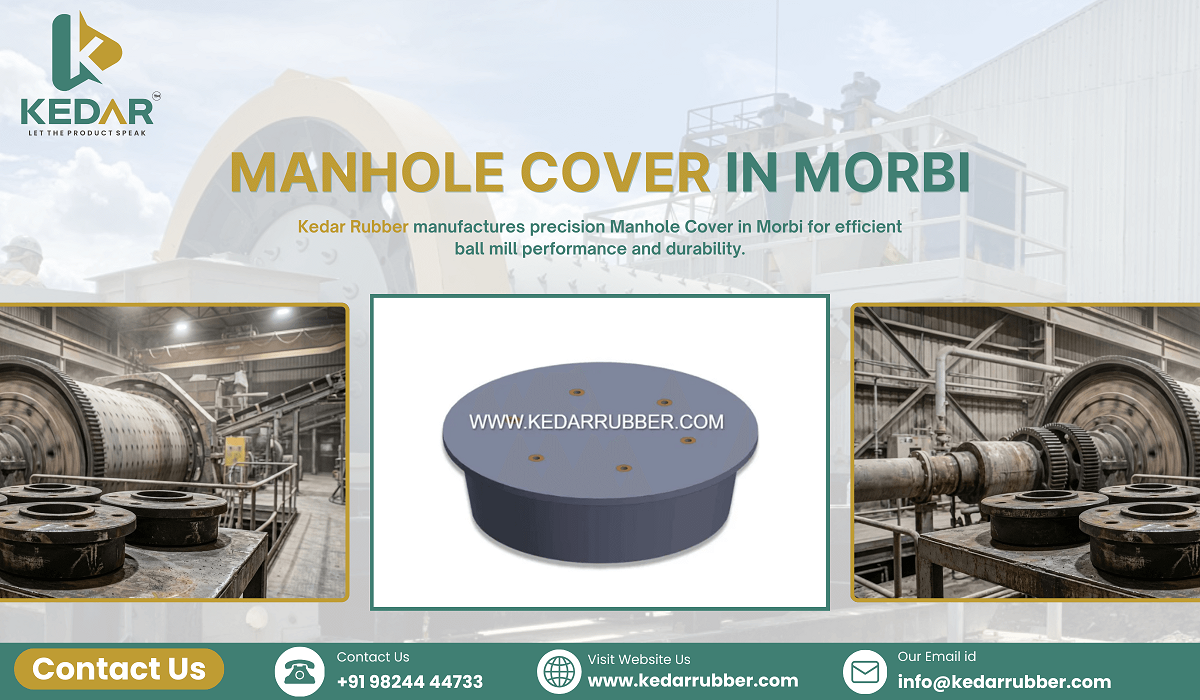
An industrial Manhole Cover is a resilient access point that enables inspection, servicing, or repair of vats, silos, hoppers, conveyors, and other enclosed apparatus. Unlike residential covers, industrial versions must withstand heavy rubbing, impact, and corrosion while supporting operational loads.
The makeup and materials chosen for these covers are determined by the setting where they are used. In harsh industrial environments, rubber layers, reinforced polymers, or ceramic inserts are often incorporated to enhance wear resistance and durability.
Uses Across Different Sectors
Mining
Manhole covers at mining sites provide access to crushers, ball mills, and ore-handling equipment. They withstand abrasive ores and heavy mechanical strain, ensuring safe and efficient inspection windows.
Cement Facilities
Cement creation involves high-heat kilns, pulverizers, and material transport systems. Rubber-backed or ceramic-strengthened manhole covers guard against abrasive clinker and dust, ensuring plant reliability.
Metal & Steel
Steel and non-ferrous metal plants require covers resistant to impact from hot metal splashes, slag, and fine abrasive particles. Manhole covers with high wear tolerance reduce upkeep frequency and enhance operational safety.
Ceramic Production
In facilities that make ceramic tiles and fixtures, material-handling and grinding machinery expose workers to fine, abrasive ceramic dust. Ceramic shielding or rubber liners are employed to lengthen service life while reducing contamination hazards.
Power Generation & Bulk Material Movement
Coal-fired power plants, ash-cleanup systems, and bulk-material conveyors use manhole covers for access to hoppers, silos, and conveyors—tough, impact-resistant covers help keep operations running without interruption and reduce the risk of material spills.
Material Science & Engineering Factors
Rubber Characteristics
Rubber linings provide flexibility, shock absorption, and abrasion resistance. Traits like Shore hardness, tensile strength, and stretch determine their suitability for various industrial tasks. In mining and metal fabrication, rubber helps lessen noise, vibration, and equipment deterioration.
Ceramic Toughness
Ceramic elements or layered composites offer extreme hardness, chemical immunity, and heat tolerance. Expert plant engineers often observe that ceramic-reinforced manhole covers perform best in areas with high friction and chemical exposure.
Wear Resistance Principles
A mix of surface hardness and flexibility ensures long life. Hard materials fend off surface wear, while pliable materials absorb shocks, preventing breaks and warping. Engineers weigh the working environment—the type of abrasive, particle size, and impact speed—when picking material combinations.
Impact Dissipation
Industrial tasks subject manhole covers to repeated blows. Rubber and composite materials help spread out energy, reducing strain on underlying equipment. Well-designed covers reduce the risk of material fatigue and prolong service life.
Design & Customization Needs
Equipment Fit
Manhole covers must match the size, attachment methods, and load-bearing needs of the equipment. Uniformity eases replacement, while tailoring allows for unique plant layouts.
Specific Sizing
Industries often need non-standard dimensions for their hoppers, silos, or conveyors. Manufacturers with deep industry knowledge understand the importance of precise sizing to prevent leaks, material escape, or fitting problems.
Design Based on Use
Factors such as operating heat, chemical contact, and material type influence design choices. Custom reinforcement, gasket selection, and sealing systems improve safety, resilience, and operational dependability.
Manufacturing Excellence & Process Oversight
Precise Production
Uniform thickness, accurate dimensions, and a quality surface finish are vital for effective wear defence. Modern moulding, casting, or machining methods ensure that every cover meets strict industry standards.
Quality Checks
Checks on batches, hardness assessments, and dimension verification reduce the chance of failure. Manufacturers skilled in rubber lining systems and ceramic wear protection know that slight variations can endanger operational safety.
Uniformity Across Batches
For industrial sites running multiple lines or locations across India—in cities like Delhi, Mumbai, Kolkata, Chennai, Bengaluru, Ahmedabad, Pune, and beyond—consistent quality ensures predictable performance and more straightforward upkeep.
Fitting & Upkeep Notes
Simple Installation
Manhole covers ought to be easy to install, needing minimal plant stoppage. Design factors include bolt layouts, lifting points, and sealing setups, allowing swift access for maintenance teams.
Reduced Time Off
Pre-made covers that fit ideally minimize lost time during setup and checks. Seasoned plant engineers often suggest modular designs for faster swapping.
Maintenance Intervals
Durable substances, proper sealing, and shock-resistant designs extend the time between required maintenance. Routine checks and minor fixes can be scheduled without disrupting plant activity.
Safety & Operational Dependability
Worker Protection
In industrial areas, poorly made or weakened covers present risks. Impact-resistant and well-sealed manhole covers shield personnel from dust, chemical exposure, and accidental contact with machinery.
Equipment Safeguarding
By resisting corrosion, abrasion, and mechanical stress, high-quality manhole covers protect sensitive machine parts, reducing the need for costly repairs.
Plant Reliability
Dependable manhole covers contribute directly to continuous operations, foreseeable maintenance schedules, and efficient material handling, boosting overall site output.
Cost Effectiveness Across the Equipment’s Lifespan
Although the upfront cost of premium coverage might be higher, its resilience guarantees savings down the road. Less downtime, fewer necessary changes, and optimized maintenance schedules offer distinct benefits throughout the equipment’s service life.
Export Readiness & Worldwide Acceptance
Enterprises with global purchasing guidelines anticipate specific documentation, quality certifications, and adherence to international benchmarks. Indian producers supplying key mining centers in Australia, Africa, and the Middle East must meet these expectations to build assurance and trust.
The Importance of Seasoned Manufacturers
Engineering proficiency, extensive sector background, and dependable supply networks are vital. Manufacturers with decades of experience grasp operational issues at the plant level, material behaviour under strain, and industry-specific demands, thereby providing products that truly satisfy industrial needs.
Introducing KEDAR RUBBER PRODUCTS PVT LTD
KEDAR RUBBER PRODUCTS PVT LTD is a premier industrial producer focusing on ball mill rubber linings, ceramic wear defence solutions, rubber lining systems, rubber components for ball mills, and conveying systems. Serving all of India—including major cities like Delhi, Mumbai, Kolkata, Chennai, Bengaluru, Hyderabad, Ahmedabad, Pune, Jaipur, Bhubaneswar, along with industrial zones in Odisha, Chhattisgarh, and Jharkhand—KEDAR RUBBER PRODUCTS PVT LTD offers extensive experience for demanding industrial tasks. Discover more at 👉 https://www.kedarrubber.com/.
Summary
In rigorous industrial settings, the [Manhole Cover] is more than just an access point—it represents a crucial element for maintaining operational dependability, safety, and protection against wear. Selecting the appropriate material, design, and installation minimizes downtime, boosts plant effectiveness, and extends equipment life. Collaborating with skilled manufacturers such as KEDAR RUBBER PRODUCTS PVT LTD assures industrial sites receive robust, top-tier solutions customized for actual operational difficulties.
Main Takeaways
- High-grade manhole covers offer superior resistance to wear.
- Operational dependability is improved via material science and thoughtful design.
- Suitable for deployment in mining, cement, metal, ceramic, power generation, and bulk material handling sectors.
- Sustained performance leads to reduced periods of inactivity and less frequent maintenance.
- Global industrial relevance ensures conformity with international benchmarks.
Current Frequently Asked Questions
Q1: What is the usual service duration for an industrial manhole cover?
A: Contingent upon the substance, working environment, and care routine, rubber-lined covers typically last 5–10 years, whereas ceramic-enhanced covers might endure 8–12 years in high-stress applications.
Q2: Which sectors favour rubber covers over ceramic ones for manholes?
A: Rubber is preferable where shock absorption and moderate abrasion are factors, often seen in mining and bulk conveyance.
Q3: How often should manhole covers undergo inspection?
A: Seasoned plant engineers advise checking each month visually and conducting in-depth reviews during regularly scheduled upkeep windows.
Q4: Can manhole covers be custom-made for unique equipment?
A: Absolutely; bespoke dimensions, reinforcement, and sealing mechanisms allow for perfect fitting with distinctive hoppers, silos, and conveyor systems.
#BallMillRubberLiner #CeramicWearProtection #RubberLining #MiningSolutions #BulkMaterialHandling #ConveyorSolutions #kedarrubberproduct #WearProtection #IndustrialManufacturing