
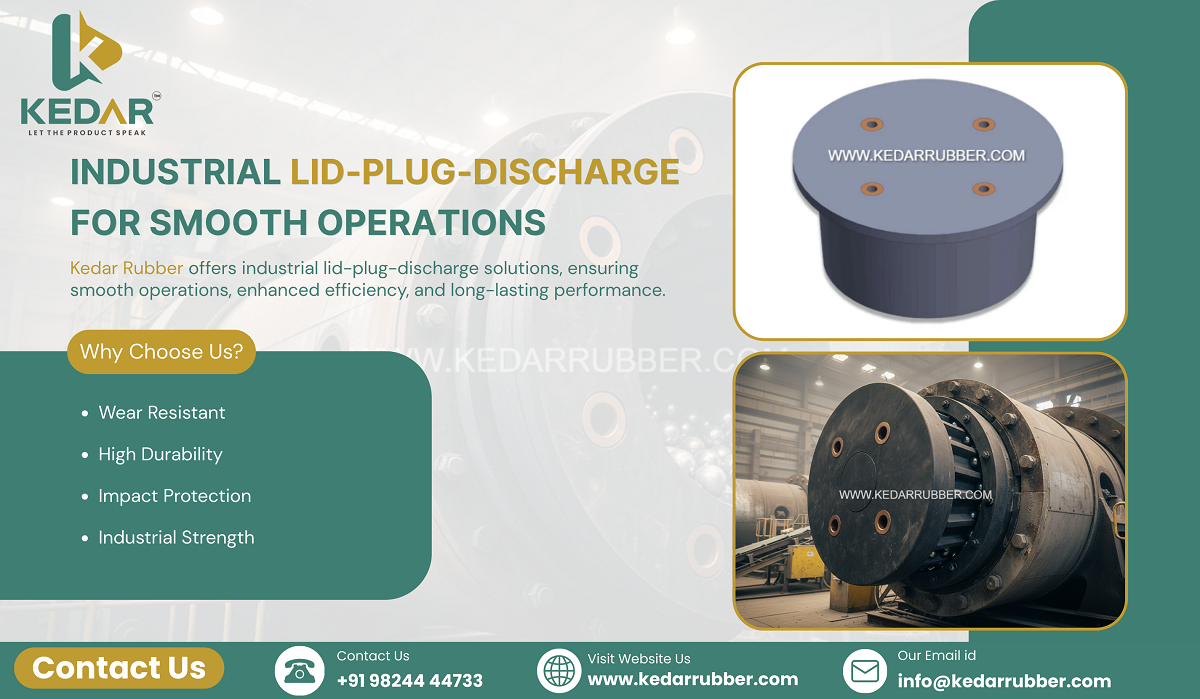
Smooth Industrial Operations with Lid Plug Discharge: Kedar Rubber Products Pvt. Ltd.
In heavy-duty industrial environments, equipment reliability and wear protection are critical factors that directly influence plant efficiency and operational costs. Industrial Lid Plug Discharge for Smooth Operations has become an essential component in maintaining consistent performance across demanding production systems. Industries such as mining, metal processing, cement manufacturing, ceramics production, and bulk material handling constantly face challenges caused by abrasion, heavy impact loads, and corrosive environments. Equipment downtime in these sectors can result in significant production losses and increased maintenance expenses. As global industrial demand continues to grow, companies are increasingly seeking robust solutions that protect machinery while ensuring uninterrupted output.
A notable solution gaining considerable traction in these sectors is the Lid Plug Discharge. Created to tackle issues related to wear and tricky material management, it’s vital for safeguarding machinery, cutting down on service intervals, and boosting overall plant effectiveness.
Industrial Hurdles Prompting Demand for Lid Plug Discharge
Seasoned plant operators frequently note that robust equipment in metal extraction and processing endures severe operational strain. Typical industry difficulties include:
- Abrasion: Constant exposure to harsh ores, cement clinker, or ceramic dust causes surface deterioration in mills and chutes.
- Impact Stress: Rapid material movement can inflict structural harm and localized wear on apparatus like ball mills and conveyors.
- Corrosion: Contact with chemicals, dampness, and industrial liquids accelerates deterioration and compromises material integrity.
- Facility Stoppages: Equipment halts due to liner failures or obstructions diminish output and inflate operational expenditures.
- Servicing Expenses: Frequent part renewal and labor-intensive upkeep disrupt plant schedules and swell operating budgets.
Within the worldwide industrial landscape, particularly in major mining centers in India, South Africa, Australia, and Brazil, these pressures render durable wear defense systems necessary.
What Constitutes Lid Plug Discharge?
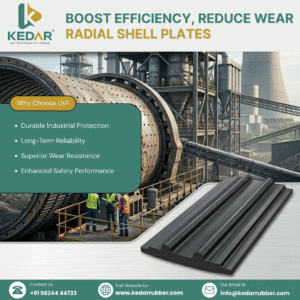
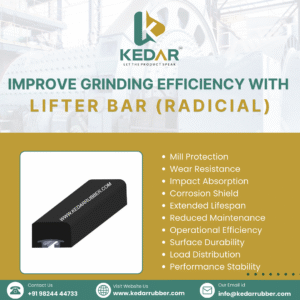
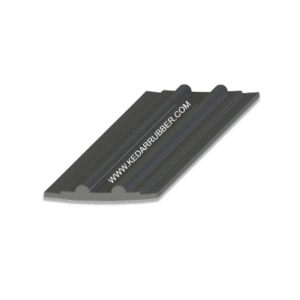
The Lid Plug Discharge is a specifically engineered element intended for heavy-duty mills and material transport gear. Functionally, it acts as a regulated release mechanism, controlling material flow while offering a shield against wear and impact. Built from specialized rubber and ceramic mixes, it guarantees equipment durability by absorbing shocks, minimizing abrasion, and preventing material backup.
Unlike conventional release setups, Lid Plug Discharge systems are developed using industrial-grade substances capable of enduring extended operational periods without impacting plant output.
Sector Applications Across Industries
The adaptability of Lid Plug Discharge spans various industrial domains:
- Mining: Facilitates the effective unloading of ores and minerals from ball mills, SAG mills, and chutes while lessening liner deterioration.
- Cement: Manages clinker movement in cement mills and reduces wear on release gates, bins, and conveyors.
- Metal & Steel: Protects grinding and discharge apparatus handling slag, iron ore, and steel slugs, sustaining continuous operation.
- Ceramics: Ensures smooth passage of abrasive powders and tile raw materials, cutting down on breakage and surface wear.
- Power Plants: Improves coal transport and ash discharge systems by mitigating damage from abrasion and impact.
- Bulk Material Flow: Optimizes transfer points in conveyors, feeders, and hoppers, preventing material buildup and machinery outages.
Across all these uses, the primary goal remains minimizing wear, enhancing material passage, and improving operational safety.
Material Science & Engineering Factors
Manufacturers with extensive sector background recognize that material choice is key to performance. Core engineering considerations include:
- Rubber Attributes: High-strength synthetic rubbers provide suppleness, shock absorption, and resistance to wear and chemical exposure.
- Ceramic Rigidity: Industrial ceramics offer outstanding wear resistance, perfect for zones facing significant abrasion and heat.
- Wear Resistance Concepts: Appropriate selection of rubber or ceramic composites ensures even material erosion and extended component lifespan.
- Shock Damping: Rubber-clad sections lessen strain on structural metal, absorbing impacts from fast-moving materials.
Choosing the right material blend is crucial to match operational settings, material flow characteristics, and the abrasive nature of the handled substances.
Design & Adaptation Needs
In demanding industrial settings, no two facilities operate identically. Experienced plant engineers often observe that design and customization are vital for peak performance:
- Equipment Interface: Lid Plug Discharge must align with existing mill dimensions, bin structures, and conveyor connections.
- Bespoke Sizing: Customized solutions account for material throughput volumes, mill diameter, and required discharge opening dimensions.
- Application-Specific Layout: Based on abrasion levels, impact forces, or chemical exposure, manufacturers adjust material grades, thickness, and structural support.
Manufacturing Excellence & Process Oversight
Quality management is the foundation of dependable wear mitigation solutions. Producers with long-standing sector engagement understand the necessity for accuracy and uniformity:
- Precision Fabrication: CNC machining and specialized molding methods guarantee components meet precise specifications.
- Quality Checks: Visual audits, hardness assessments, and wear simulations validate every production run before shipment.
- Batch Uniformity: Standardized production methods lessen variation and boost dependability in large-scale operations.
Superior manufacturing benchmarks ensure Ball Mill Rubber Liner parts deliver consistent functionality throughout all operational cycles.
Fitting & Servicing Notes
Simplicity of installation and upkeep directly impacts plant productivity. Lid Plug Discharge assemblies are engineered to lessen operational disruptions:
- Effortless Installation: Pre-assembled liners and plug units can be fitted with minimal interruption.
- Reduced Outages: Durable materials extend service intervals, cutting down on unplanned maintenance.
- Service Schedules: Predictable wear characteristics allow maintenance crews to schedule replacements smartly, optimizing labor and running expenses.
Safety & Operational Dependability
In mineral extraction and processing, safety and reliability are closely linked:
- Worker Security: Shock-absorbing rubber lessens the danger from flying debris and operational risks.
- Equipment Defense: Controlled release mechanisms prevent material jamming and overloading, protecting structural elements.
- Plant Uptime: Consistent material flow ensures continuous production, supporting performance targets and project deadlines.
Value Efficiency Over Equipment Lifetime
Long-term operational cost reductions stem from well-conceptualized wear defense systems:
- Fewer Interruptions: Robust materials lower the frequency of unscheduled halts.
- Maintenance Streamlining: Foreseeable wear rates permit better planning of labor and spare components.
- Sustained Savings: Investing in premium Lid Plug Discharge systems cuts down on total servicing expenditure and protects high-value assets.
Export Readiness & International Acceptance
International export standards emphasize consistent performance and adherence to regulations:
- Documentation & Standard Awareness: Experienced makers supply material attestations, wear test outcomes, and ISO compliance paperwork.
- Global Buyer Specifications: Lid Plug Discharge solutions meet industry benchmarks for mining, cement, steel, and ceramics operations in Australia, South Africa, Brazil, and other industrial hubs.
Why Seasoned Producers Are Essential?
Manufacturers with substantial time in the industry grasp the subtleties of heavy-duty industrial work:
- Engineering Acumen: Knowledge of flow dynamics, wear patterns, and impact tolerance is crucial.
- Sector Experience: Decades of involvement permit accurate customization of solutions for real-world operational demands.
- Dependable Supply: Consistent fabrication assures timely delivery for major industrial projects across India and worldwide.
About Kedar Rubber Products
KEDAR RUBBER PRODUCTS PVT LTD is a seasoned fabricator supporting Indian and global industrial sectors with specialized remedies in wear defense and material transit. Offering proficiency in Ball Mill Rubber Liners, Ceramic Wear Defense Solutions, Rubber Lining Systems, Ball Mill Rubber Products, and Conveyor Solutions, Kedar Rubber Products delivers dependable, high-output industrial answers. For further details, explore: 👉 https://www.kedarrubber.com/.
Their offerings serve major industrial hubs and regions within India, including Mumbai, Pune, Nashik, Chennai, Bengaluru, Hyderabad, Kolkata, Delhi NCR, Ahmedabad, Vadodara, Surat, Jaipur, Jamshedpur, Rourkela, Bhilai, Durgapur, and others.
In Summary:
In demanding industrial settings, the Lid Plug Discharge serves a vital function in extending equipment life, lessening outages, and ensuring secure and efficient material handling. By incorporating resilient rubber and ceramic wear defense technologies, industries can sustain operational dependability while managing servicing expenditures. Experienced fabricators such as Kedar Rubber Products provide tailored solutions designed for the precise needs of the mining, metal, cement, ceramic, and bulk material transport sectors, ensuring steady performance throughout India and global industrial markets.
Key Takeaways
- Offers necessary wear defense in abrasive settings
- Improves operational dependability and cuts down on downtime
- Suitable for mining, cement, metal, ceramic, and bulk material transport
- Long-term operation reduces service schedules
- Globally relevant in industrial centers and export destinations
FAQS
Q1. What is the typical service duration for a Lid Plug Discharge?
- Service life hinges on material choice and operating context. In heavy-duty work, rubber-lined setups can last 3–5 years, while ceramic-reinforced ones might last beyond 7 years.
Q2. Which sectors gain the most from Lid Plug Discharge?
- Mining, cement, metal & steel, ceramics, power plants, and bulk material handling sectors see significant boosts in equipment durability and flow management.
Q3. How often should Lid Plug Discharge components be maintained?
- Maintenance frequency varies with material abrasiveness and throughput. Experienced plant engineers recommend inspections every 6–12 months for rubber components and annually for ceramic inserts.
Q4. Rubber vs Ceramic – which is better for wear protection?
- Rubber absorbs impact and vibration effectively, while ceramic provides superior abrasion resistance. Often, a combination is used for optimal performance.
Q5. Are Lid Plug Discharge systems used globally?
- Yes. Industrial hubs in Australia, South Africa, Brazil, and India rely on them for mining, metal processing, and cement operations.
#BallMillRubberLiner #CeramicWearProtection #RubberLining #MiningSolutions #BulkMaterialHandling #ConveyorSolutions #kedarrubberproduct #WearProtection #IndustrialManufacturing