
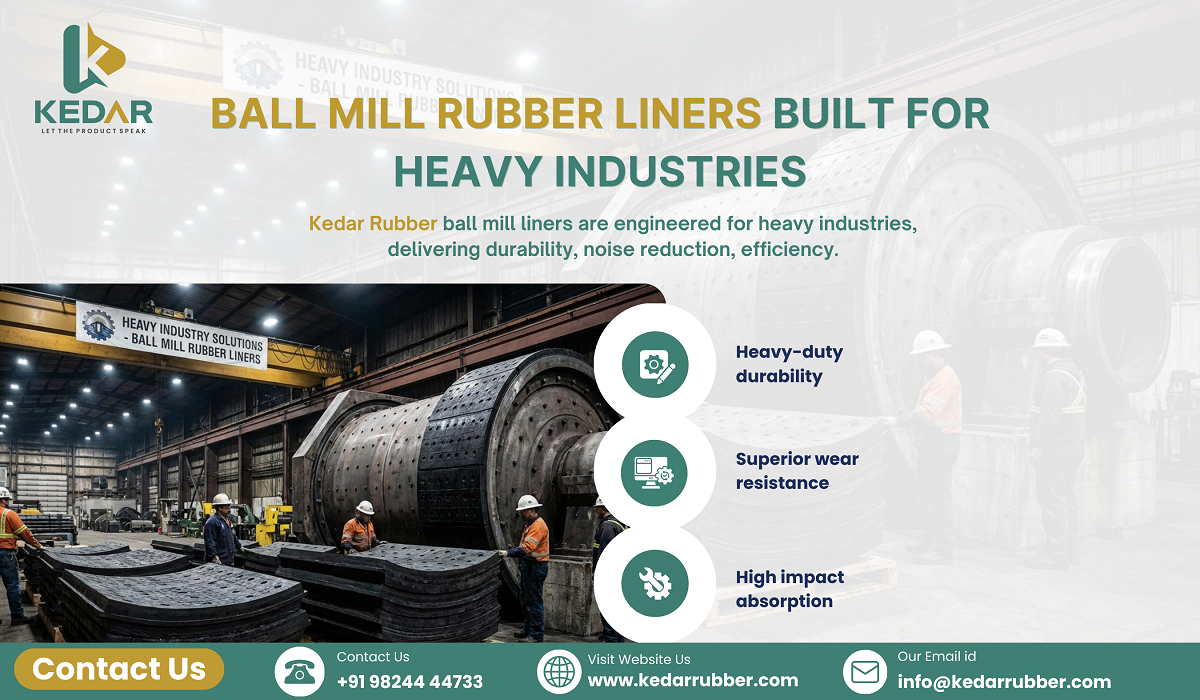
Ball Mill Rubber Liner Supplier India: Practical Buying Guide
Mill downtime is expensive, noise complaints are rising, and steel liners are not always the right fit for Indian cement and mining plants. A well-made rubber liner can reduce impact noise, cut maintenance load, and improve liner handling during shutdowns. If you are evaluating ball mill rubber liners supplier india for a new mill or a replacement cycle, this guide will help you compare quality, manufacturing capability, inspection standards, and delivery process. You will also see where design errors usually happen, what procurement teams in Ahmedabad, Mumbai, and Hyderabad often overlook, and how Kedar Rubber approaches custom mill liner supply for Indian operating conditions.
Why Choose Kedar Rubber for Ball Mill Rubber Liner Supplier India
The practical reason many plants move to rubber lining is simple: easier handling, lower noise, and better control over shutdown time. In Indian plants, especially in dusty cement units and hard mineral grinding lines, maintenance teams often ask for a wear resistant rubber liner that can take repeated impact without creating the same handling burden as steel. That requirement is not theoretical. It comes straight from plant-floor experience where every extra hour of stoppage affects output.
Yes, Kedar Rubber brings strong manufacturing depth to that requirement. Kedar Rubber Products Pvt. Ltd. has over 25 years of experience, is led by Mr. Sandip Trivedi and a skilled team of rubber technology experts, and has supplied custom rubber solutions to 200+ clients across 30+ major projects. Their office is at 903, 9th Floor, SKD Surya Icon, Opp. Torrent Power Office, Naranpura, Ahmedabad – 380013, Gujarat, India, with manufacturing at 28,29,30 Shankheshwar Industrial Estate, Tajpur Road, Changodar, Ahmedabad – 382213, Gujarat, India.
Here’s how plants usually evaluate a supplier beyond brochure language:
- Mill-wise customization, not standard-size pushing
- Rubber compound selection for abrasion and impact profile
- Dimensional consistency during repeat orders
- Faster fitment during shutdown windows
- Service communication after dispatch
A maintenance head from Surat once put it plainly during a review meeting: “Liner cost matters, but lost grinding hours cost more.” That is exactly how most serious buyers in Pune, Vadodara, and Jaipur assess value today.
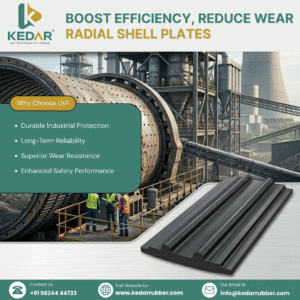
Our Ball Mill Rubber Liner Supplier India Manufacturing Capabilities
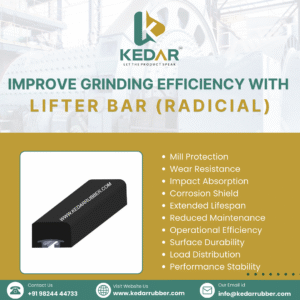
Yes, we provide custom solutions based on mill dimensions, feed material, operating speed, and expected wear zone. That matters because one cement mill liner design will not automatically suit a mining rubber liner application. A silica-heavy grinding line, for example, needs different wear planning than a clinker-based system. To understand performance factors in more detail, many buyers first review how rubber liners transform ball mill grinding.
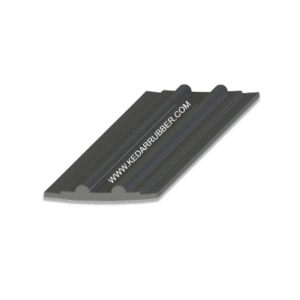
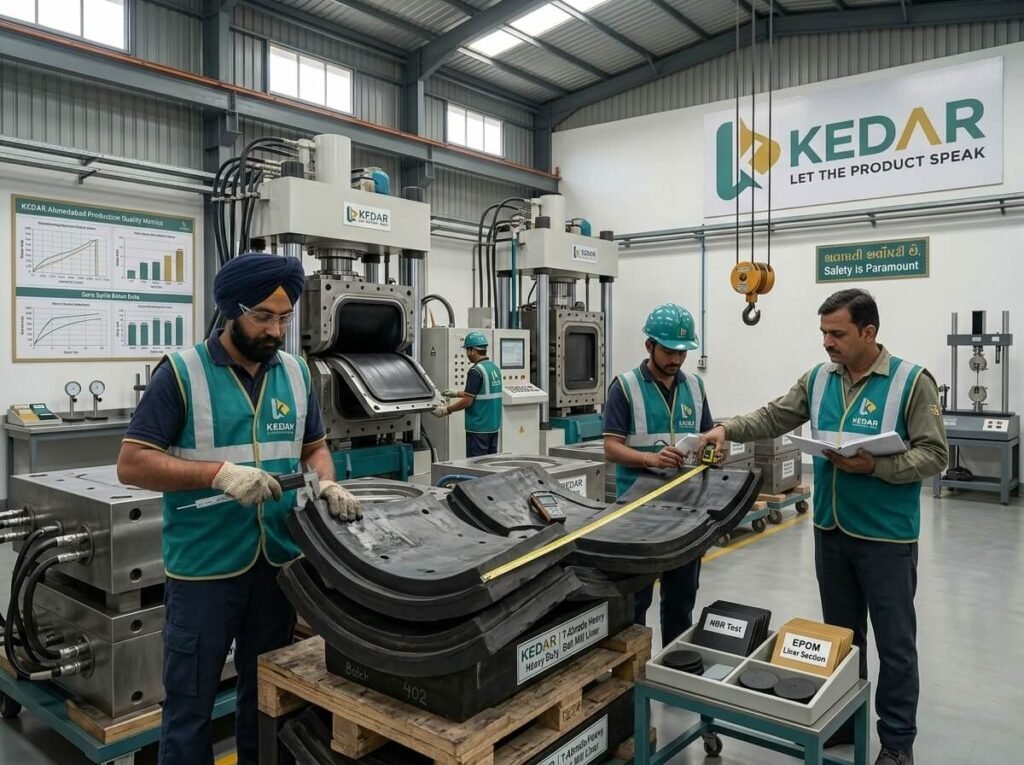
The manufacturing side is where many procurement decisions get clearer. Kedar Rubber works on custom ball mill rubber liners, abrasion and impact-resistant designs, and associated components that support fitment accuracy. In practical terms, that means attention to backing geometry, bolt hole alignment, shell contour matching, and wear zone engineering. Plants looking for custom rubber liner India solutions usually ask about compound consistency, hardness balance, and expected liner life under actual Indian operating loads.
Here’s what buyers often want answered quickly:
- Can you make liners as per existing mill drawings?
- Can worn steel liner layouts be converted into rubber-based designs?
- Can mixed sets be supplied for shell, head, and grate-side requirements?
- Can dispatch be planned around shutdown schedules in Delhi, Chennai, or Bangalore?
For related fitment components, teams also review triangle head plate liner options when the head section needs better matching with the overall liner assembly.
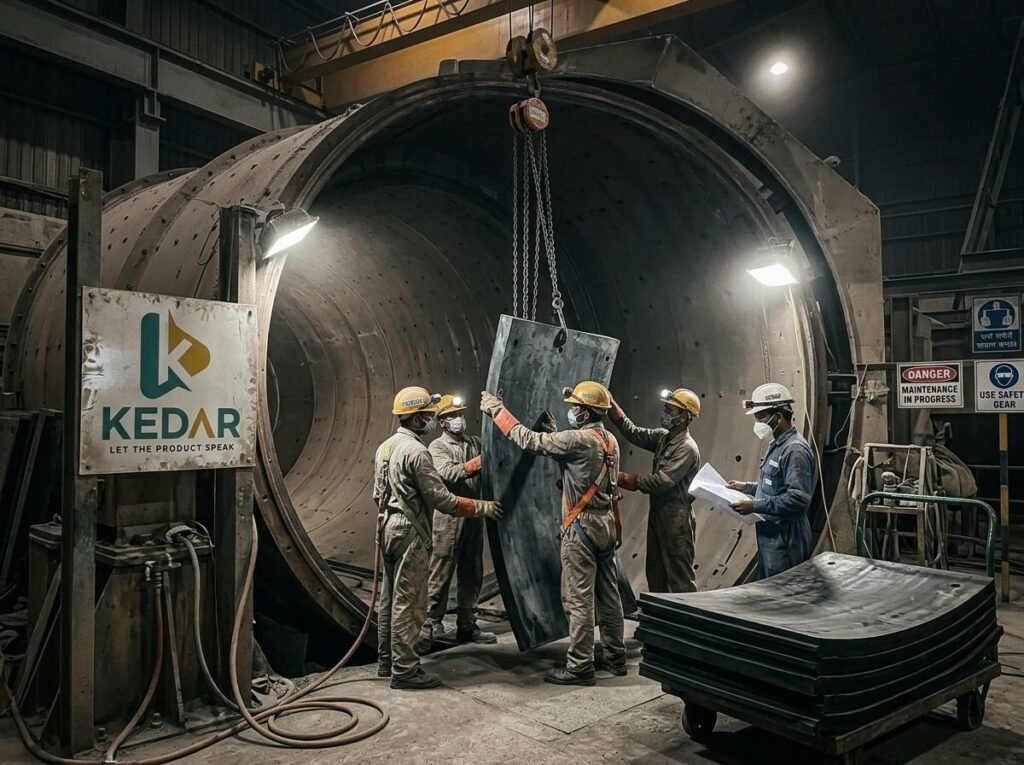
A short success story helps here. One medium-sized grinding unit in Indore was facing repeated delays because liner plate handling required extra manpower during every scheduled shutdown. After shifting to a lighter rubber-based setup with mill-specific dimensions, the maintenance team reported smoother handling and less crane dependency inside the shutdown window. That is often where a longer life rubber liner shows its real value—not just in wear hours, but in easier maintenance planning.
Navigating Quality Standards & ISO 9001:2015 Certification
The best way to judge a liner supplier is to look at process discipline, not only product claims. ISO 9001:2015 certification does not guarantee that every liner will perform equally in every mill, but it does show that the company follows structured quality management systems for documentation, traceability, inspection, and corrective action. For industrial buyers, especially those handling audits in Kolkata or multi-plant procurement from Chandigarh, that matters.
Here’s how Kedar Rubber supports quality confidence. The company is an ISO 9001:2015 Certified Company and aligns its work with documented manufacturing and inspection practices. That becomes useful when plants need repeatable quality across multiple orders, clear communication on tolerances, and confidence that custom molded rubber products are not being produced in an ad hoc way.
Inspection is not only about final dispatch. Good liner manufacturing usually includes:
- Raw material and compound checks
- Mold and dimensional verification
- Batch-level production control
- Fitment review against approved drawings
- Final visual and dimensional inspection before packing
Buyers exploring heavy-duty applications often also look at ball mill rubber liners built for heavy industries to understand how liner design changes with operating conditions. If your requirement is a noise reduction rubber liner, ask for both wear logic and installation logic. Noise reduction is useful, but not if fitment gaps create premature failure.
Local Manufacturers vs Kedar Rubber (Comparison Table)
The direct comparison most buyers need is not price alone. It is local supply convenience versus proven customization, process control, and after-order support. Plants searching for rubber liner manufacturers in Ahmedabad often start locally, which is sensible. But the final decision should be based on fit, documentation, production control, and service response.
| Comparison Factor | Generic Local Manufacturer | Kedar Rubber Products Pvt. Ltd. |
|---|---|---|
| Experience | Varies widely | Over 25 years |
| Customization | May rely on standard patterns | Mill-specific custom solutions |
| Quality System | Not always documented | ISO 9001:2015 Certified Company |
| Project Track Record | Limited visibility | 200+ clients, 30+ major projects, 5+ awards |
| Product Range Support | May be narrow | Ball mill liners and related mill components |
| Operational Benefit Focus | Basic supply-led approach | Longer wear life, 65-75% lighter than steel, up to 70% noise reduction |
For buyers comparing associated components, the center circle product page is also relevant because complete liner performance often depends on how adjoining parts match under load.
Get a Quote for [Ball Mill Rubber Liner Supplier India]
Step-by-Step Process – How We Deliver Ball Mill Rubber Liner Supplier India
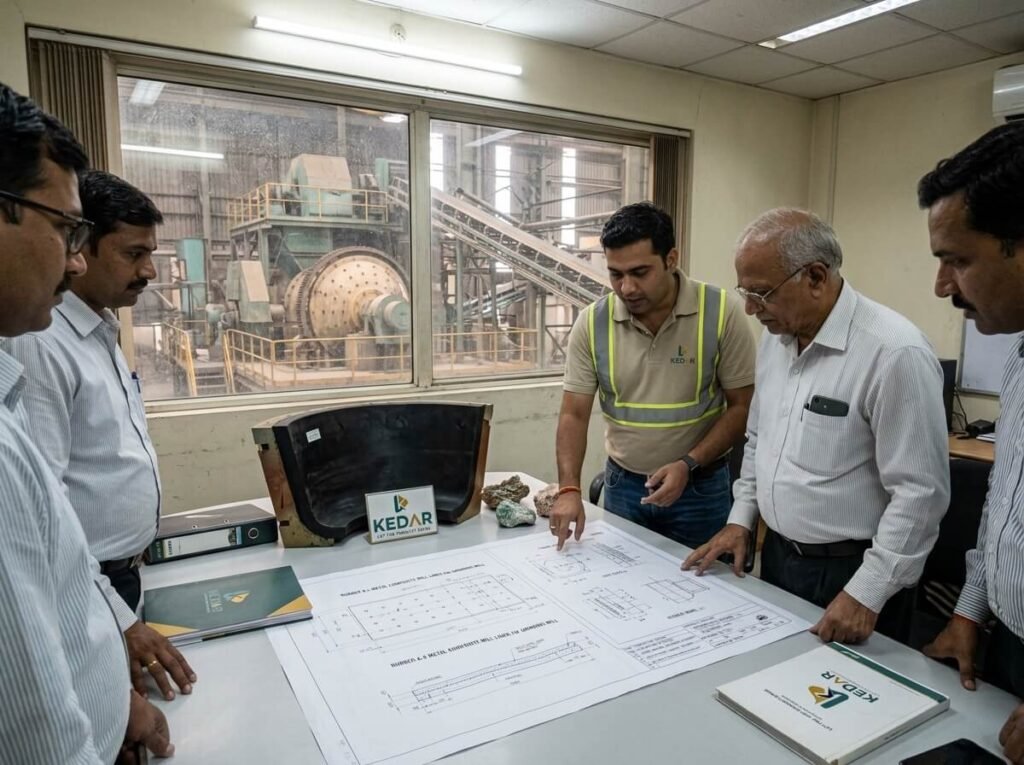
Here’s how Kedar Rubber typically supports a supply cycle from inquiry to dispatch. First comes application review: mill size, ore or clinker characteristics, RPM, existing liner pattern, and current failure points. Then the team studies dimensions, wear zones, and fitment constraints. This is where an abrasion resistant rubber liner requirement is separated from a high-impact requirement.
The process usually follows these steps:
- Requirement discussion and drawing collection
- Technical review of existing liner condition
- Design or adaptation of liner geometry
- Compound selection and production planning
- Inspection, packing, and dispatch scheduling
- Fitment guidance and post-supply support
A common question is whether all plants need fully custom work. Not always. Some mills can use adapted proven patterns, while others need a full custom rubber liner Ahmedabad approach because shell shape, feed size, or wear pattern is unusual. Buyers wanting deeper design insight often review advanced triangle head plate guidance before finalizing the head-end section.
Another common question: do rubber liners suit only one industry? No. They are used across mining, mineral processing, and cement grinding, provided design and compound match the load profile. That is why terms like cement mill liner, mining rubber liner, and rubber mill liner India should not be treated as interchangeable without technical review.
Real Client Case Study
Here’s a realistic case from western India. An anonymized cement client near Ahmedabad was facing high shutdown effort on a secondary grinding mill. The steel liner setup created two clear issues: heavy handling during maintenance and rising noise complaints from nearby operational areas. The plant team was also struggling with uneven wear in specific impact zones.
After technical review, Kedar Rubber proposed a custom liner layout matched to the mill shell dimensions and wear profile. The supply included mill-specific molded components and fitment guidance for the shutdown team. The expected goals were not dramatic marketing targets; they were simple, practical goals: reduce handling effort, improve wear distribution, and support faster maintenance turnaround.
Results reported over the next operating cycle were encouraging:
- Lower liner handling burden during shutdown
- Noticeable reduction in mill noise
- Better wear consistency across key zones
- Less maintenance stress on the fitment team
If you are comparing suppliers and need direct discussion, use the contact page for a Free Rubber Liner Consultation, WhatsApp follow-up, or to request the Download Ball Mill Liner Cost Guide. For serious buyers searching phrases like ball mill rubber liner manufacturers near me, practical discussion on mill details will save more time than broad catalog comparison.
FAQs
1. What is the main benefit of a rubber liner in a ball mill?
The main benefit is easier handling with lower noise and lower maintenance effort compared with heavier steel options in many applications.
2. Are rubber liners suitable for cement mills in India?
Yes, if the liner design matches mill size, feed characteristics, and impact conditions. Cement mill liner selection should always be application-based.
3. How long does a longer life rubber liner usually last?
Service life depends on ore, RPM, ball charge, and operating conditions. A proper technical review is needed before any life estimate is given.
4. Can you supply custom liners for old mills?
Yes. Existing drawings, worn samples, and shutdown observations can all help create a suitable replacement design.
5. Do rubber liners really reduce noise?
Yes. In many installations, rubber liners help reduce impact noise significantly, and some designs can support up to 70% noise reduction.
6. Why does ISO 9001:2015 matter for liner buyers?
It matters because documented quality systems improve consistency, traceability, and process control across custom manufacturing work.
7. How do I start the buying process?
Start with your mill dimensions, current liner photos, operating data, and wear issues. Then request technical review, consultation, and costing.