
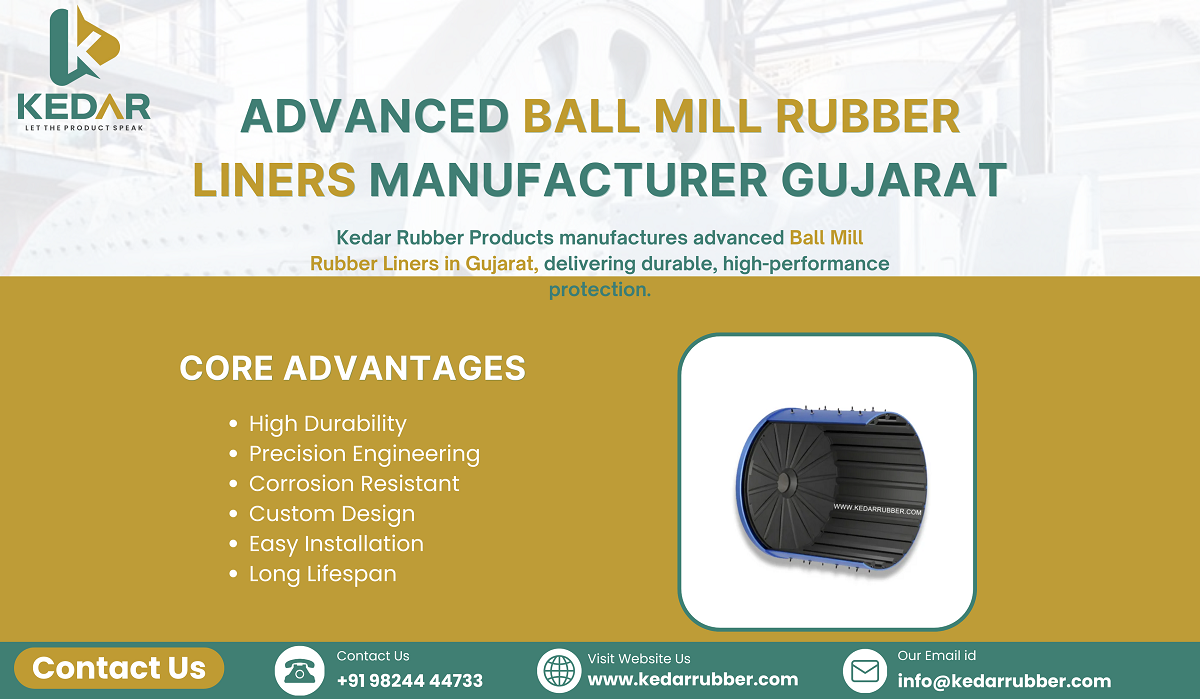
Heavy Duty Ball Mill Rubber Liner: Practical Selection Guide for Indian Plants
A heavy-duty ball mill liner is not just a wear part. In real plant conditions, it directly affects shutdown frequency, noise levels, liner handling time, and grinding consistency. For teams comparing Heavy Duty Ball Mill Rubber Liner, the real question is simple: will the liner survive impact, reduce maintenance effort, and fit the mill without repeated site corrections? In Indian mining, mineral processing, and cement units across Ahmedabad, Mumbai, Hyderabad, Chennai, Pune, Kolkata, and Vadodara, that answer depends on compound quality, design accuracy, and practical manufacturing discipline more than catalogue claims.
Why Choose Kedar Rubber for Heavy Duty Ball Mill Rubber Liner
The best starting point is field practicality. Kedar Rubber Products Pvt. Ltd. has worked in industrial rubber for over 25 years and understands that a liner drawing on paper often changes once actual shell condition, feed size, slurry pattern, and bolt alignment are reviewed. Led by Mr. Sandip Trivedi and a skilled team of rubber technology experts, the company has delivered custom rubber solutions to 200+ clients, completed 30+ major projects, and earned 5+ industry awards.
Yes, buyers often search for rubber liner manufacturers in Ahmedabad when lead time is critical. But location alone is not enough. What matters is whether the supplier can deliver a properly engineered wear resistant rubber liner with the right hardness, backing support, and profile geometry for actual mill duty. For a mineral unit in Jaipur, the issue may be impact at feed end. For a processing plant near Bangalore, maintenance teams may simply want safer handling because rubber liners are typically 65-75% lighter than steel.
Here’s how Kedar Rubber approaches that requirement: site-oriented customization, manufacturing control, and realistic discussion about service conditions. The company’s office is at 903, 9th Floor, SKD Surya Icon, Opp. Torrent Power Office, Naranpura, Ahmedabad – 380013, Gujarat, India, with manufacturing at 28,29,30 Shankheshwar Industrial Estate, Tajpur Road, Changodar, Ahmedabad – 382213, Gujarat, India. For buyers evaluating ball mill rubber liner manufacturers near me, that factory access matters because it shortens communication between drawing approval, molding, testing, and dispatch.
A short example from western India explains this well. A maintenance head from a unit near Indore once said his biggest cost was not liner price but “unexpected Sunday shutdowns.” That is a common plant-side reality. If liner fitment is poor, every correction costs labour, crane time, and production hours.
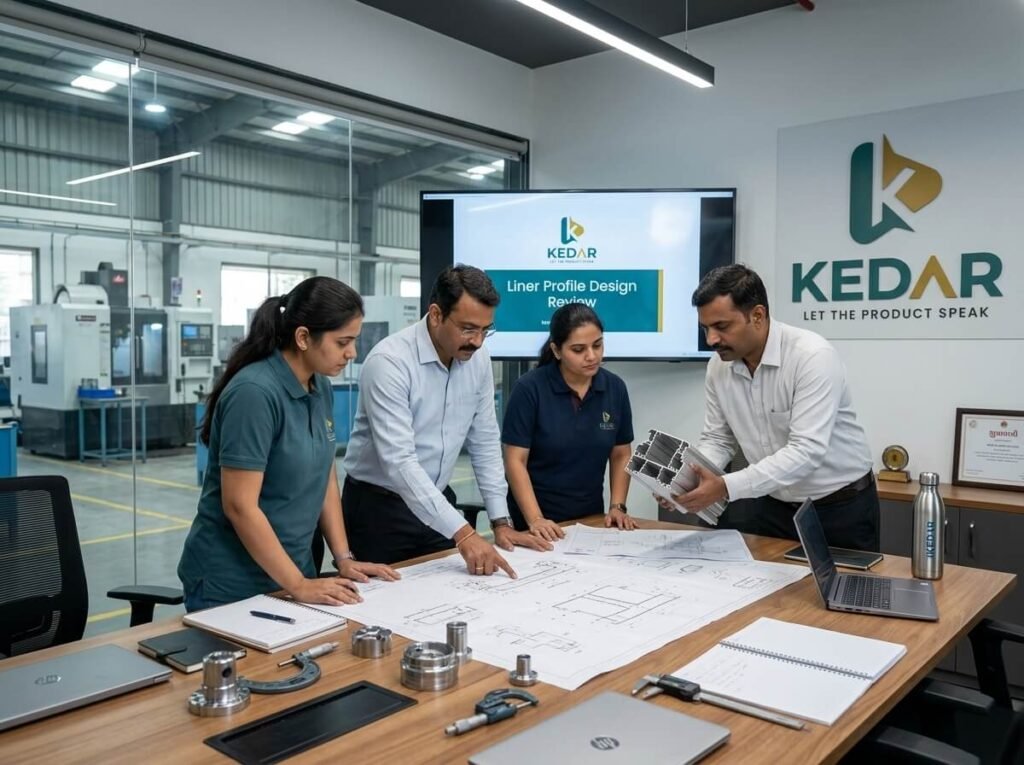
Our Heavy Duty Ball Mill Rubber Liner Manufacturing Capabilities
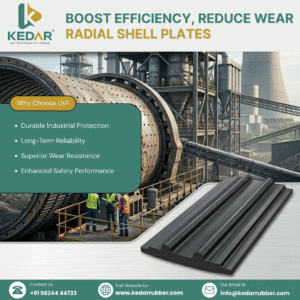
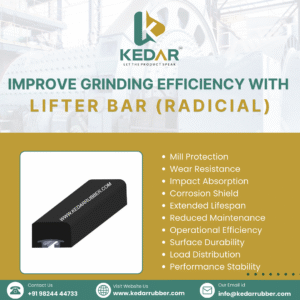
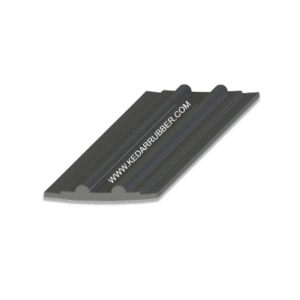
Yes, we provide liners designed around operating conditions, not generic dimensions. That includes shell liners, feed end liners, discharge end liners, lifter patterns, and supporting components that work with mill geometry. Related parts such as triangle head plate liners and center circle components are relevant when plants want complete compatibility across assemblies.
The best liner design balances four things: impact resistance, abrasion resistance, weight, and serviceability. A proper abrasion resistant rubber liner can improve liner life in fine grinding circuits, while a tougher compound may be needed for coarser feed. In many mills, a noise reduction rubber liner also helps improve working conditions. Plants that have shifted from steel to rubber often report noticeably quieter operation, and in many applications noise reduction can go up to 70%.
Here’s what procurement teams usually ask:
- Can a liner be made for an old mill with non-standard dimensions? Yes.
- Can a mining rubber liner and cement mill liner be engineered differently? Yes, and they should be.
- Can a supplier support Indian industries with custom molded rubber products beyond liners? Yes, where tooling and design match the application.
For plants studying grinding efficiency, this article on how rubber liners transform ball mill grinding gives useful context. For heavy industries comparing durability expectations, this detailed page helps explain why liner design should match operating duty, not just mill size.
Midway through any serious buying discussion, the next step is straightforward:
Get a Quote for [Heavy Duty Ball Mill Rubber Liner]
Navigating Quality Standards & ISO 9001:2015 Certification
The best quality system is the one that shows up in finished fitment. Kedar Rubber is an ISO 9001:2015 Certified Company, which matters because this standard emphasizes process control, traceability, consistent documentation, and corrective action systems. In practical terms, plant buyers should look for control over raw material batching, mold accuracy, dimensional inspection, and dispatch verification.
Yes, certification alone does not guarantee long life. But it does reduce the chances of random variation. In heavy-duty applications, that is important. A longer life rubber liner depends not only on compound recipe, but also on curing control and dimensional consistency. A few millimeters of mismatch in a liner set can create stress concentration, loosening, or uneven wear.
For buyers searching terms like custom rubber liner India, it helps to ask direct technical questions:
- What hardness range is recommended for my ore or clinker duty?
- Is the liner profile designed for cascading or cataracting action?
- How is bolt-hole tolerance checked?
- Is there support for old drawing conversion to production-ready dimensions?
You can review the company background and manufacturing focus through the Kedar Rubber homepage, especially if you are comparing an industrial rubber manufacturer Gujarat with general-purpose fabricators.
Mini client success story
A cement grinding unit in Chandigarh replaced a mixed set of aging liners that had been patched over two shutdowns. The plant’s concern was not only wear, but also crew fatigue during maintenance. After switching to a properly matched rubber liner configuration, the team reported easier handling during shutdown and more stable maintenance planning over the next operating cycle. No dramatic claims, just fewer surprises, which is often the real win in plant maintenance.
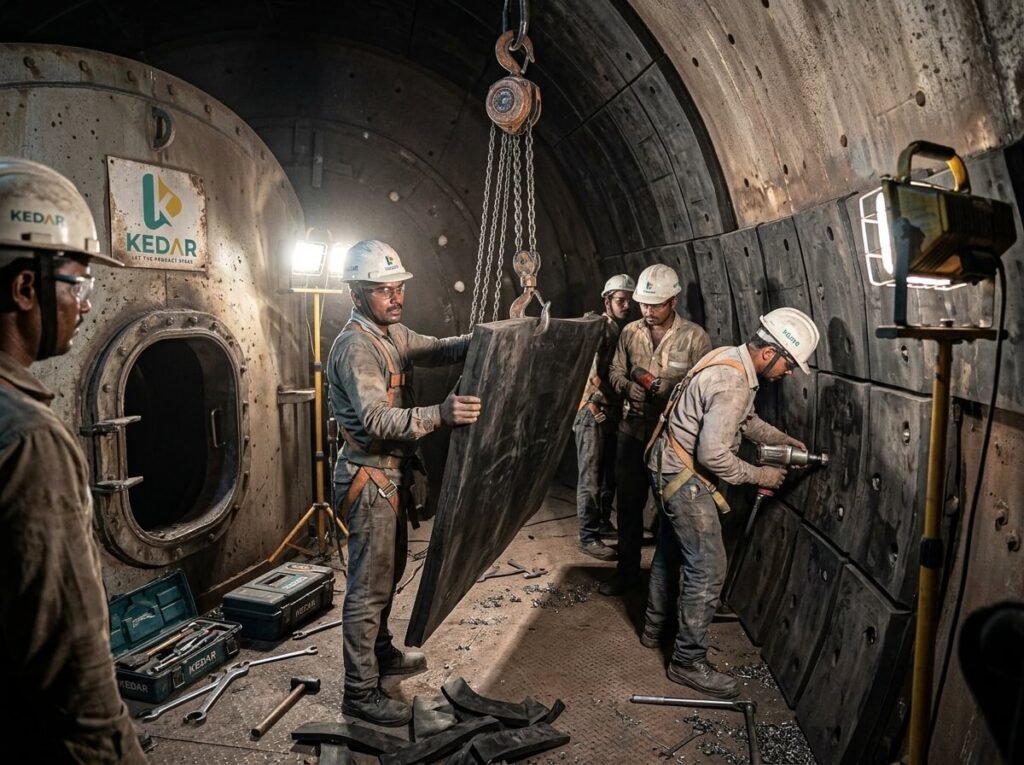
Local Manufacturers vs Kedar Rubber
Here’s how Kedar Rubber typically compares when plants evaluate local options.
| Comparison Point | Local Generic Supplier | Kedar Rubber Products Pvt. Ltd. |
|---|---|---|
| Mill-specific customization | Often limited to standard molds | Customized to mill specifications and duty conditions |
| Material performance focus | General rubber grade | Wear, abrasion, and impact-focused compounds |
| Weight advantage over steel | Varies | Typically 65-75% lighter than steel liners |
| Noise reduction potential | Rarely specified clearly | Up to 70% noise reduction in suitable applications |
| Experience signals | May be limited | 25+ years, 200+ clients, 30+ major projects, 5+ awards |
| Support for related heavy mill parts | Not always available | Supports related liner systems and engineered components |
Step-by-Step Process – How We Deliver Heavy Duty Ball Mill Rubber Liner
Here’s how Kedar Rubber typically delivers a project in a controlled way.
- Application review: Mill size, operating RPM, feed material, impact zone, and current failure pattern are studied.
- Drawing and measurement check: Old drawings are verified against actual plant conditions.
- Compound and profile selection: The liner is designed as a rubber mill liner India solution based on wear and impact requirement.
- Tooling and production: Molding, curing, and dimensional checks are carried out at the Ahmedabad facility.
- Inspection and dispatch: Final verification reduces mismatch during installation.
- Installation guidance: Teams get practical support for fitment sequence and shutdown planning.
If you are comparing profile design details, this technical article on advanced triangle head plate design for ball mill rubber liner systems is worth reading. And if your team wants direct discussion, the contact page is the fastest route for a Free Rubber Liner Consultation, WhatsApp support, or to Download Ball Mill Liner Cost Guide.
Real Client Case Study
Here’s a realistic case from an anonymized customer in eastern India.
A mineral processing company near Kolkata was running a ball mill where the steel liner set was creating three problems: high handling effort during shutdown, elevated noise near the operating floor, and inconsistent service intervals because feed characteristics changed seasonally. The plant team was not looking for marketing claims. They wanted predictable maintenance.
After the technical discussion, the team developed a heavy-duty rubber liner package and focused on feed-end impact and discharge-side wear patterns. The team aligned the installation planning with the shutdown window and completed the dimensional checks carefully before dispatch. Over the following run period, the maintenance team reported easier liner handling, reduced noise perception around the mill area, and a more manageable service schedule. The commercial team liked another point: replacement planning became less reactive.
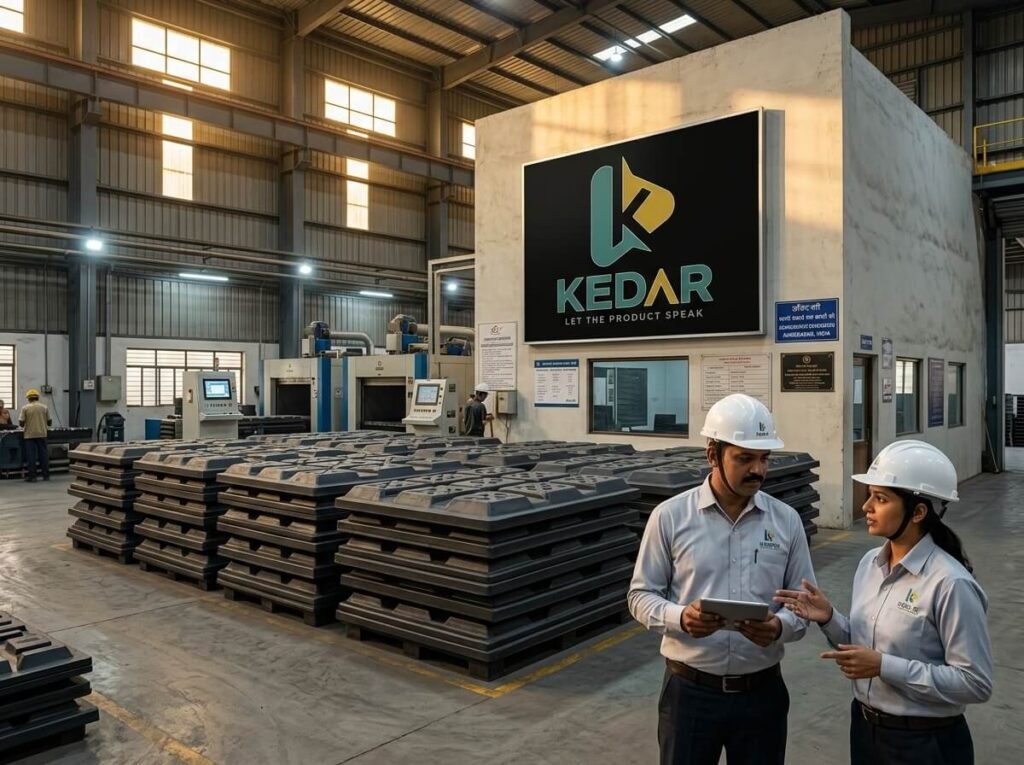
That is usually how good liner projects succeed in Delhi, Ahmedabad, or Chennai as well. They solve a maintenance planning problem first and a procurement problem second.
FAQs
1. What is a heavy-duty ball mill rubber liner used for?
It protects the mill shell and improves grinding conditions in mining, mineral processing, and cement applications.
2. Are rubber liners better than steel liners for all mills?
No. They are highly effective in many applications, but suitability depends on feed size, impact level, mill speed, and operating environment.
3. How much lighter is a rubber liner than steel?
In many cases, rubber liners are around 65-75% lighter than comparable steel liners.
4. Can rubber liners reduce plant noise?
Yes. In suitable applications, noise reduction can reach up to 70%, which helps operator comfort and plant conditions.
5. Do you provide custom sizes for old ball mills?
Yes. Customization based on mill dimensions and actual operating conditions is available.
6. What industries use these liners in India?
Mining, cement, mineral grinding, and other heavy process industries across India use them.
7. How can I request pricing or technical advice?
You can contact the team for a Free Rubber Liner Consultation, WhatsApp discussion, or to Download Ball Mill Liner Cost Guide.