
Ball Mill Lining System Supplier: What Indian Plants Should Check Before Buying
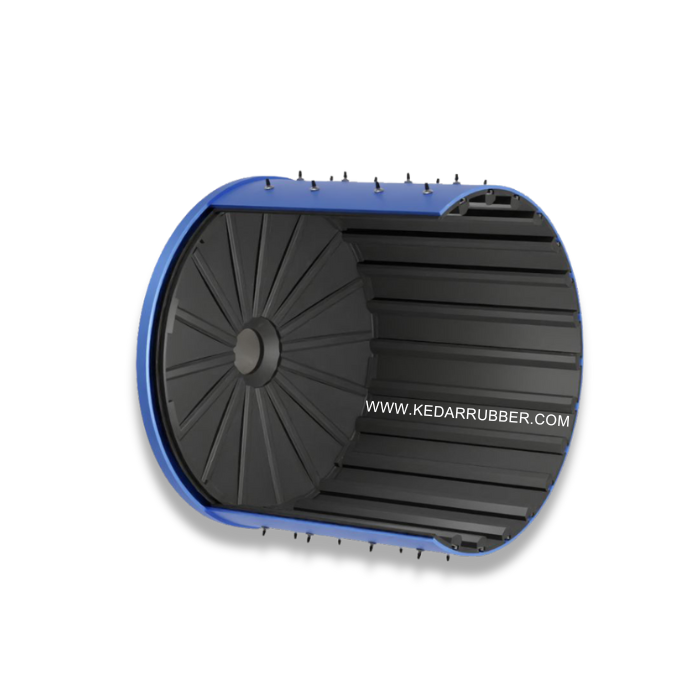
If your grinding mill is stopping too often, making too much noise, or eating into maintenance budgets, the liner system is usually part of the story. A properly selected ball mill lining system supplier helps control impact, reduce shutdown frequency, and improve working conditions on the shop floor. For teams comparing options, this guide explains what to check in a supplier, how manufacturing quality affects liner life, and why details like fitment accuracy matter as much as rubber compound design. For product specifications and application details, see the ball mill rubber liners page.
In practical terms, plant teams in Ahmedabad, Mumbai, and Hyderabad usually ask the same questions: Will the liner last longer than steel in this duty cycle? Can it reduce noise? Can the supplier customize lifter bars, shell plates, and feed end parts to our mill dimensions? Those are the right questions. This article answers them with a ground-level view shaped by Indian operating conditions.
Why Choose Kedar Rubber for Ball Mill Lining System Supplier
The best supplier is not the one with the longest brochure. It is the one that understands what happens when a mill runs three shifts, handles variable feed, and cannot afford an unplanned halt on a Saturday night. Kedar Rubber has worked in this space for over 25 years as Kedar Rubber Products Pvt. Ltd., serving 200+ clients with custom rubber solutions and 30+ major projects under the guidance of Mr. Sandip Trivedi and a skilled rubber technology team.
Yes, buyers often search for rubber liner manufacturers in Ahmedabad, but location alone does not solve plant problems. What matters is whether the supplier can study the mill shell, pulp conditions, impact zones, and fastening pattern before production starts. In many Indian cement and mineral plants, the real cost is not liner price. It is downtime, labour coordination, delayed dispatches, and production loss.
A small example from a unit near Surat makes this clear. Their maintenance team first focused only on piece cost. After two cycles, they realized the frequent fitment adjustments were taking more time than expected. Once the liner geometry was corrected to suit the actual mill condition, installation became smoother and the shutdown window became more predictable.
That is where Kedar Rubber’s home page helps buyers verify company background, manufacturing focus, and service areas before making technical discussions more serious.
Our Ball Mill Lining System Supplier Manufacturing Capabilities
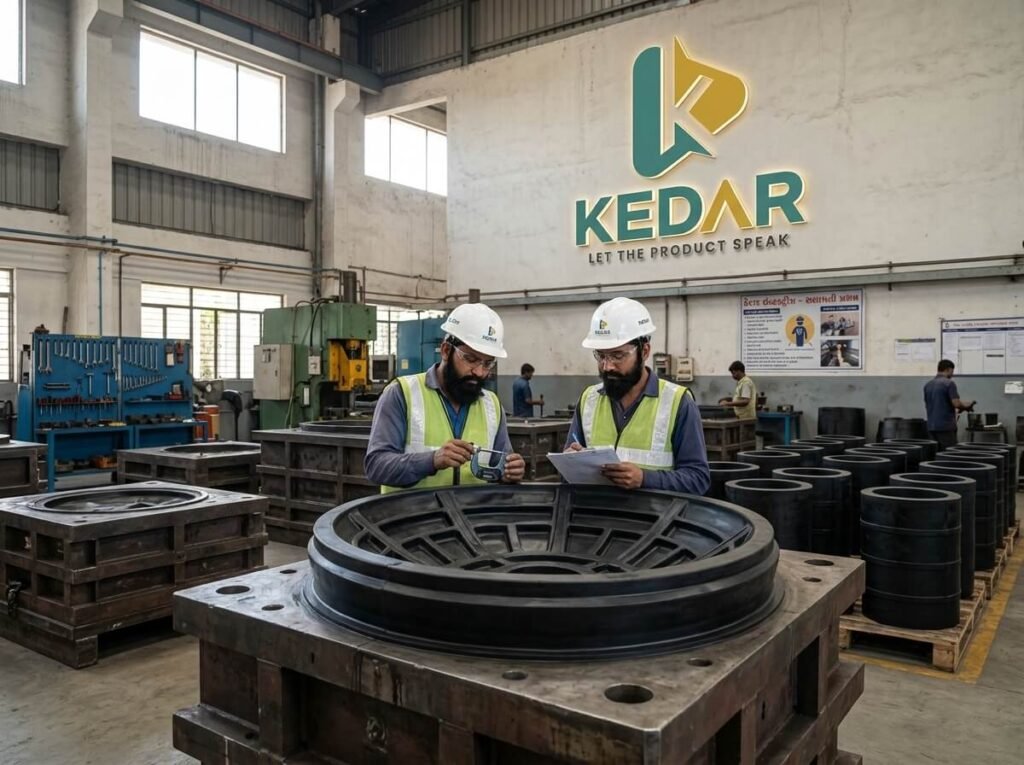
Here’s how Kedar Rubber approaches manufacturing: start with the mill data, then build the liner around service conditions rather than pushing a standard size into a non-standard job. This matters for a wear resistant rubber liner because wear pattern changes from one application to another. A mining rubber liner sees different impact and slurry action than a cement mill liner.
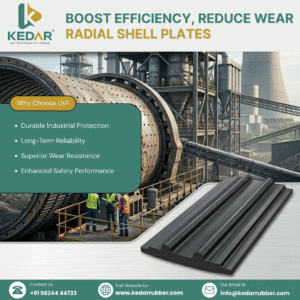
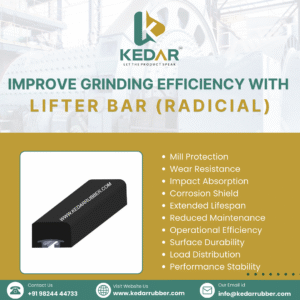
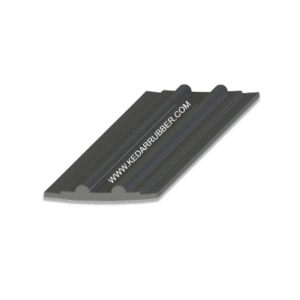
The manufacturing side usually covers shell liners, feed end liners, discharge end liners, lifter bars, grate-related molded parts, and matching components like triangle head plate liners. Where mill design needs it, associated parts such as center circle components also become part of the liner package.
A good rubber mill liner India supplier should also be able to handle:
- compound selection for abrasion and impact balance
- dimensional accuracy for bolt-hole alignment
- customization for old mills with wear on mating surfaces
- weight optimization for easier handling during shutdown
- molded part consistency from batch to batch
Yes, we provide practical value when the liner is 65-75% lighter than comparable steel parts and helps achieve meaningful noise control. In real plant conditions, a noise reduction rubber liner can improve operator comfort substantially, especially in enclosed mill houses in Pune, Vadodara, or Jaipur, where nearby operations run in parallel and noise complaints affect shift discipline.
For buyers researching technical behavior in service, the article on how rubber liners transform ball mill grinding gives useful context on why liner design influences grinding efficiency, maintenance intervals, and operational stability.
Get a Quote for [Ball Mill Lining System Supplier]
Navigating Quality Standards & ISO 9001:2015 Certification
Here’s the practical answer: quality in a liner system is not only about raw material hardness. It is about process discipline. Kedar Rubber Products Pvt. Ltd. is an ISO 9001:2015 Certified Company, and that matters because international quality systems push consistency in documentation, inspection, traceability, and corrective action.
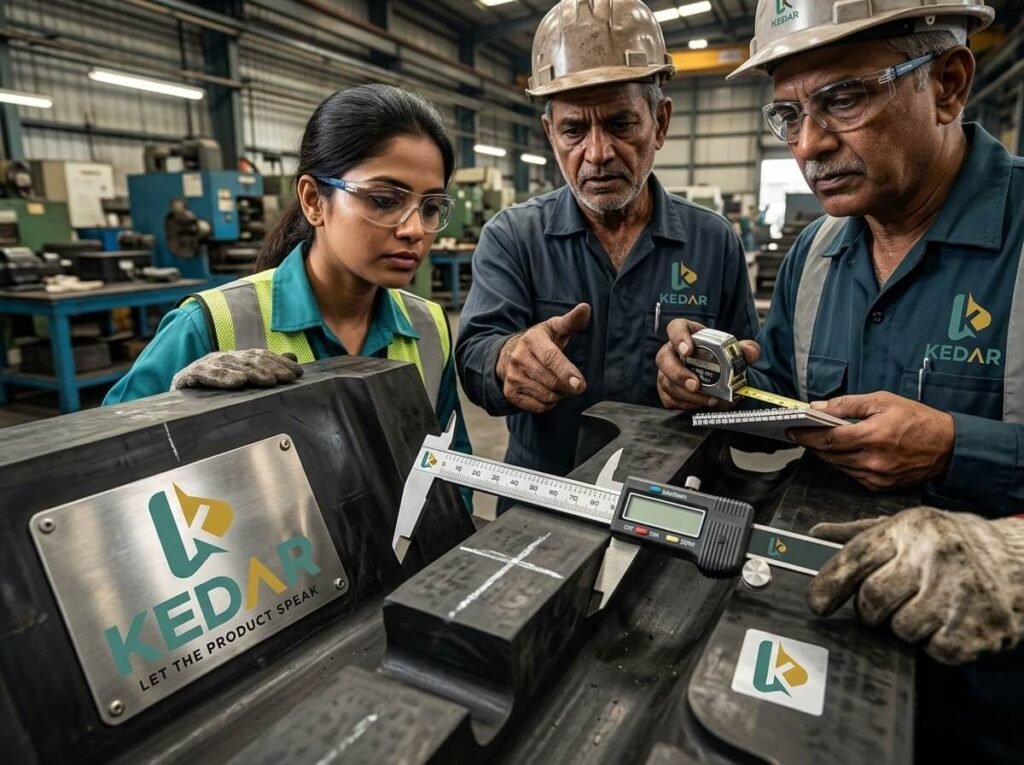
For a custom rubber liner India order, quality checks should include drawing verification, mold accuracy, compound control, curing discipline, and final dimensional inspection. In Indian industry, especially where mills have been retrofitted over years, even small dimensional variation can create bolt mismatch, gap formation, or uneven seating. Those issues show up later as faster wear, vibration, or installation delays.
A common mistake I have seen in plants from Chennai to Indore is assuming all black rubber parts are equal. They are not. A true abrasion resistant rubber liner must match the duty. For coarse feed and impact zones, resilience matters. For sliding wear, compound behavior under repeated stress matters more. The phrase “longer life” only means something when it is linked to actual application conditions.
One useful technical reference is the post on ball mill rubber liners built for heavy industries, which explains how heavy-duty environments affect liner expectations. This is where buyers can separate catalog claims from application-fit engineering.
Local Manufacturers vs Kedar Rubber (Comparison Table)
The best comparison is the one based on operating reality, not generic claims. Here is a practical view.
| Comparison Point | Typical Local Fabricator | **Kedar Rubber** |
|---|---|---|
| Mill-specific customization | Often limited to standard sizes | Designed as per mill specifications and operating need |
| Experience depth | May vary by project | Over 25 years in industrial rubber solutions |
| Quality system | Informal or vendor-dependent | ISO 9001:2015 certified process discipline |
| Noise reduction potential | Not always engineered into design | Up to 70% noise reduction depending on application |
| Handling weight | Can remain heavy and difficult during shutdown | 65-75% lighter than steel alternatives |
| Support for related liner parts | Usually fragmented sourcing | Integrated support across liner-related molded parts |
For teams comparing design features, the page on advanced triangle head plate for ball mill rubber liner is useful because many procurement decisions miss the importance of matching accessory parts with the main liner system.
Step-by-Step Process – How We Deliver Ball Mill Lining System Supplier
Here’s how Kedar Rubber generally delivers a project in a way plant teams can follow.
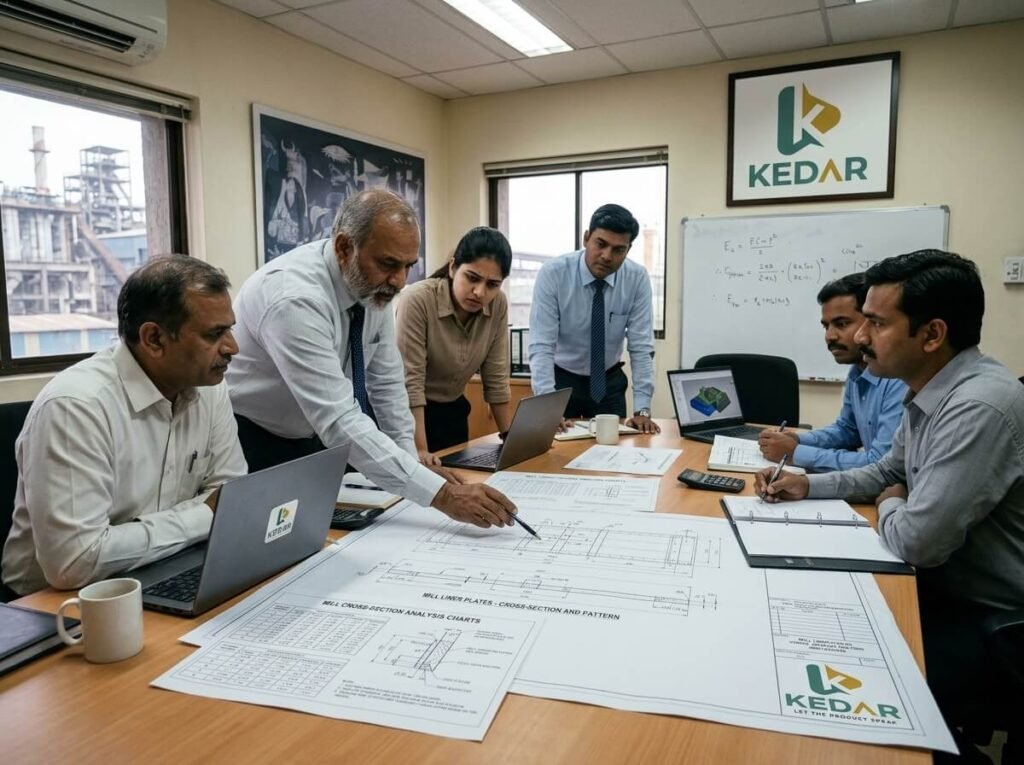
First comes application study. Mill size, RPM, material handled, slurry or dry condition, and past wear pattern are reviewed. This is the stage where many buyers ask, “Can you help if my old drawing is incomplete?” Yes, usually a supplier with actual shop-floor experience can work from physical samples, site measurements, and damaged-part mapping.
Second comes design and component matching. This includes shell liners, lifters, feed end geometry, and related molded parts. Third comes manufacturing and inspection. Fourth comes dispatch planning aligned with shutdown schedule. Fifth comes fitment support and operating feedback.
A short success story from Bangalore is worth noting. One ceramic mineral processor had recurring trouble with inconsistent fitment from mixed vendors. After moving to a single-source rubber liner package with proper part matching, the team reduced shutdown confusion because every component arrived tagged and sequenced. That sounds simple, but on the shop floor, simple systems save real time.
Buyers who want drawings reviewed or site discussions can use the contact page for a Free Rubber Liner Consultation, WhatsApp coordination, or to Download Ball Mill Liner Cost Guide. This is especially useful for plants in Delhi, Kolkata, and Chandigarh where technical review often begins remotely before a visit is planned.
Real Client Case Study
Here’s a realistic case from western India. An anonymized cement grinding unit, “Client A,” operating between Ahmedabad and Mumbai, was facing liner change intervals shorter than expected. The plant had high maintenance pressure, rising labour costs, and strong complaints about mill-house noise during peak shifts.
The review showed three issues. The earlier liner profile was not fully aligned with impact zones. Bolt alignment during installation was inconsistent. And some associated molded parts were sourced separately, creating mismatch during shutdown. The revised solution used a longer life rubber liner approach with application-matched geometry, better seating accuracy, and coordinated component supply.
Within the next service cycle, the maintenance team reported smoother installation, lower manual handling strain, and noticeably better noise control. They also found planning easier because the supplier package reduced last-minute improvisation. For plants in mining and cement, that kind of predictability matters more than big claims.
Another common buyer query is: “Do ball mill rubber liners work only in large plants?” No. Smaller units in Hyderabad or medium-scale processors around Surat also benefit when the liner is matched to duty and service expectations. “Can rubber liners replace steel in every case?” Not automatically. The selection depends on feed size, impact level, chemistry, and mill configuration. “How long does a custom rubber liner Ahmedabad supplier take?” That varies with mold readiness, part complexity, and shutdown schedule.
FAQs
1. What does a ball mill lining system supplier actually provide?
A supplier usually provides shell liners, lifter bars, feed and discharge end liners, related molded parts, and support for fitment planning.
2. How do I know if I need a rubber liner instead of steel?
Check noise levels, maintenance frequency, weight handling issues, and wear pattern. Rubber often helps where impact and abrasion can be balanced through compound design.
3. Are rubber liners suitable for cement mills?
Yes, in many cases a cement mill liner in rubber or rubber-based configuration helps reduce noise and improve maintenance handling.
4. Can liner systems be customized for old mills?
Yes. Site measurements, worn-part samples, and operating history are often used for custom development.
5. What is the benefit of lighter liner weight?
It helps during installation, reduces handling strain, and can shorten shutdown work.
6. Why is ISO 9001:2015 important in liner manufacturing?
It supports consistency in process control, inspection, documentation, and corrective action.
7. Do suppliers serve plants outside Gujarat?
Yes, projects commonly move across Indian industrial belts including Mumbai, Hyderabad, Chennai, and Pune.