Man Hole Plug in Morbi: A Critical Reliability Component in Heavy-Duty Industrial Equipment
In robust industrial settings, operational dependability is seldom solely dependent on big, obvious machinery. Facility personnel understand that smaller elements frequently determine if a stoppage becomes a standard check or a costly production shortfall. Manhole plugs in Morbi help maintain access seal integrity, ensure door seal effectiveness, and protect the interior from wear. Thoughtfully designed plugs lessen seepage hazards, endure scraping and jolting, and promote safer, quicker servicing intervals across facilities handling ceramics, ore, and bulk goods.
Operations in mining, cement production, metal refining, ceramic fabrication, and the movement of bulk materials are constantly under strain. Abrasive substances, shock loading, chemical process fluids, and extended running periods continually place stress on equipment integrity. As worldwide industrial needs continue to grow—fueled by infrastructure development, energy transition initiatives, and urban sprawl—plants are expected to operate longer with fewer interruptions.
Operational Hurdles Driving Need for Manhole Plugs
Throughout industrial fields, several frequent operational difficulties influence the style and choice of manhole closures:
- Scraping Wear: In ore extraction and metal fabrication, interior equipment surfaces are perpetually exposed to abrasive sludge, raw ore, cement clinker, or ceramic feedstocks. Any port becomes a likely area of deterioration if not adequately protected.
- Impact Forces: Grinding mills, mixing containers, and material-conveyance equipment produce recurring impact stress. Manhole zones must absorb localized pressure without fracturing or warping.
- Chemical Deterioration: Exposure to chemicals, moisture, and process agents accelerates rust, especially around seals and openings.
- Interruption Potential: Inadequately conceived access covers can lead to leaks, misalignment, or frequent swaps—each causing unscheduled downtime.
- Servicing Expenses: Swapping out damaged access parts raises labour time and puts staff at risk in enclosed areas.
These issues aren’t confined to just one region. Similar operating scenarios are found in major mining centers, cement complexes, ceramic production zones, and steelworks throughout India, as well as in comparable industrial zones globally.
What Constitutes a Man Hole Plug?
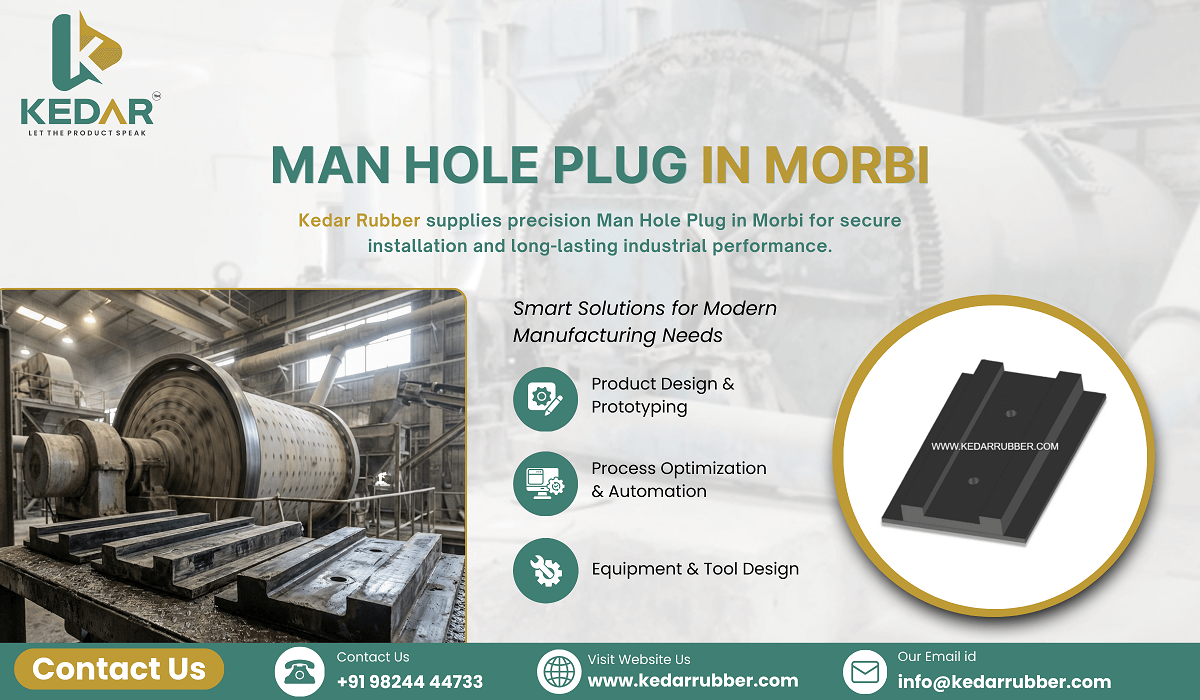
A Man Hole Plug is a detachable, carefully engineered seal used to secure access ports or inspection openings in industrial equipment such as grinding wheels, storage tanks, processing units, and lined containers.
From an engineering viewpoint, its job is quite clear:
- To firmly secure access apertures
- To keep internal pressure and containment levels steady
- To shield exposed rims from abrasion and impact
- To permit multiple openings without harming the primary equipment
Unlike fixed covers, a manhole plug must balance structural power, resistance to wear, and ease of manipulation. For lined machinery, it also functions as an extension of the inner defence against wear.
Use Cases Across Sectors
Mining
In mining, manhole plugs are commonly used in grinding mills and fluid transport systems. They allow secure entry for examining linings and performing upkeep while resisting wear from ore and grinding elements.
Cement Facilities
Cement grinding units and material transport containers require manhole plugs that resist clinker abrasion and temperature shifts without deforming.
Metal & Steel
Steel plants use manhole plugs in blenders, converters, and other equipment where impact stress and scale buildup are everyday.
Ceramic Production
The processing of ceramic raw materials involves sharp, hard particles. Appropriately fashioned plugs prevent early deterioration around access points.
Power Generation
Ash conveyance systems and process vessels necessitate access seals that resist chemical attack and impact.
Bulk Material Transport
Transfer chutes, storage bins, and holding units rely on secure manhole seals to provide inspection access without compromising overall structural integrity.
Material Science & Engineering Factors
Seasoned facility supervisors often note that access elements degrade faster than leading liners if material selection is unsuitable.
Key engineering aspects to consider include:
- Rubber Qualities: Industrial-grade elastomer delivers flexibility, shock dampening, and resistance to material fatigue. Appropriate recipe formulation ensures consistent firmness and pliability.
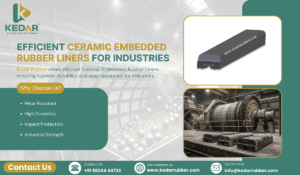
- Ceramic Inclusion: In areas with severe scraping, ceramic pieces can be built into rubber-backed designs to boost service life while retaining shock absorption.
- Wear Resistance Concepts: Defence against abrasion relies on a mix of hardness, not just the degree of hardness. Overly rigid materials can break under sudden force.
- Energy Absorption: Plugs featuring rubber lining disperse impact energy, lessening the strain transferred to the supporting shell structures.
These concepts guide material choices based on actual operational conditions, rather than theoretical performance assertions.
Design & Modification Necessities
No two industrial installations are exactly alike. Manhole plug design must take into account:
- Equipment Synergy: Matching the mill shell depth, contour, and liner geometry
- Precise Sizing: Accurate measurements for proper sealing and force distribution
- Situation-Specific Layout: Differences in material flow, impact vector, and heat levels
Tailoring ensures the plug fits ideally within the existing wear defence mechanisms, rather than creating a vulnerable spot.
Production Quality & Process Oversight
Producers with extended sector tenure recognize that uniformity is as vital as blueprinting.
Crucial manufacturing elements involve:
- Managed elastomer formulation
- Accurate moulding for precise dimensions
- Correct adhesion between rubber and any embedded parts
- Quality verification per batch for firmness, density, and stretch characteristics
Stable process management guarantees reproducibility across production runs, which is vital for extensive facilities running numerous units.
Setup & Servicing Notes
From a servicing perspective, a well-conceived access hatch seal ought to:
- Permit easy mounting with conventional instruments
- Minimize alignment challenges during reinstallation
- Sustain sealing effectiveness across multiple service intervals
Convenient handling reduces interruptions and shortens the time spent in restricted areas by servicing crews.
Safety & Functional Dependability
Safety is an imperative aspect in industrial functions. Appropriately engineered access seals contribute towards:
- Secure retention of internal contents
- Lowered probability of abrupt seal ejection
- Safeguarding personnel during operations and checks
By preserving equipment soundness, they indirectly bolster overall facility trustworthiness.
Value Over the Equipment’s Useful Life
Although initial procurement choice is significant, true worth emerges throughout the equipment’s service span:
- Fewer unscheduled downtimes
- Less frequent need for replacement
- Foreseeable maintenance planning
Value derives from operational stability rather than saving money on materials initially.
Global Market Readiness & Acceptance
Industrial purchasers in worldwide arenas anticipate:
- Uniform quality documentation
- Comprehension of international operating environments
- Capacity to meet specification-driven demands
Components prepared for export indicate methodical production habits and engineering advancement.
The Importance of Seasoned Producers
For key wear components, expertise translates into:
- Superior material selection
- Practical design refinements
- Dependable provision and technical assistance
Vendors with tangible industrial backgrounds understand how items perform over numerous operational years, beyond just the initial startup.
Regarding KEDAR RUBBER PRODUCTS PVT LTD
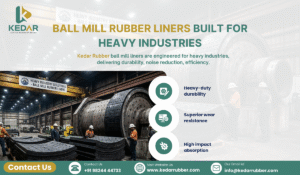
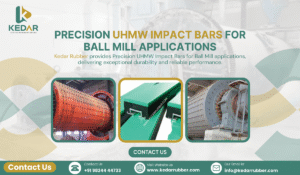
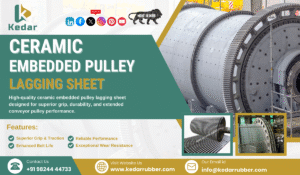
KEDAR RUBBER PRODUCTS PVT LTD is an established industrial fabricator specializing in mill rubber linings, ceramic wear defence systems, rubber lining installations, mill rubber items, conveying solutions, and associated abrasion parts such as access seals.
The firm supports industrial operations across all of India, assisting functions throughout every state and union territory, including key industrial belts in Gujarat, Maharashtra, Rajasthan, Odisha, Chhattisgarh, Jharkhand, West Bengal, Tamil Nadu, Karnataka, Andhra Pradesh, Telangana, Madhya Pradesh, Uttar Pradesh, Punjab, Haryana, and beyond—covering major material extraction zones, ceramic production clusters, cement centers, and metal refining areas.
Further details are found at 👉 https://www.kedarrubber.com/
Summary
Access plugs might seem secondary compared to leading wear liners, yet their role in workplace safety, access consistency, and equipment protection is crucial. When devised with appropriate material science, manufacturing rigour, and application awareness, they notably boost long-term facility productivity.
Selecting the appropriate solution is less about assertions and more about proven history, consistency, and operational alignment.
Main Points
- Access plugs are vital wear and safety parts
- Correct design minimizes delays and service hazards
- Rubber and ceramic combinations balance impact force and surface wear
- Suitable for mining, cement, metal, ceramic, and bulk material handling sectors
- Enduring performance relies upon engineering and production quality
Frequently Asked Questions (FAQ)
Q1. What is the typical service life of an access plug?
Duration varies based on wear severity, impact force, and service routines. Under steady circumstances, plugs last through several maintenance cycles.
Q2. Are access plugs appropriate for rugged impact-mill applications?
Yes, provided they are engineered with suitable rubber traits and reinforcement.
Q3. How often should access plugs be checked?
Inspections are generally scheduled to coincide with planned mill or equipment downtime.
Q4. Contrasting rubber versus ceramic wear defences—what distinguishes them?
Rubber absorbs shock; ceramics resist surface erosion. Integrated designs deliver balanced results.
#ManHolePlug #ManHolePluginMorbi #IndustrialWearProtection #RubberLining #CeramicIndustry #MiningSolutions #BulkMaterialHandling #PlantMaintenance #IndustrialReliability