Radial Shell Plate in Morbi: Engineering Reliability for High-Wear Industrial Environments
In demanding industrial settings, how well machinery holds up directly impacts factory output, operational security, and long-term expenses. Mining equipment handles rough ores under constant pounding, while cement factories process materials like clinker and mix them at high heat and under stress. Metal and steel facilities handle forceful movement of materials, and ceramic producers use very abrasive inputs. In these sectors, systems that move large volumes of material endure continuous mechanical strain. The Radial Shell Plate in Morbi, helps safeguard machinery under these challenging operating conditions.
Deterioration is among the most persistent hurdles. Uncontrolled scraping, forceful impacts, chemical breakdown, and improper material paths lead to early equipment failure, frequent halts, and rising maintenance costs. As global output figures climb and facilities strive for extended operational runs, the need for expertly designed wear countermeasures continues to increase across industrial markets in India and elsewhere.
The Radial Shell Plate has surfaced as a key element in tackling these issues. Conceived for demanding applications such as ball mills and material-conveyance setups, it performs a crucial role in protecting machinery exteriors, boosting liner performance, and stabilizing plant operations over extended service life.
Industrial Hurdles That Fuel Demand for the Radial Shell Plate
Plant supervisors in mining, cement, metalwork, ceramics, and bulk transport sectors encounter similar deterioration-related issues, regardless of location.
- Scraping: Constant contact between equipment surfaces and complex, sharp substances causes gradual material loss. In ball mills, this grating focuses on the shell areas exposed to cascading contents and ore.
- Forceful Impacts: High-energy shocks from grinding media or falling matter generate localized stress areas. Without effective energy soaking, these blows result in fractures, liner harm, and shell warping.
- Chemical Breakdown: Dampness, chemical agents, and harsh processing conditions accelerate corrosion, particularly on mining and chemical processing sites.
- Unscheduled Stoppages: Sudden liner failures necessitate immediate shutdowns. Seasoned plant personnel often note that responding to maintenance costs significantly more than planned upkeep.
- Increasing Upkeep Expenses: Frequent swaps, labour-intensive fitting, and lengthy interruptions directly weigh on operational budgets.
These difficulties are widespread across India’s mining zones, cement manufacturing areas, ceramic centers, and metal refining regions, as well as in comparable settings worldwide.
What Defines a Radial Shell Plate?
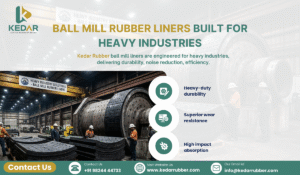
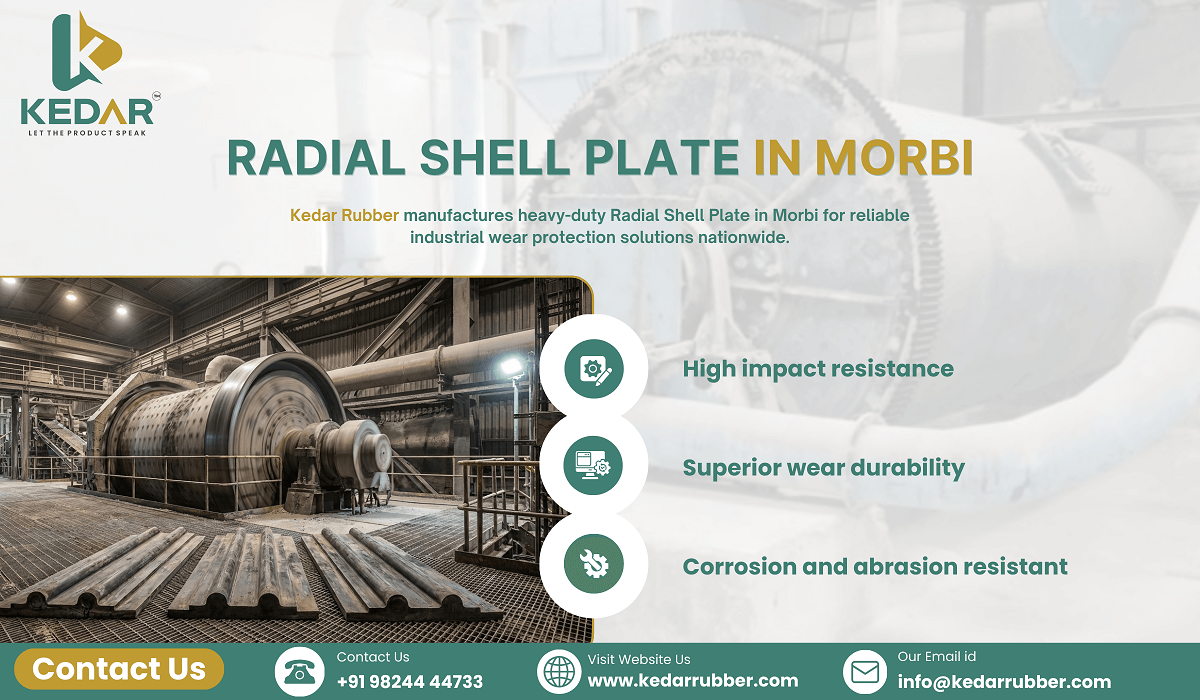
A Radial Shell Plate is a specialized element for wear defence mounted along the interior surface of grinding mills, notably ball mills. Its primary purpose is to shield the mill’s outer layer from wear while supporting the entire liner assembly.
Unlike standard flat liners, radial shell plates are shaped to follow the curve of the mill shell. This outward-facing arrangement helps spread impact forces more uniformly, reducing pressure buildup and improving liner stability during operation.
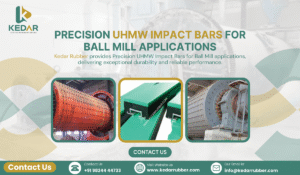
Usually constructed from specialized rubber mixes or rubber-ceramic blends, radial shell plates are designed to work alongside lifting bars and other liner parts, forming a complete wear defence structure rather than being a standalone item.
Uses Across Different Sectors
Mining Sector
In extraction and ore-refining activities, radial shell plates protect the exteriors of ball mills from abrasive ore and grinding components. They help maintain shell integrity during lengthy grinding periods and varying feed conditions.
Cement Factories
Cement mills processing clinker and additives depend on shell defence to handle both scraping and impact. Radial shell plates help maintain steady liner placement and consistent mill output.
Metal & Steel Facilities
In metal processing plants, grinding and material preparation phases involve high-force circumstances. Shell-guarding components reduce the risk of structural damage to the mills.
Ceramic Production
Ceramic raw materials are highly erosive. Radial shell plates help manage continuous wear while supporting managed grinding processes.
Power Plants
Coal grinding setups and related milling gear in power stations benefit from enhanced wear resistance and shorter maintenance gaps.
Bulk Material Transport
While most evident in milling applications, comparable radial defence concepts are used in high-wear chutes, transfer points, and material flow channels within systems that move large loads.
Material Science & Design Considerations
Selecting the correct material is crucial for how well radial shell plates perform.
- Rubber Qualities: Engineered rubber blends provide flexibility, impact dampening, and sound reduction. Their springiness allows them to compress under stress and return to their original shape without lasting damage.
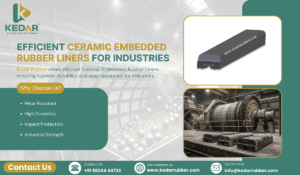
- Ceramic Inclusion: In areas with severe scraping, complex ceramic components may be embedded within rubber structures. Ceramic offers high firmness and wear resistance, while rubber absorbs impact energy.
- Wear Defence Principles: Effective wear defence balances firmness with resilience. Too much firmness without flexibility leads to cracking, while overly yielding materials wear out quickly.
- Impact Soaking: Radial shell plates must absorb repeated blows without transmitting excessive strain to the mill shell, preserving its structural soundness.
Producers with deep industry familiarity recognize that material science choices must suit the specific use, not be one-size-fits-all.
Style & Tailoring Needs
No two mills function under precisely the same conditions. Adapting the design is vital.
- Equipment Fit: Shell diameter, liner layout, and attachment methods differ between mills. Radial shell plates must align perfectly with existing mechanical connection points.
- Custom Sizing: Thickness, outward curve, and segment length are adjusted based on operational loads and wear zones.
- Use-Specific Design: Feed particle size, mill rotation speed, grinding media, and moisture levels affect liner behaviour. Designs must reflect actual plant conditions rather than theoretical estimations.
Production Excellence & Method Oversight
Uniformity in manufacturing directly influences field performance.
- Exact Production: Precise shaping and controlled hardening ensure the part holds its form and acts predictably.
- Quality Checks: Testing for hardness, verifying dimensions, and confirming adhesion help prevent early failures.
- Batch Uniformity: Consistent material traits across different production runs guarantee predictable wear patterns and reliable maintenance planning.
Setup & Servicing Insights
Thoughtfully designed curving hull segments ease both installation and subsequent maintenance.
- Quick Setup: Precisely conceived contours and attachment mechanisms reduce assembly time during outages.
- Minimized Stoppages: Swifter liner exchanges permit facilities to resume operations promptly.
- Servicing Intervals: Understandable deterioration patterns allow for scheduled maintenance rather than sudden fixes.
Safety & Operational Dependability
Security remains an absolute primary concern in industrial activities.
- Personnel Well-being: Reduced linear mass and secure mounting and servicing setups reduce handling hazards.
- Apparatus Shielding: By safeguarding the mill’s exterior shell, curved hull segments prevent structural damage that could jeopardize safety.
- Facility Dependability: Stable lining arrangements help ensure steady mill function and regulated material movement.
Economic Value Across Equipment Lifespan
While initial selection hinges on technical suitability, enduring financial aspects guide choices.
- Extended Value: Longer liner endurance reduces replacement frequency.
- Fewer Interruptions: Less unscheduled halting equates to greater facility accessibility.
- Servicing Streamlining: Timetabled servicing windows enable superior resource deployment and cost oversight, rather than focusing solely on upfront material expense.
Export Readiness & Worldwide Acceptance
Industrial purchasers worldwide anticipate more than just product delivery.
- Paperwork & Standard Awareness: Clear technical documents, material specifications, and quality records support international approvals.
- Global Purchaser Views: Uniformity, trustworthiness, and sustained supply capacity influence international procurement choices.
- Export-Focused Manufacturing: Grasping transport, packing, and adherence standards is vital for overseas arenas.
The Importance of Seasoned Producers
Wear defence options are not standard goods.
- Design Acumen: Accurate application analysis and design choice avert expensive misalignments.
- Sector Knowledge: Experience with varied operating settings builds practical understanding beyond theoretical blueprints.
- Trustworthy Supply: Industrial sites rely on readily available replacement parts to maintain operational flow.
About KEDAR RUBBER PRODUCTS PVT LTD
KEDAR RUBBER PRODUCTS PVT LTD is a seasoned manufacturer specializing in industrial rubber and wear defence remedies, serving the extraction, cement, metallurgy, ceramic, energy, and bulk material transport sectors. With extensive experience in challenging facility settings, the firm focuses on tailored solutions rather than generic products.
Its production capabilities support needs across all of India, spanning territories like Gujarat, Maharashtra, Rajasthan, Odisha, Jharkhand, Chhattisgarh, Karnataka, Tamil Nadu, Andhra Pradesh, Telangana, Madhya Pradesh, Uttar Pradesh, West Bengal, Punjab, Haryana, Himachal Pradesh, Uttarakhand, Bihar, Assam, and other industrial zones where mining, cement, ceramics, and metal processing are established.
Further specifics are accessible at 👉 https://www.kedarrubber.com/
Summary
Curved hull segments serve a vital role in protecting grinding machinery operating under harsh wear conditions. By integrating sound material science, application-specific configuration, and manufacturing uniformity, they help boost facility dependability, safety, and enduring operational effectiveness.
For sectors that face constant rubbing and impact, selecting the appropriate wear defence system is a strategic decision that impacts output well beyond a single servicing period.
Key Points to Note
- Curving hull segments shield mill exteriors from rubbing and impact
- Engineered materials balance wear resistance and energy absorption capacity
- Custom layout enhances fit and performance
- Scheduled servicing lessens unexpected downtime
- Suitable for extraction, cement, metal, ceramic, and bulk transport sectors
- Configured for enduring industrial dependability and worldwide approval
Current Frequent Inquiries
1. What is the usual service duration for a curving hull segment?
Operational life is contingent upon ore traits, mill velocity, and working conditions. Appropriately chosen segments typically endure through planned maintenance periods.
2. Which industries frequently utilize curving hull segments?
Extraction, cement production, metal refinement, ceramic creation, power generation, and bulk material transport sectors.
3. How often should curving hull segments be checked?
Standard checks are usually coordinated with scheduled mill shutdowns to assess wear patterns and fastener soundness.
4. Rubber versus porcelain wear solutions: which proves superior?
Rubber excels at absorbing impact, while porcelain offers greater abrasion resistance. Numerous uses employ composite arrangements for balanced outcomes.
5. Are curving hull segments employed globally?
Yes, comparable wear defence concepts are used in extraction and refining facilities worldwide under similar operational conditions.
#BallMillRubberLiner #CeramicWearProtection #RubberLining #MiningSolutions #BulkMaterialHandling #ConveyorSolutions #kedarrubberproduct #WearProtection #IndustrialManufacturing