Rodmill Lifter Bar in Morbi: A Critical Component for Efficient Grinding Operations in Heavy Industrial Environments
Introduction
Sectors like mineral extraction, cement production, metal refining, and major bulk material management face some of the toughest mechanical demands. Equipment in these areas must endure continuous scraping, repeated forceful blows, and rigorous operating settings, all while keeping output steady. Rodmill Lifter Bars in Morbi are vital for ensuring dependable grinding mill function, assisting these industries in managing material deterioration, enhancing internal material flow, and sustaining steady operation in heavy-duty processing environments where equipment toughness and work effectiveness are paramount.
Grinding machinery, encompassing rod mills and ball mills, is especially vulnerable to severe wear. These mills process hard ores, minerals, and feedstocks, which progressively degrade internal parts. Without suitable safeguarding against wear, mills can suffer faster damage, resulting in frequent halts, higher upkeep expenditures, and diminished facility output.
Producers such as KEDAR RUBBER PRODUCTS PVT LTD have developed specialized coatings designed to resist wear in grinding mills, including rodmill elements engineered to boost trustworthiness under severe facility conditions. Their engineering method prioritizes tangible industrial outcomes over theoretical assertions, which proves crucial in actual plant settings.
Operational Hurdles Driving the Need for Rodmill Lifter Bars
Grinding mills run nonstop in industries where equipment dependability directly influences production volume. Several functional difficulties amplify the requirement for sturdy lifter bar solutions.
Wear from Hard Substances
Mineral extraction and processing sites handle highly abrasive materials like iron ore, bauxite, copper ore, and limestone. As rods and materials tumble inside the mill, constant rubbing gradually degrades the inner surfaces of the mill.
Seasoned plant supervisors often note that abrasive action is the main reason internal mill parts fail.
Significant Impact Loading
During grinding operations, steel rods repeatedly hit the mill casing and liners. These high-energy collisions generate intense mechanical strain. Without parts designed to cushion impacts, internal surfaces can sustain structural harm.
Rusting in Damp Settings
Certain grinding processes incorporate moisture or chemical additives. In these situations, chemical attack can combine with abrasion, speeding up component breakdown.
Unscheduled Stoppages
Grinding mills represent key production assets. When internal parts break down unexpectedly, plants must cease operations for fixes. Lost time interrupts material pipelines and reduces productivity.
Increasing Upkeep Outlays
Frequent replacement of liners and repairs drives up operating expenses. Procurement divisions and maintenance teams are increasingly exploring wear solutions that extend the time between service intervals.
Throughout major industrial zones—such as mining areas, steel clusters, and ceramic production centers—these functional problems have fueled greater demand for expertly designed rodmill lifter bars.
What Exactly Is a Rodmill Lifter Bar?
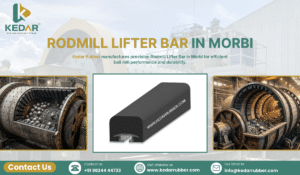
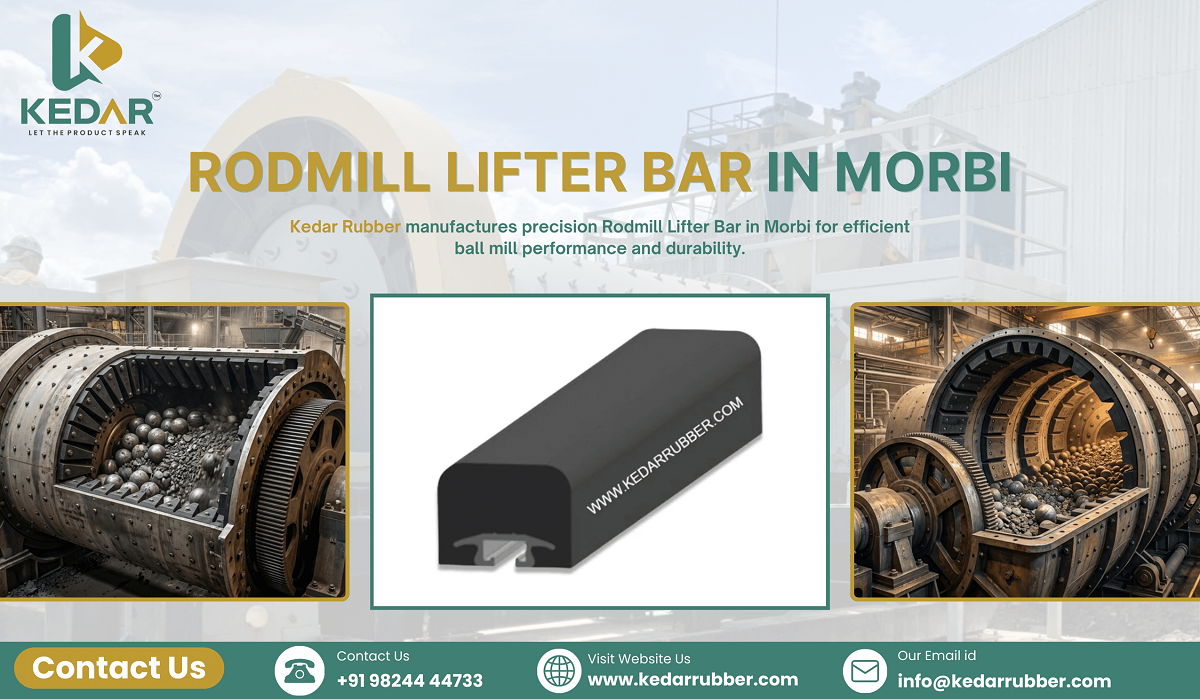
A Rodmill Lifter Bar is an internal segment subject to wear, fitted inside rod mills to assist in raising and cascading the grinding rods and the materials being processed.
The lifter bar is generally secured along the inner face of the mill shell. Its primary purpose is to elevate the grinding media as the mill rotates and allow them to drop along a managed path. This action improves the grinding process by promoting effective material breakdown.
Unlike simple lining plates, lifter bars actively shape the mill’s internal behavior. Their physical configuration dictates:
- The maximum height at which the grinding rods are raised
- The force generated when the material cascades
- How efficiently does material flow within the mill
In mineral extraction and metal refinement activities, appropriately designed lifter bars help maintain consistent grinding output while simultaneously shielding the mill shell from direct abrasion.
Uses Across Various Sectors
Rodmill lifter bars find use across several heavy industries where grinding and material manipulation are core functions.
Mining Sector
Mineral extraction heavily relies on rod mills for the initial crushing of ores. Lifter bars help maintain efficient grinding cycles while safeguarding internal mill components.
Typical mining uses include:
- Processing of iron ore
- Grinding copper ore
- Processing of gold ore
- Refining bauxite
Cement Factories
Cement formulation necessitates grinding raw components like limestone, clinker, and various additives. Rodmill parts aid in achieving uniform material size reduction before subsequent processing.
Metal and Steel Works
Steel manufacturing sites process raw minerals and scrap material that often require grinding before melting or refining. Rodmill systems equipped with suitable lifter bars support efficient material preparation.
Ceramic Production
Ceramic makers process raw materials such as feldspar, quartz, and clay. Grinding apparatus must maintain exact particle sizes, making stable mill performance crucial.
Power Stations
Facilities generating power from coal frequently employ grinding equipment to prepare fuel materials. Dependable wear components help maintain steady fuel conditioning.
Bulk Material Handling Centers
In sectors managing large volumes of minerals, aggregates, and industrial powders, rod mills contribute to size adjustment and material conditioning.
Material Science & Engineering Aspects
Selecting the right material for rodmill lifter bars demands careful engineering assessment. The objective is to balance resistance to scraping wear with the capacity to absorb impacts.
Rubber Wear Characteristics
Rubber sees extensive use in grinding mill liners and lifter bars due to its capacity to soak up impact energy. When rods strike rubber surfaces, the material briefly deforms, lessening stress buildup.
Key qualities of rubber include:
- High elasticity
- Impact dampening
- Resistance to tearing
Good performance against abrasion under moderate grinding pressures
Ceramic Hardness
In certain wear protection setups, ceramics might be incorporated where exceptionally high resistance to scraping is needed. Ceramic substances are known for their significant hardness and longevity.
Principles of Wear Resistance
Wear in grinding systems typically happens via:
- Friction from sliding
- Erosion from impacts
- Material breakdown over time
Properly conceived lifter bars help redistribute impact forces more uniformly, slowing the overall rate of deterioration.
Impact Dampening
Rubber-based arrangements are especially effective in situations where heavy steel rods deliver repeated blows. By absorbing some of the impact energy, the lifter bar protects both the mill shell and the surrounding liner arrangement.
Design & Personalization Needs
Every grinding mill possesses distinct structural specifications. Consequently, rodmill lifter bars frequently require tailoring to fit specific equipment configurations.
Key design aspects include:
- Mill diameter and length
- Rod size and mass
- Grinding rotation speed
- Material properties
Manufacturers usually produce lifter bars in various dimensions and shapes to align with different mill structures.
Customization based on the application ensures that lifter bars deliver optimal grinding motion while maintaining structural soundness.
Production Quality & Process Control
Uniformity in fabrication is vital for wear elements used in industrial grinding units.
Accurate making methods ensure that lifting bars align correctly within the mill setup. Even slight differences in dimension can impact how easily they fit and how well they function.
Core production methods include:
- Regulated rubber mixing
- Exact shaping techniques
- Size verification
- Material assessment
Consistency across batches is especially important when several lifting bars are fitted at the same time inside a mill.
Mounting & Upkeep Notes
Maintenance crews favor wear parts that make fitting simpler and cut down on stoppage durations.
Rodmill lifting bars are generally made for easy attachment using mechanical fixings or built-in lining arrangements.
During service stoppages, experts examine:
- Remaining thickness
- Surface deterioration
- Fastener soundness
Thoughtfully designed lifting bars help lengthen service periods and prevent unexpected breakdowns.
Safety & Operational Dependability
Grinding mills operate under considerable mechanical stress. Dependable protective wear parts directly boost worker security and site stability.
When lifting bars function as intended:
- Grinding rods move along predictable paths
- Mill casing structures stay shielded
- Maintenance crews encounter fewer urgent fixes
In demanding industrial settings, safety enhancements frequently stem from equipment that is tough and performs predictably.
Value Over the Equipment’s Lifespan
Industrial sites assess equipment parts based not just on the initial purchase price but also on their long-term effect on operations.
Effective lifting bars add to cost-effectiveness by:
- Lowering the wear of liners
- Extending the time between maintenance
- Avoiding unplanned downtime
Optimizing maintenance is particularly valuable in large Lifter Bar (Radicial), Wave Liner And Buffer Liner processing facilities where even brief production halts can impact total output.
Readiness for Shipment & Worldwide Acceptance
International buyers in the extraction and industrial processing sectors anticipate suppliers to adhere to rigorous quality and paperwork standards.
Producers ready for international trade must supply:
- Material tracking
- Consistent manufacturing benchmarks
- Technical documentation
- Dependable delivery timelines
Industrial sectors across Asia, the Middle East, Africa, and areas with heavy mining frequently seek robust wear defense systems that meet global benchmarks.
The Importance of Experienced Fabricators
Wear defense elements might seem basic, but their design demands a profound understanding of grinding mill dynamics.
Fabricators with a lengthy history in the sector grasp:
- Wear patterns observed in real-world use
- Needs for equipment compatibility
- Mounting difficulties faced by plant technical staff
Trustworthy vendors also sustain stable manufacturing processes to guarantee uniform product performance.
Regarding KEDAR RUBBER PRODUCTS PVT LTD
KEDAR RUBBER PRODUCTS PVT LTD is a seasoned producer specializing in industrial wear defense solutions, including rubber linings, ceramic wear defense systems, and parts related to conveyors.
The firm delivers engineered goods for sectors like mining, cement production, metal working, and handling of bulk materials. Their solutions are utilized by site operators throughout India, encompassing major industrial zones such as:
Ahmedabad, Vadodara, Surat, Rajkot, Mumbai, Pune, Nagpur, Nashik, Chennai, Coimbatore, Hyderabad, Visakhapatnam, Bengaluru, Mysuru, Kolkata, Durgapur, Jamshedpur, Ranchi, Bhubaneswar, Raipur, Bilaspur, Jaipur, Udaipur, Bhopal, Indore, Kanpur, Lucknow, Noida, Faridabad, Gurgaon, Chandigarh, Guwahati, and numerous other industrial hubs across Gujarat, Maharashtra, Tamil Nadu, Karnataka, Telangana, Andhra Pradesh, Odisha, Jharkhand, Chhattisgarh, Rajasthan, Madhya Pradesh, Uttar Pradesh, Haryana, Punjab, Assam, and West Bengal.
Further details regarding their industrial wear defense solutions are available at:👉 https://www.kedarrubber.com/
Summary
Rodmill lifting bars fulfill a vital function in sustaining the effectiveness and longevity of grinding mills utilized across mining, cement, metal working, and other heavy industries.
While frequently overlooked, these parts significantly influence grinding action, abrasion defense, and upkeep schedules. When correctly designed and produced, lifting bars contribute to steady mill operation and enhanced site dependability.
For site engineers and purchasing departments, choosing expertly designed wear components is a key step towards sustaining efficient and secure industrial functions.
Main Points
- Rodmill lifting bars support efficient grinding work
- They guard internal mill surfaces from scraping and impact
- Appropriate design enhances operational reliability
- Suitable for the mining, cement, steel, and ceramic sectors
- Long-lasting wear defense helps decrease maintenance interruptions
Trending FAQs
1. What is the typical lifespan of a Rodmill Lifter Bar?
- The lifespan depends on operating conditions, grinding material hardness, and mill speed in many plants.
2. Can Rodmill Lifter Bars be used in all grinding mills?
- They are primarily designed for rod mills. However, similar lifter systems are used in ball mills with design variations based on grinding media type.
3. How often should lifter bars be inspected?
- Maintenance teams typically inspect lifter bars during scheduled mill shutdowns.
4. Are rubber lifter bars better than metal alternatives?
- Rubber lifter bars offer improved impact absorption and reduced noise levels, while metal liners may perform better in extremely high-temperature conditions.
5. Do lifter bars affect grinding efficiency?
- Yes. Their geometry influences how grinding rods move inside the mill, which directly impacts grinding performance and material breakdown.
#BallMillRubberLiner #CeramicWearProtection #RubberLining #MiningSolutions #BulkMaterialHandling #ConveyorSolutions #kedarrubberproduct #WearProtection #IndustrialManufacturing