- 903, SKD Surya Icon, Naranpura, Ahmedabad
- +91-98244 44733
- info@kedarrubber.com

Certified Company
ISO 9001:2015
Leading Manufacturer
of Rubber Products

Industry Services
BROCHURES
Download your Free Report: What every business owner must know
Download Brochures PDFAbrasion / Impact Resistant Rubber Liner in Gujarat
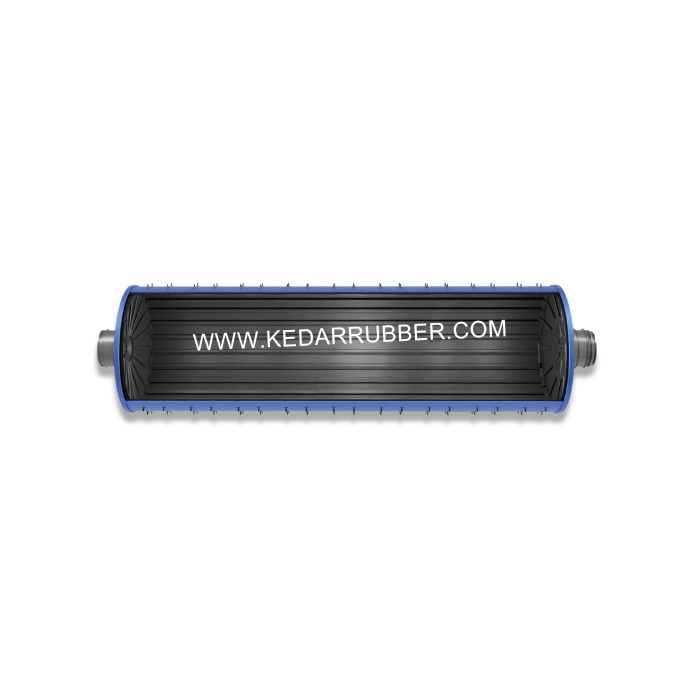
High-Performance Abrasion and Impact Resistant Rubber Liners for Gujarat Industries
Introduction
Industrial operations in sectors like mining, cement, ceramics, metal processing, and bulk material handling continuously face one common engineering challenge—equipment wear under harsh operating conditions. In regions with heavy industrial activity, such as Gujarat, where manufacturing clusters in Ahmedabad, Vadodara, Surat, Rajkot, Bhavnagar, Jamnagar, and Vapi–Valsad belt are rapidly expanding, the demand for reliable wear protection systems has significantly increased.
In grinding and material processing systems, especially ball mills, internal wear is a persistent issue caused by continuous impact and abrasive movement of raw materials. Without proper protection, equipment degradation leads to frequent shutdowns, reduced efficiency, and increased maintenance cycles.
This is where Abrasion / Impact Resistant Rubber Liner play a critical role as an engineered wear protection solution. They are not just protective layers but part of a system designed to improve operational stability, reduce downtime, and maintain consistent grinding performance in industrial environments.
Industrial Challenges That Drive Demand for Abrasion / Impact Resistant Rubber Liner
In heavy-duty processing industries across Gujarat’s industrial zones, several operational challenges directly influence the need for advanced lining systems:
- Abrasion: Continuous grinding of ores, clinker, minerals, and ceramic raw materials causes severe surface wear.
- Impact Loads: Large feed sizes entering ball mills create high-impact stress on internal surfaces.
- Corrosion: In chemical processing and mineral wet grinding, moisture and reactive materials accelerate material degradation.
- Unplanned Downtime: Frequent liner replacement leads to production interruptions.
- Maintenance Costs: Repeated metal liner replacements increase operational overhead and workforce requirements.
Experienced plant engineers often observe that traditional metallic liners struggle in high-abrasion environments. In mining and metal processing operations in regions like Kutch mining belts and industrial plants around Vadodara and Jamnagar, equipment reliability becomes a critical production factor.
What are Abrasion / Impact Resistant Rubber Liner?
Abrasion / Impact Resistant Rubber Liner are engineered wear-resistant lining systems installed inside grinding mills to protect the shell from abrasion and impact damage.
Unlike conventional metal liners, rubber liners are designed using high-performance elastomer compounds that absorb impact energy and reduce noise while maintaining structural integrity under continuous load.
From an engineering perspective, these liners function as:
- A shock absorber layer between the grinding media and the mill shell
- A wear-resistant barrier against abrasive material flow
- A noise and vibration reduction system improving operational conditions
Manufacturers with long-term industry exposure understand that liner selection directly influences grinding efficiency, mill life, and overall plant stability.
Applications Across Industries in Gujarat
Ball mill rubber lining systems are widely used across multiple industrial sectors in Gujarat:
- Mining Industry: Used in ore grinding and mineral processing units, especially in regions dealing with limestone, bauxite, and silica extraction.
- Cement Plants: Cement manufacturing clusters in Surat, Ahmedabad, and Rajkot regions rely on ball mills for clinker grinding, where wear resistance is critical.
- Metal & Steel Plants: Used in ore preparation and beneficiation processes.
- Ceramic Manufacturing: Morbi and surrounding ceramic clusters use ball mills for raw material grinding, where consistent particle size distribution is essential.
- Power Plants: Coal grinding systems require durable liners for continuous operation.
- Bulk Material Handling Units: Used in material preparation systems before downstream processing.
Material Science & Engineering Considerations
The performance of Abrasion / Impact Resistant Rubber Liner depends heavily on material composition and engineering design:
- Rubber Properties: High elasticity rubber compounds help absorb repeated impact loads without cracking.
- Ceramic Integration: In some advanced systems, ceramic inserts improve surface hardness and extend wear life.
- Wear Resistance Mechanism: Rubber reduces direct metal-to-material contact, minimizing abrasion.
- Energy Absorption: Impact energy is distributed across the liner surface instead of concentrated stress points.
In industrial environments, selecting the correct compound mix is not a generic process. It depends on ore hardness, moisture content, mill speed, and operating temperature.
Design And Customization Requirements
Ball mill liners are never one-size-fits-all solutions.
Key design considerations include:
- Mill diameter and length compatibility
- Grinding media type and size
- Feed material characteristics
- Operating speed and load conditions
In Gujarat’s diverse industrial ecosystem, customization becomes essential. Ceramic manufacturers in Morbi may require different lining profiles compared to mining operations in Kutch or cement plants in South Gujarat.
Manufacturing Quality & Process Control
Reliable liner performance depends on controlled manufacturing practices:
- Precision molding and curing processes
- Controlled rubber compound formulation
- Dimensional accuracy checks for fitment
- Batch-to-batch consistency testing
Industrial buyers, especially EPC contractors and OEMs, expect strict quality assurance aligned with operational safety and long service life expectations.
Installation & Maintenance Considerations
From a plant engineering perspective, ease of installation is a major operational advantage.
Rubber liners typically offer:
- Faster installation compared to heavy steel liners
- Reduced mill downtime during replacement cycles
- Simplified handling and assembly
- Lower maintenance frequency under stable operating conditions
Maintenance schedules are usually planned based on wear monitoring rather than reactive replacement, improving plant uptime efficiency.
For leadership development, management strategies, and advanced business thinking frameworks used by global organizations, you can refer to Harvard Business Review (HBR).
Safety & Operational Reliability
Safety is a critical factor in industrial plant environments.
Abrasion / Impact Resistant Rubber Liner contribute to:
- Reduced vibration and noise levels inside mills
- Improved worker safety during maintenance operations
- Lower risk of liner breakage or sudden failure
- Stable grinding performance under continuous load
In large-scale plants across Gujarat industrial corridors, operational reliability directly impacts production targets and safety compliance.
Cost Efficiency Over Equipment Life Cycle
Instead of focusing on upfront cost, modern industrial procurement evaluates lifecycle efficiency:
- Reduced shutdown frequency
- Lower replacement intervals
- Minimal secondary damage to mill shells
- Improved grinding efficiency consistency
In long-term operations, especially in cement and mining sectors, lifecycle optimization becomes more important than short-term cost considerations.
For global business intelligence, market trends, and industry innovation insights that help manufacturers and enterprises understand evolving economic landscapes, you can refer to Business Insider.
Export Readiness & Global Acceptance
Industrial buyers today expect suppliers to meet global standards in:
- Documentation and traceability
- Material compliance and testing reports
- Packaging and logistics readiness
- Application engineering support
Gujarat-based manufacturing systems are increasingly aligned with international expectations, supporting both domestic and export-oriented industries.
Why Experienced Manufacturers Matter
Manufacturers with deep industrial exposure understand real plant challenges beyond theoretical design.
In practice:
- Equipment conditions vary across plants
- Material loads are inconsistent
- Maintenance environments are not always ideal
Experienced plant engineers often observe that reliability comes not just from material quality but from engineering understanding, application fitment, and long-term field performance feedback.
About Kedar Rubber Products Pvt Ltd
Kedar Rubber Products Pvt Ltd is an experienced industrial manufacturer providing wear protection and rubber engineering solutions for mining, cement, ceramic, and bulk material handling industries across India, including key industrial regions of Gujarat.
Their engineering approach focuses on real industrial conditions rather than standard catalog-based solutions.
More details can be explored at: 👉 https://www.kedarrubber.com/
Conclusion
Abrasion / Impact Resistant Rubber Liner play a crucial role in improving equipment life, reducing wear-related failures, and maintaining consistent grinding efficiency across industrial sectors in Gujarat. Their importance becomes more significant in high-abrasion environments where downtime directly affects production output.
From mining operations in Kutch to ceramic clusters in Morbi and cement plants across Surat and Ahmedabad, rubber lining systems have become an integral part of modern industrial maintenance strategy.
A well-designed liner system is not just a component—it is part of the plant’s operational reliability framework.
Key Takeaways
- Effective wear protection improves equipment lifespan.
- Supports consistent operational reliability in harsh environments
- Suitable for mining, cement, ceramic, and steel industries
- Reduces long-term maintenance and downtime
- Strong relevance across Gujarat’s industrial zones
Dedicated Team
True Partners
Global Know-How
Focus On Innovation
FAQ
Q1. What are abrasion and impact resistant rubber liners used for?
They are used to protect industrial equipment like ball mills, chutes, hoppers, and conveyors from heavy wear caused by abrasive and high-impact materials.
Q2. Which industries commonly use these rubber liners?
Mining, cement plants, ceramic manufacturing, steel industries, and bulk material handling sectors widely use them for wear protection.
Q3. How do abrasion resistant rubber liners improve equipment life?
They reduce direct metal-to-material contact, absorb impact energy, and minimize surface wear, which helps extend equipment service life.
Q4. What is the difference between abrasion resistance and impact resistance in rubber liners?
Abrasion resistance protects against surface grinding wear, while impact resistance helps absorb sudden shock loads from heavy material fall.
Q5. Can these rubber liners be customized for different equipment?
Yes, they are engineered based on equipment size, operating conditions, and material type to ensure proper fit and performance.