
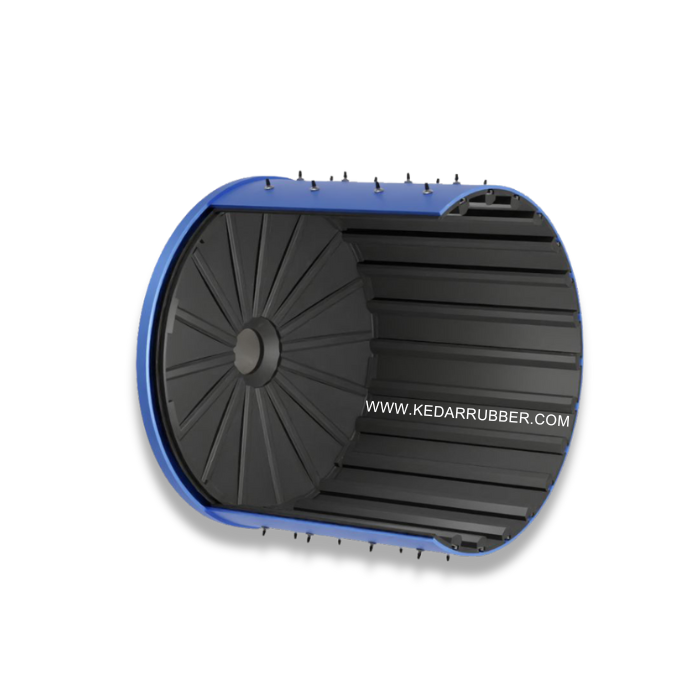
Ball Mill Liner Manufacturer Ahmedabad: Practical Guide for Better Mill Life, Lower Noise, and Reliable Fit
Mill liner failure rarely starts as a big event. In most Indian plants, it begins with rising vibration, uneven wear, bolt loosening, higher shutdown frequency, and operators saying the mill “sounds heavier” than usual. That is why many buyers looking for ball mill rubber liners manufacturer ahmedabad now focus less on simple piece price and more on wear life, fit accuracy, and maintenance hours saved over a full campaign. For mining, mineral processing, and cement units in Ahmedabad, Surat, Mumbai, Pune, Hyderabad, Chennai, and Kolkata, liner performance has become a plant reliability issue, not just a purchase item.
Why Choose Kedar Rubber for Ball Mill Liner Manufacturer Ahmedabad
The practical answer is simple: plant teams need liners that fit right, last longer, and reduce stoppage pressure on maintenance crews. Kedar Rubber brings over 25 years of experience in industrial rubber engineering, backed by ISO 9001:2015 certification, 200+ clients, 30+ major projects, and 5+ industry awards. Led by Mr. Sandip Trivedi and a skilled rubber technology team, the company works with actual mill dimensions, operating conditions, feed pattern, and impact zones rather than offering a generic sheet-based solution. Buyers searching for Rubber Liner Manufacturers in Ahmedabad usually compare durability, response time, and customization depth before anything else.
Yes, real value shows up during shutdown. A maintenance head from Vadodara once told me that steel liner replacement used to consume both time and patience because every delay pushed dispatch schedules. With rubber-based systems, the discussion changes to safer handling, reduced weight, and better working conditions around the mill. That is where supporting parts such as triangle head plate liners also matter, because liner system integrity depends on how all contact and support areas behave together under load.
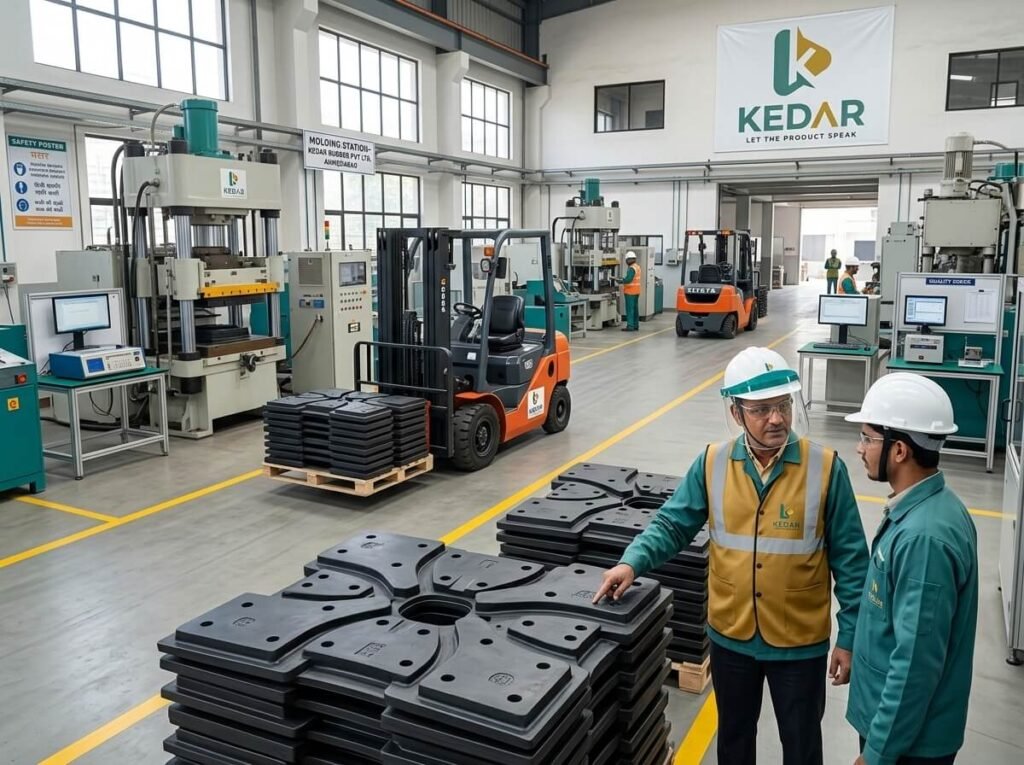
Our Ball Mill Liner Manufacturer Ahmedabad Manufacturing Capabilities
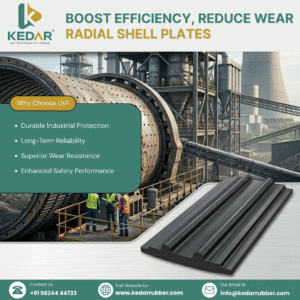
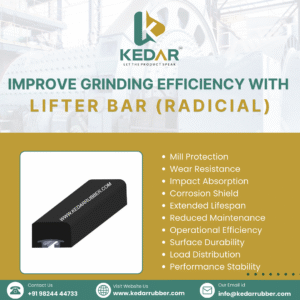
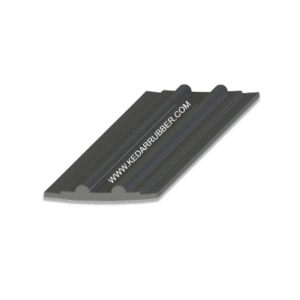
Here’s how Kedar Rubber approaches manufacturing in a way plant engineers appreciate. The factory at 28,29,30 Shankheshwar Industrial Estate, Tajpur Road, Changodar, Ahmedabad – 382213, Gujarat, India is set up for custom molded rubber products designed around mill diameter, shell configuration, discharge arrangement, ore characteristics, and operating RPM. Instead of forcing one pattern everywhere, the team aligns hardness, thickness, backing support, and wear profile with the application. This matters whether the requirement is a mining rubber liner, a cement mill liner, or a custom rubber liner Ahmedabad project for a process plant.
The best liner is the one that solves a real operating problem. In one common scenario, a cement unit near Jaipur may want lower noise and easier handling during maintenance, while a mineral grinding unit serving Bangalore may prioritize abrasion pattern and bolt retention. For such applications, parts like center circle components work as part of a larger wear system. That is also why terms such as wear resistant rubber liner, abrasion resistant rubber liner, longer life rubber liner, and noise reduction rubber liner are not marketing language on the shop floor; they are operating targets tied to maintenance budgets.
Yes, buyers also ask whether rubber can handle heavy-duty Indian conditions. In many cases, the answer is yes, provided compound selection and design are done properly. A well-made rubber mill liner India setup can offer up to 70% noise reduction compared with conventional metallic arrangements, while being 65-75% lighter than steel. That lower weight helps during installation, especially where shutdown windows are tight and contractor manpower is limited. For engineers wanting more detail on design behavior, this technical article on advanced triangle head plate design explains why geometry and support matter in service life.
Navigating Quality Standards & ISO 9001:2015 Certification
The direct answer is that quality in mill liners is not only about the final molded part. It starts with drawing review, mold discipline, raw material control, dimensional checks, traceability, and inspection consistency. As an ISO 9001:2015 Certified Company, Kedar Rubber Products Pvt. Ltd. follows a process-oriented quality framework that helps reduce variation from batch to batch. External ISO 9001:2015 standards are widely used to structure documentation, corrective action, and repeatability, which is important for plants running multi-location procurement across Delhi, Indore, Chandigarh, and Ahmedabad.
Here’s what experienced buyers usually ask: Will the liner profile match the mill? Will hardness stay within range? Will the installation team face hole mismatch? Will wear be even across feed and discharge sides? These are the practical questions that separate a standard vendor from an experienced industrial rubber manufacturer Gujarat buyers can depend on. For a deeper operating perspective, this post on how rubber liners transform ball mill grinding gives a useful view of grinding efficiency, maintenance ease, and plant-side considerations.
Get a Quote for [Ball Mill Liner Manufacturer Ahmedabad]
A small but useful success story comes from an anonymized ceramics processor in Surat. The plant had recurring complaints from operators about mill area noise and liner handling fatigue during shutdown. After shifting to a customized rubber lining arrangement, the team reported easier fitment and noticeably calmer mill surroundings. It was not a miracle fix; it was simply a case of using the right material and profile for the duty cycle. That is why some procurement teams now search for custom rubber liner India rather than asking only for generic rates.
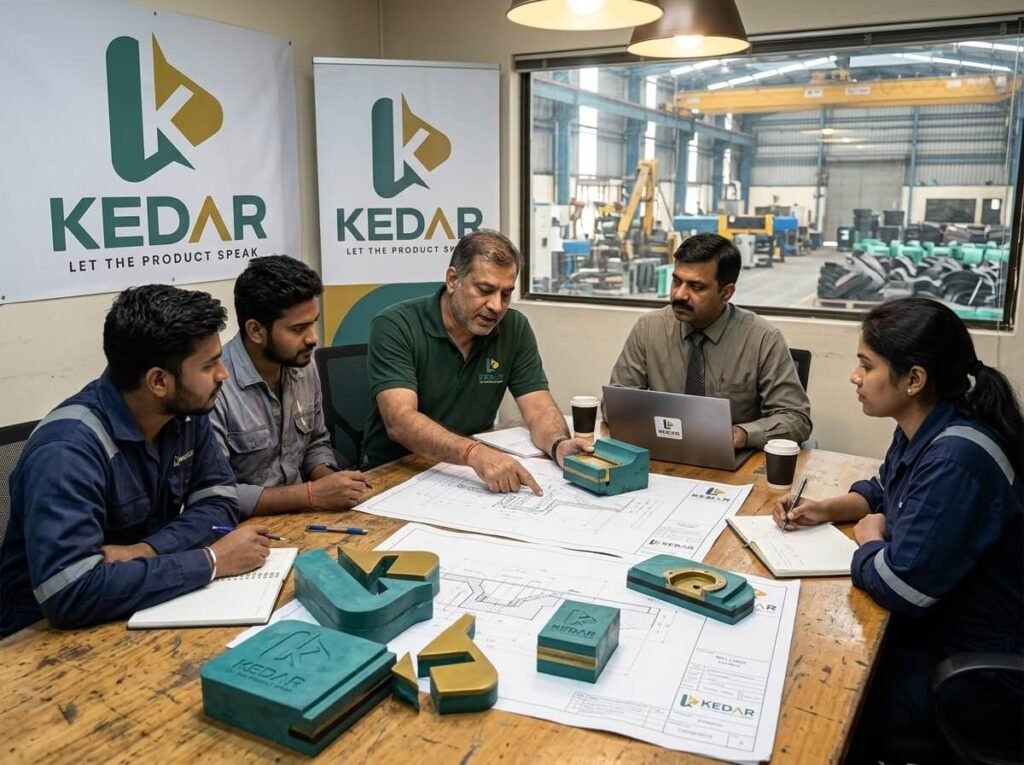
Local Manufacturers vs Kedar Rubber (Comparison Table)
The best comparison is one based on operating outcomes, not brochure claims. Below is a practical decision table plant teams can use.
| Evaluation Factor | Typical Local Supplier | **Kedar Rubber** |
|---|---|---|
| Mill-specific customization | Often limited to standard patterns | Built as per mill specifications and duty conditions |
| Weight advantage over steel | Varies, not always optimized | Typically 65-75% lighter than steel |
| Noise reduction | Moderate or undocumented | Up to 70% noise reduction in suitable applications |
| Quality system | May vary by batch | ISO 9001:2015 process-based controls |
| Experience signals | Limited project depth | 25+ years, 200+ clients, 30+ major projects |
| Application support | Product supply focused | Engineering-led support for mining and cement use cases |
Yes, comparison should also include content depth and technical transparency. This article on ball mill rubber liners for heavy industries is useful for procurement teams validating service suitability before sending drawings and BOM details. It also helps answer a frequent People Also Ask query: are rubber liners suitable for heavy-duty mills? In many cases, yes, if the design basis is correct.
Step-by-Step Process – How We Deliver Ball Mill Liner Manufacturer Ahmedabad
Here’s how Kedar Rubber typically delivers a project. First comes application review: mill dimensions, shell data, material characteristics, current liner pain points, and shutdown schedule. Second is design alignment, where the team studies impact zones, expected wear path, fastening layout, and service objective, whether that is longer liner life, lower noise, reduced maintenance downtime, or easier replacement. Third is manufacturing and inspection. Fourth is dispatch coordination and fitment guidance. Fifth is post-installation review to understand wear behavior. For buyers searching online for ball mill rubber liner manufacturers near me, this process detail is often more useful than a generic catalog.
The direct answer to “how long does development take?” depends on complexity, quantity, and whether there is an existing drawing set. Repeat jobs move faster. New custom jobs need more review because getting the fit wrong by a small margin creates big headaches on shutdown day. Plants with urgent replacement needs can start through the contact page and request a Free Rubber Liner Consultation, ask for WhatsApp coordination, or request to Download Ball Mill Liner Cost Guide for budgeting support.
Real Client Case Study
Here’s a realistic case from western India. An anonymized cement grinding unit, “Client S,” operating between Ahmedabad and Mumbai, faced three linked issues: high liner handling time, repeated shutdown extension, and uncomfortable noise levels near the mill bay. The existing metallic setup was durable in parts but hard on maintenance planning. During a scheduled outage, the team reviewed feed-end wear, shell condition, and handling constraints. A customized rubber liner package was then developed for the mill profile and operating pattern.
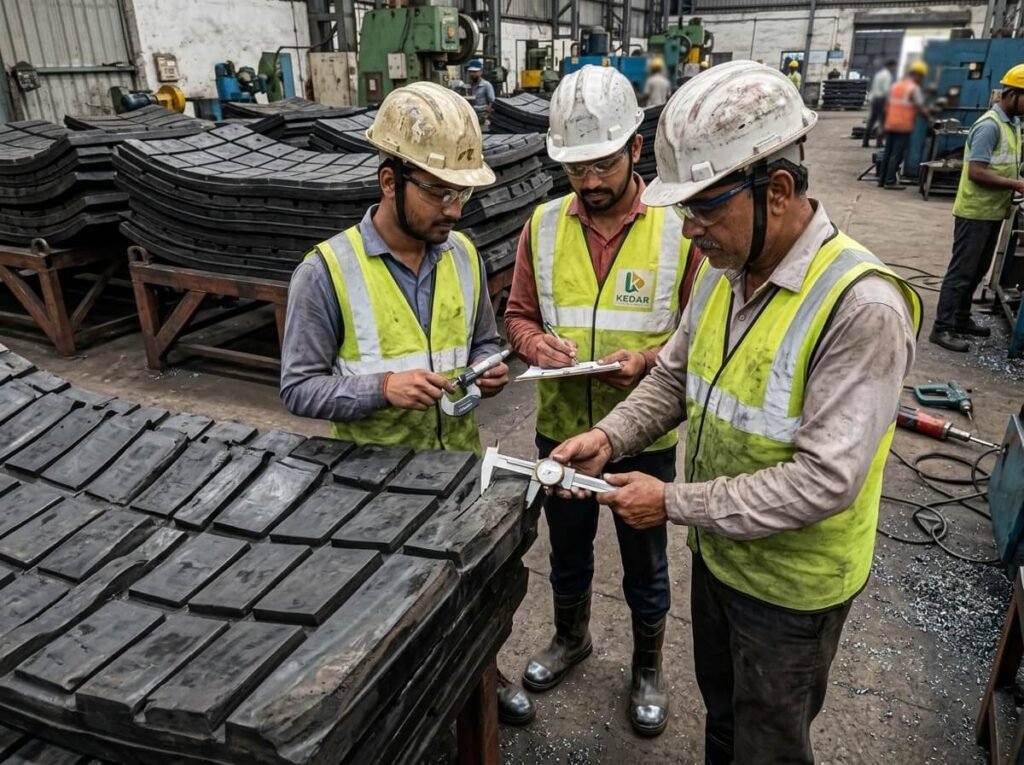
The result over the next service cycle was not just lower noise. The plant also reported easier handling during fitment, lower fatigue on the maintenance crew, and a more predictable shutdown sequence. In procurement terms, that improved life-cycle value even if line-item comparison alone did not show the full picture. This is why many engineers comparing Ball Mill Rubber Liner Manufacturers now ask for evidence on installation practicality, not only wear claims.
FAQs
1. What is the main benefit of a rubber ball mill liner?
The main benefit is a combination of lower noise, lower weight, easier handling, and potentially longer service life when the liner is matched properly to the mill duty.
2. Are rubber liners suitable for cement mills?
Yes, a cement mill liner in rubber can work well where abrasion, maintenance ease, and noise control are key considerations.
3. How do I choose the right liner for my mill?
Start with mill size, material type, feed conditions, RPM, wear pattern, and shutdown frequency. A site-specific review gives the right answer.
4. Do rubber liners reduce maintenance downtime?
Yes, lighter components can make handling and replacement faster, which helps reduce planned shutdown time.
5. Can you supply for cities outside Ahmedabad?
Yes, supply discussions commonly involve plants in Delhi, Hyderabad, Chennai, Pune, Kolkata, and other industrial cities.
6. What industries use these liners most?
Mining, mineral processing, cement, ceramics, and selected chemical process plants are common users.
7. What should I ask before requesting a quote?
Share mill dimensions, current liner type, material handled, expected wear issue, quantity, and shutdown date.