
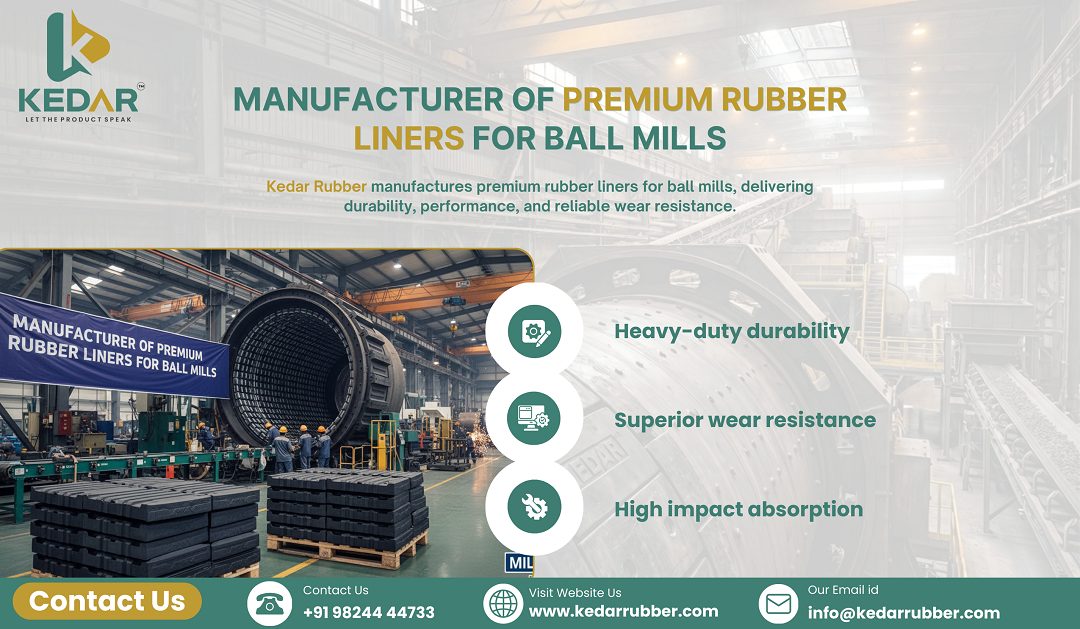
Buy Ball Mill Rubber Liner for Longer Mill Life and Lower Downtime
Ball mill stoppage is costly. In most Indian plants, one liner failure does not just mean a part replacement; it affects output, power use, manpower planning, and sometimes even dispatch schedules. If you are planning to buy ball mill rubber liner, you need clarity on material quality, fitment accuracy, wear life, and service support. By the end of this article, you will know what to check before ordering, how an experienced manufacturer handles customization, and why Kedar Rubber is often considered by procurement and maintenance teams looking for practical mill lining solutions across Ahmedabad, Mumbai, Delhi, Pune, Hyderabad, Chennai, and Surat.
Why Choose Kedar Rubber for Buy Ball Mill Rubber Liner
This section explains what serious buyers usually compare before placing an order. The focus is not on claims, but on what matters on the shop floor: fit, wear life, shutdown time, and support after dispatch.
The best way to evaluate a liner partner is to see whether they understand plant conditions, not just drawings. Kedar Rubber has over 25 years of experience in industrial rubber products and custom mill lining work. The company is led by Mr. Sandip Trivedi and a skilled team of rubber technology experts, with custom solutions delivered to 200+ clients, 30+ major projects, and 5+ industry awards.
Yes, buyers today ask more practical questions than before. Will the liner reduce noise? Will it handle slurry impact? Can it be made for an old mill where original drawings are missing? These are valid questions, especially for mining and cement units in Jaipur, Vadodara, Kolkata, and Indore, where plants often run mixed-age equipment.
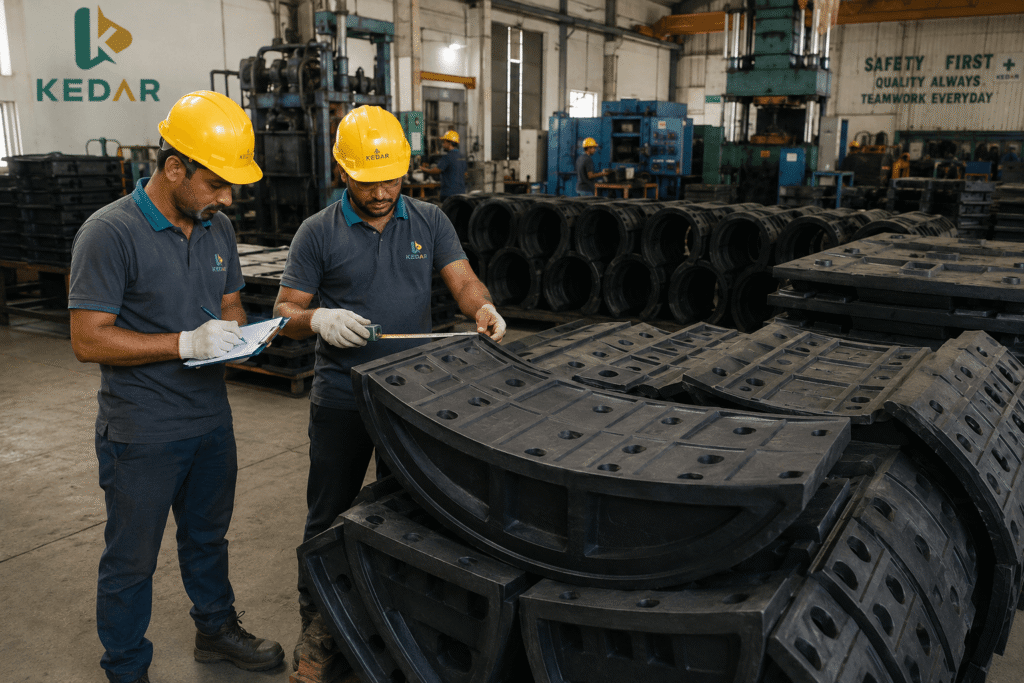
In actual plant use, a properly designed wear resistant rubber liner helps reduce metal-to-metal impact, lowers noise levels, and makes handling easier during shutdowns. Kedar Rubber’s liner systems are known for up to 70% noise reduction and 65-75% lower weight compared to steel liners. That difference matters when maintenance teams are working under tight shutdown windows.
A small example: one maintenance head from a cement unit near Bangalore once said the real savings did not come from liner price alone. It came from avoiding an extra half-day of shutdown because the liner segments matched the mill shell correctly. That is the kind of ground reality experienced buyers understand well.
You can also explore related solutions here:
- Ball Mill Rubber Liner
- Rubber Lining
- Industrial Rubber Products
Our Buy Ball Mill Rubber Liner Manufacturing Capabilities
Here you will see what a capable manufacturer should be able to do before you release a purchase order. Good manufacturing in this segment is always about customization, not off-the-shelf assumptions.
Yes, we provide custom liner development based on mill size, operating speed, material characteristics, impact pattern, and maintenance requirements. That is important because a mining rubber liner for ore grinding and a cement mill liner for clinker handling do not face the same loading conditions.
A reliable setup should cover:
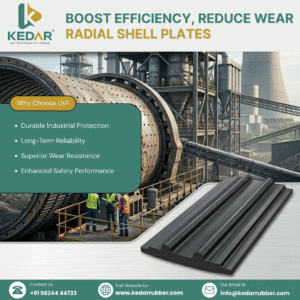
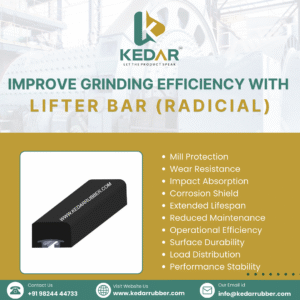
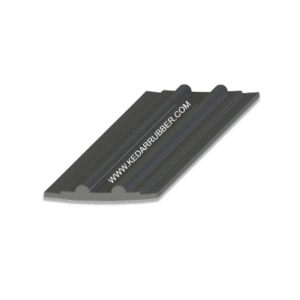
- Shell liners and lifter bars
- Feed end and discharge end arrangements
- Profile-based customization for impact and sliding wear
- Molded rubber components for different mill geometries
- On-site fitment understanding for old and modified mills
Here’s how Kedar Rubber approaches manufacturing. The team studies operating details, checks drawings or old liner samples, and aligns the molding process with actual plant use. This matters when you need a custom rubber liner India solution instead of a generic part. It also matters when you need an abrasion resistant rubber liner for fine grinding or a noise reduction rubber liner for enclosed plant areas where operator exposure is a concern.
For buyers comparing rubber liner manufacturers in Ahmedabad, one useful point is factory access. Kedar Rubber’s factory is located at 28,29,30 Shankheshwar Industrial Estate, Tajpur Road, Changodar, Ahmedabad – 382213, Gujarat, India, which supports production visibility and dispatch planning. The office is at 903, 9th Floor, SKD Surya Icon, Opp. Torrent Power Office, Naranpura, Ahmedabad – 380013, Gujarat, India.
Get a Quote for [Buy Ball Mill Rubber Liner]
For buyers who want cost clarity before final discussion, ask for a Free Rubber Liner Consultation or Download Ball Mill Liner Cost Guide. Many procurement teams now also prefer a WhatsApp-first discussion for drawing review and urgent requirement sharing.
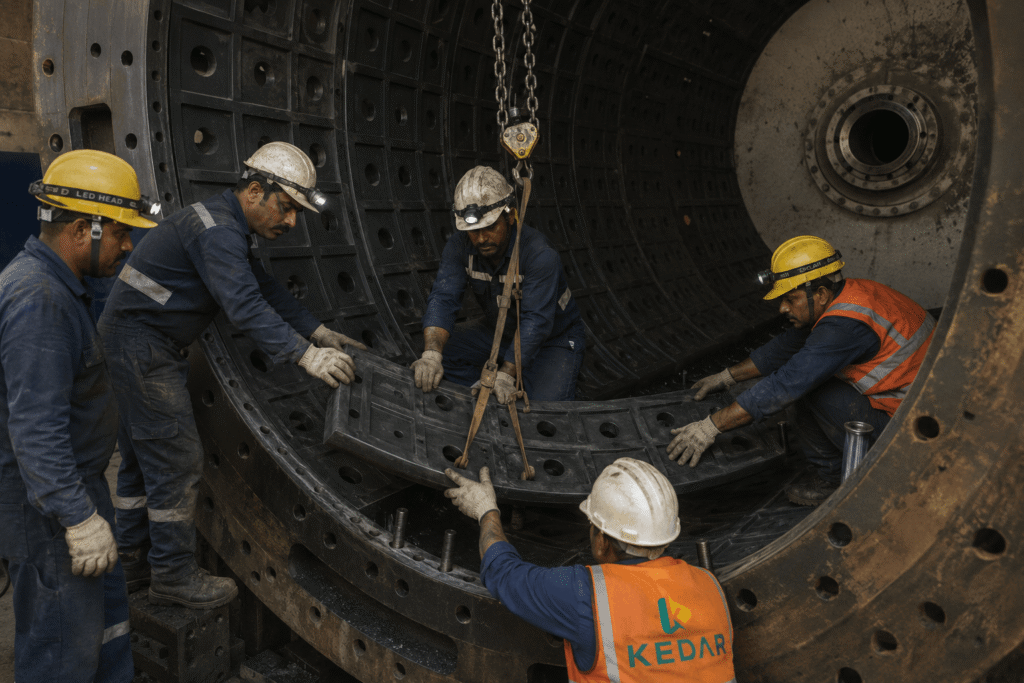
Navigating Quality Standards & ISO 9001:2015 Certification
This section covers a question buyers ask more often now: how do you judge quality beyond appearance? In rubber lining, quality is a process issue as much as a product issue.
Yes, ISO matters when it is supported by manufacturing discipline. Kedar Rubber is an ISO 9001:2015 Certified Company, which helps buyers looking for consistency in documentation, process control, inspection, and traceability. In practical terms, this becomes useful when your team wants repeatable quality over multiple supply cycles, not just one successful dispatch.
The best quality checks in a rubber mill liner India project usually include:
- Material consistency across batches
- Dimensional accuracy
- Bonding and molding control
- Hardness and wear-performance checks
- Fitment compatibility with mill specifications
External references to ISO 9001:2015 standards are relevant here because modern procurement teams, especially in Mumbai, Delhi, and Ahmedabad, increasingly align vendor evaluation with documented quality systems. This is common in large cement groups, mineral processors, and EPC-linked buying environments.
People also ask: Do rubber liners last longer than steel? In many applications, yes, especially where impact absorption and abrasion control are important. People also ask: Are rubber liners suitable for cement mills? Yes, provided the design matches the mill conditions. People ask: Can liners be customized for old mills? Yes, with proper measurement, sample review, and profile selection.
A longer life rubber liner is never just about material grade. It is the result of matching compound, profile, and operating conditions. Similarly, custom molded rubber products used in heavy industry must perform according to actual operating conditions, not just catalog dimensions. That is where experience from an industrial rubber manufacturer Gujarat buyers already know becomes valuable.
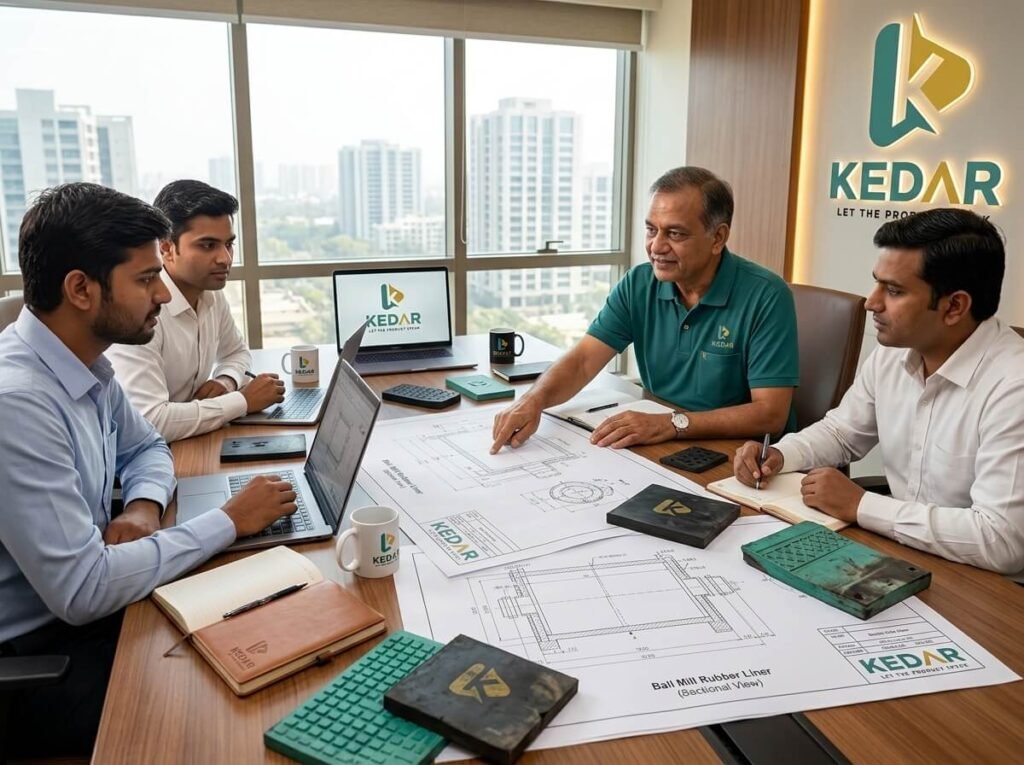
Local Manufacturers vs Kedar Rubber
This section gives a direct comparison. It helps plant heads and purchase teams decide what to check before shortlisting vendors.
Here’s a practical comparison many buyers use when evaluating Ball Mill Rubber Liner Manufacturers and regional suppliers.
| Evaluation Point | Typical Local Supplier | Kedar Rubber |
|---|---|---|
| Experience in industrial rubber | May vary by product line | Over 25 years |
| Customization by mill specification | Sometimes limited | Detailed custom approach |
| Noise reduction benefits | Not always defined | Up to 70% reduction |
| Weight vs steel liners | Depends on design | 65-75% lighter than steel |
| Quality system | May not be formalized | ISO 9001:2015 Certified Company |
| Project credibility | Limited public record | 200+ clients, 30+ major projects, 5+ awards |
If you are comparing Ball Mill Rubber Liner Suppliers India, focus on downtime risk, not only purchase price. A lower quote can become expensive if fitment, wear rate, or replacement planning is weak.
Step-by-Step Process – How We Deliver Buy Ball Mill Rubber Liner
This section outlines the buying and delivery flow. It helps teams understand what should happen from inquiry to installation.
Here’s how Kedar Rubber typically handles a project:
1. Requirement review
The team studies mill details, application type, wear issues, and shutdown schedule. This is where mining, chemical, and cement use cases are separated properly.
2. Drawing or sample evaluation
If drawings exist, they are checked. If not, old samples, site measurements, or photos can be used. This is common in brownfield units in Pune, Hyderabad, and Chennai.
3. Design and material selection
The liner profile, rubber properties, and thickness are aligned with impact and abrasion conditions. This is critical for a cement mill liner or high-load mining rubber liner application.
4. Manufacturing and quality checks
Compounding, molding, dimensional verification, and inspection happen before dispatch. Good process control reduces site-level surprises.
5. Dispatch and support
The liners are packed and sent with attention to installation sequence. Buyers can coordinate through phone or WhatsApp for urgency.
Common buyer question: How long does replacement planning take? It depends on complexity, but faster decisions happen when operating data and old liner photos are shared early.
Real Client Case Study
This section gives a realistic example of how a liner project creates value. It is useful for teams trying to justify a change in liner strategy.
A mid-sized cement plant in western India, referred to here as Client M, was facing repeated shutdown pressure due to faster wear and difficult handling of heavy metallic liners. The plant team needed a custom rubber liner Ahmedabad source that could understand old mill conditions and supply with dimensional accuracy.
The best result came from solving three issues together: wear pattern mismatch, installation effort, and noise. After review of the operating conditions and worn-out liner samples, a customized liner set was developed. The new configuration helped reduce handling effort during shutdown and improved operator comfort because the running noise dropped noticeably.
Within the next operating cycle, the customer reported smoother maintenance planning and fewer complaints from the line team. The real gain was not dramatic marketing language; it was predictable maintenance. For a plant manager, that matters more than anything else.
If you are planning to buy, the next steps are simple:
- Share your mill size, application, and current problem.
- Ask for a Free Rubber Liner Consultation.
- Request to Download Ball Mill Liner Cost Guide.
- Connect on WhatsApp for urgent drawings or photos.
- Call +91-98244 44733, +91 63569 50669, +91 63590 30015, +91 90990 53366, or 079 4924 3469.
FAQs
1. What should I check before I buy ball mill rubber liner?
Check mill dimensions, operating conditions, wear pattern, liner profile, material quality, and supplier support during shutdown.
2. Are rubber liners suitable for mining and cement plants?
Yes. They are widely used in mining and cement applications when the design is matched to impact and abrasion conditions.
3. Do rubber liners reduce noise in ball mills?
Yes. Properly designed rubber liners can reduce operating noise significantly, in some cases up to 70%.
4. Can you make liners as per old samples if drawings are missing?
Yes. Sample-based and measurement-based customization is possible for older mills.
5. How is a rubber liner better than a steel liner?
Rubber liners are lighter, easier to handle during shutdown, and often better at absorbing impact and reducing noise.
6. Do you support buyers outside Gujarat?
Yes. Supply discussions and dispatch support commonly serve customers across major Indian industrial cities.
7. How do I contact Kedar Rubber for an inquiry?
You can call, email info@kedarrubber.com, kedarrubber@gmail.com, factory@kedarrubber.com, or use the contact page and WhatsApp for faster response.