
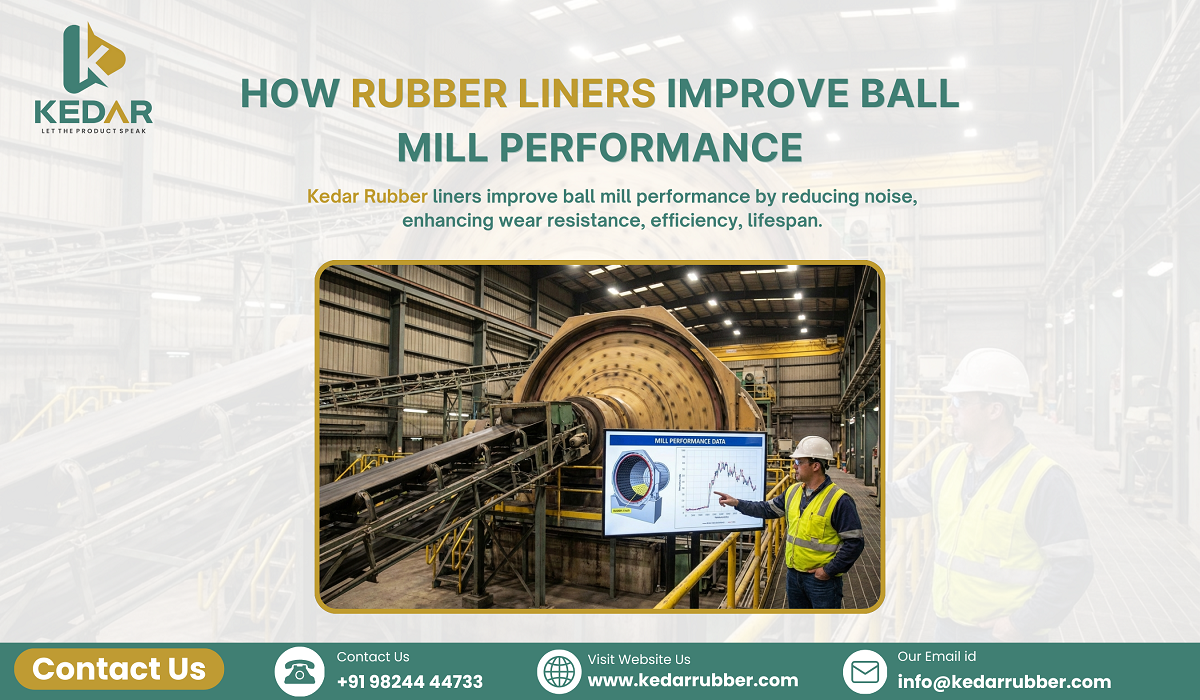
OEM Ball Mill Rubber Liner Manufacturer in Ahmedabad: Kedar Rubber
The right lining system drastically reduces noise pollution while extending the operational lifespan of the equipment. For heavy industries seeking reliable solutions, partnering with an established OEM Ball Mill Rubber Liner Manufacturer ensures that every lifter bar and shell plate is engineered to handle exact operational loads. By customizing the rubber compound to your specific grinding media and feed material, plants achieve optimal trajectory and grinding efficiency without the constant need for replacements.
When operating a heavy-duty grinding mill, plant managers often battle two relentless enemies: excessive noise and rapid component wear. Replacing steel liners frequently not only drives up maintenance costs but also results in crippling production downtime. Transitioning to a high-quality rubber alternative solves these specific shop-floor challenges. As an experienced industrial rubber expert, I have spent over 15 years analyzing wear patterns and impact forces inside cement and mining mills.
Why Choose Kedar Rubber for OEM Ball Mill Rubber Liner Manufacturer
The best approach to protecting a mill cylinder is utilizing materials that absorb impact rather than rigidly resisting it. Rubber linings compress and bounce back, effectively dissipating the kinetic energy generated by heavy steel balls. Over the past two decades, our engineering team has seen firsthand how upgrading to high-grade rubber components transforms plant operations. Plant heads in cities like Mumbai and Delhi frequently report that rubber linings operate at significantly lower decibel levels, achieving up to 70% noise reduction compared to traditional steel plates. This creates a safer, more compliant working environment for factory personnel.
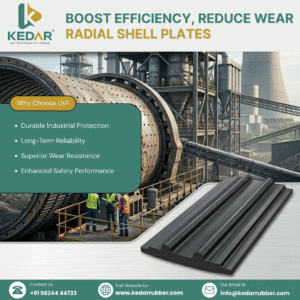
Beyond noise control, weight reduction is a critical factor for energy efficiency. Rubber is 65-75% lighter than steel, which directly reduces the rotational mass of the mill. This lower weight translates to less strain on the motor and gearbox, ultimately saving on electrical power consumption. We regularly supply wear resistant rubber liner systems that outlast steel in wet grinding applications. Our formulations resist the corrosive effects of slurries, ensuring a longer wear life. You can explore how an abrasion impact resistant rubber liner prevents premature blinding and cracking under continuous heavy loads. By focusing on customized contour designs, we ensure the grinding media is lifted to the precise height needed for maximum comminution.
Our OEM Ball Mill Rubber Liner Manufacturer Manufacturing Capabilities
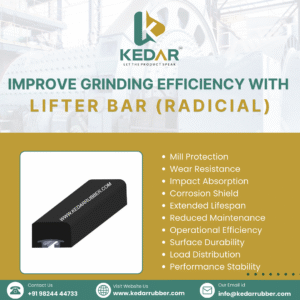
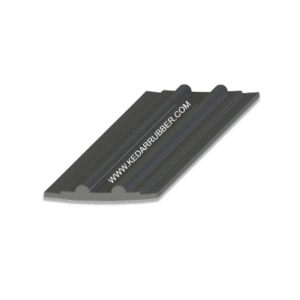
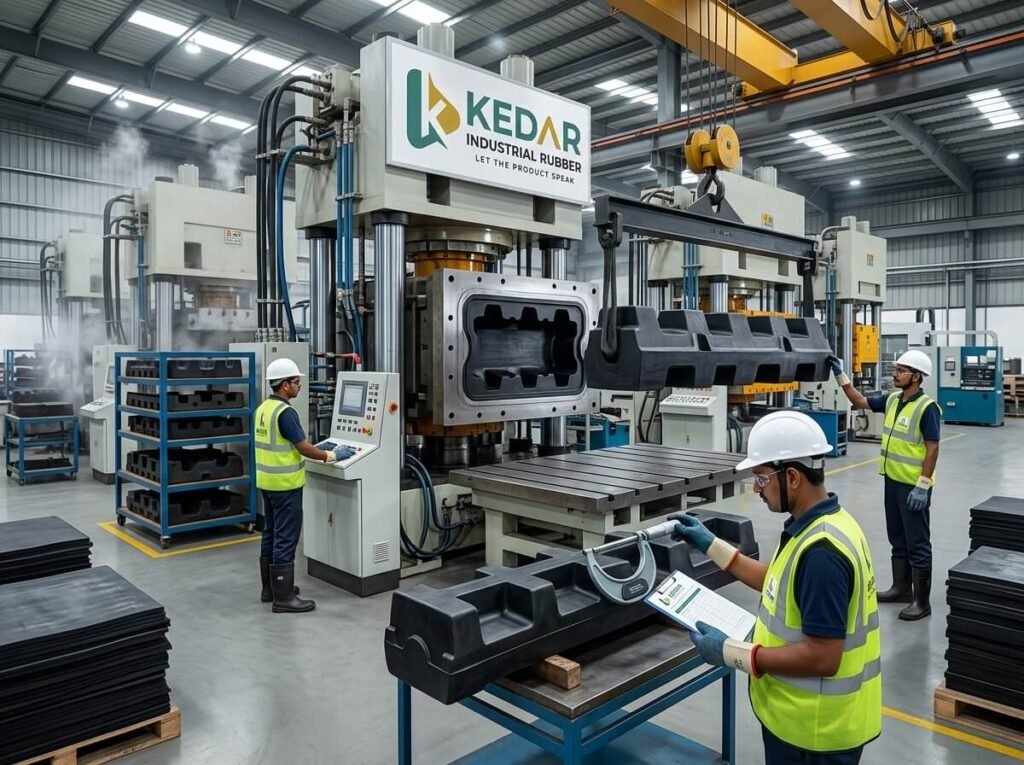
Yes, we provide fully customized rubber lining solutions tailored to the exact dimensions of your grinding equipment. From our state-of-the-art facility located in the Shankheshwar Industrial Estate in Changodar, we formulate specific rubber compounds based on the abrasive nature of your raw materials. Whether you operate a gold mine in Bangalore or a limestone crushing unit in Hyderabad, our manufacturing process guarantees precision. We utilize heavy-duty hydraulic presses to mold shell lifter bars, head liners, and grate plates that fit seamlessly into your existing mill shell without requiring major modifications.
We understand that unplanned mill downtime costs thousands of dollars per hour. Therefore, our production strategy emphasizes dimensional accuracy and strict curing times to prevent rubber degradation. If you are looking for reliable rubber liner manufacturers in Ahmedabad, our facility is equipped to handle bulk orders and rapid prototyping. We continuously test our batches for tensile strength, elongation, and shore hardness. Facilities looking to upgrade their internal wear parts can benefit greatly from a wear resistant rubber liners installation, which drastically cuts down on maintenance interventions.
Get a Quote for OEM Ball Mill Rubber Liner Manufacturer
Navigating Quality Standards & ISO 9001:2015 Certification
Maintaining consistent quality across hundreds of heavy rubber parts requires a rigorous, documented process. As an ISO 9001:2015 Certified Company, we adhere strictly to international manufacturing standards. Every batch of raw rubber undergoes chemical analysis before it enters the mixing mill. This ensures that the final product can withstand the severe impact forces found in large-diameter grinding mills. Our quality control team measures every parameter, from vulcanization temperature to the bonding strength of the steel backing plates used in our heavy-duty lifters.
Plant managers across Chennai and Surat trust our components because our quality assurance leaves no room for defects. We document the entire lifecycle of the product, ensuring traceability from raw material sourcing to final dispatch. This level of transparency is why we have successfully delivered custom rubber solutions to over 200 clients. To understand the engineering behind these durable components, you can read about how ball mill rubber liners built for heavy industries are tested for resilience. Adhering to these strict ISO protocols guarantees that every liner we ship performs predictably, allowing maintenance teams to schedule replacements accurately rather than dealing with sudden failures.
Local Manufacturers vs Kedar Rubber
When sourcing replacement liners, procurement teams often weigh the initial cost against long-term durability. Unbranded, low-cost rubber parts frequently fail prematurely due to improper vulcanization or inferior carbon black dispersion. The following table highlights the critical differences between standard local suppliers and our specialized manufacturing approach.
| Feature | Standard Local Suppliers | Kedar Rubber Products Pvt. Ltd. |
|---|---|---|
| Material Quality | Generic commercial rubber, prone to rapid wear. | Custom-blended, high-tensile wear-resistant compounds. |
| Weight Reduction | Often poorly optimized, minimal energy savings. | 65-75% lighter than steel, significantly reducing motor load. |
| Noise Reduction | Minimal acoustic dampening. | Up to 70% reduction in operational noise levels. |
| Customization | Standard off-the-shelf sizes only. | Precise customization as per exact mill specifications. |
| Certification | Rarely certified or tested. | ISO 9001:2015 Certified Quality Management System. |
Here is how Kedar Rubber ensures that your investment yields a positive return. By focusing on the exact trajectory of the grinding media, we prevent dead zones inside the mill. Many ball mill rubber liner suppliers India fail to calculate the correct lifter face angle, which leads to media crashing against the opposite liner instead of the toe of the charge. You can learn more about the physics of this process and how rubber liners improve ball mill performance by ensuring optimal cascade action. We engineer our lifter profiles to maintain their shape longer, ensuring consistent grinding efficiency throughout the liner’s life cycle.
Real Client Case Study
A major cement manufacturing plant located near Ahmedabad was experiencing severe bottlenecks due to frequent liner failures in their secondary grinding mill. They were using standard manganese steel liners, which required replacement every six months. The constant downtime was costing them heavily, and the noise levels on the shop floor were violating industrial safety norms. They reached out to us for a Free Rubber Liner Consultation, seeking a robust alternative that could handle highly abrasive clinker grinding.
Our engineering team conducted a thorough site visit to analyze the mill dimensions, feed size, and rotational speed. We proposed a custom-engineered rubber lining system utilizing a high-shore hardness compound designed specifically for dry grinding applications. The transition required meticulous planning to ensure the new rubber plates aligned perfectly with the existing shell drillings. Once installed, the results were immediate. The mill noise dropped by 65%, transforming the working environment for the operators. More importantly, the lighter rubber liners reduced the power draw on the main motor by 8%, leading to substantial energy savings.
After 14 months of continuous operation, the maintenance team inspected the mill and found the wear to be minimal and uniform. The rubber liners lasted more than twice as long as the previous steel setup, drastically reducing maintenance downtime. This success story is a common scenario when plants switch to engineered rubber solutions. For plants utilizing discharge screens, installing a durable rubber screens manufacturer India for ball mills setup further prevents blinding and increases throughput. Whether you are in Jaipur, Chandigarh, or Kolkata, optimizing your mill internals with custom rubber is a proven strategy for operational efficiency.
To take the next step in optimizing your grinding mill, Download Ball Mill Liner Cost Guide or connect with our technical team via WhatsApp. Our engineers in Pune, Indore, and Vadodara are ready to analyze your wear data and propose a lining system that guarantees longer life and higher throughput. Contact us today at +91-98244 44733 or email info@kedarrubber.com to discuss your specific milling challenges.
FAQs
1. What is the average lifespan of a rubber ball mill liner?
The lifespan depends on the feed material, mill speed, and grinding media size. Generally, high-quality rubber liners last 1.5 to 3 times longer than standard steel liners in wet grinding applications due to their high abrasion resistance and impact absorption.
2. Can rubber liners be used in dry grinding cement mills?
Yes, specially formulated rubber compounds with high heat resistance are used in dry grinding mills. They are highly effective in secondary grinding stages where temperatures are controlled, providing excellent wear life and noise reduction.
3. How much noise reduction can we expect by switching to rubber liners?
Rubber liners significantly dampen the impact of grinding media against the mill shell. Plants typically experience up to a 70% reduction in operational noise, improving workplace safety and complying with industrial noise regulations.
4. Are rubber liners lighter than steel mill liners?
Yes, rubber liners are 65-75% lighter than manganese steel equivalents. This substantial weight reduction decreases the overall rotational mass of the mill, which lowers the strain on bearings and reduces electrical power consumption.
5. Do I need to modify my mill shell to install rubber liners?
No structural modifications are usually required. A professional manufacturer will design custom rubber liner plates and lifter bars to align perfectly with your mill’s existing drill hole patterns and structural dimensions.
6. What factors determine the wear resistance of a rubber liner?
Wear resistance is determined by the quality of the raw rubber, the dispersion of carbon black, the vulcanization process, and the specific shore hardness formulated for your feed material’s abrasiveness.
7. How do I request a custom rubber liner quotation?
You can request a quote by providing your mill dimensions, internal drawings, and operational parameters (feed size, media size, RPM). Contact our technical team at +91-98244 44733 or factory@kedarrubber.com for a free consultation.