
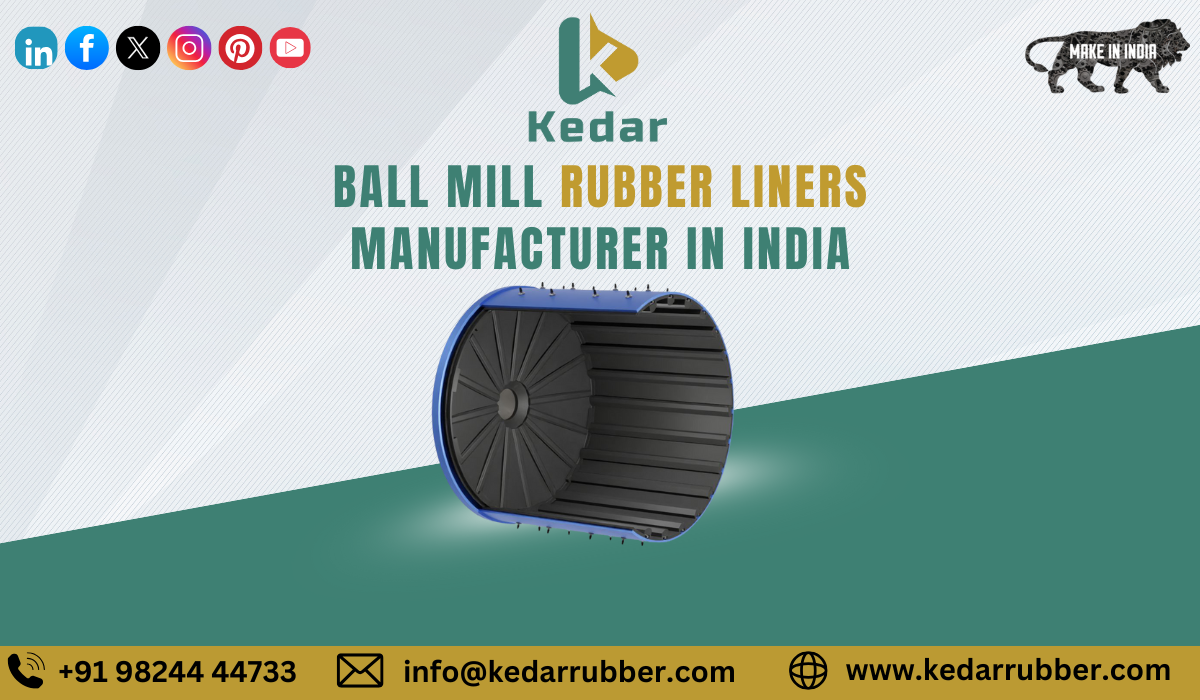
Rubber Liner for Mineral Processing in Ball Mill Rubber Liner: Kedar Rubber
The severe operational demands of the mining and cement industries require grinding components that can withstand constant abrasion and heavy impact. For plant managers looking to optimize their milling circuits, upgrading to a high-quality Rubber Liner for Mineral Processing offers an immediate reduction in structural stress and operational noise. Traditional steel liners often lead to excessive mill downtime due to frequent replacements and heavy maintenance requirements. Rubber liners, being 65-75% lighter than steel, allow mills to run more efficiently, drawing less power while protecting the mill shell from aggressive wear.
Understanding the environmental conditions inside heavy-duty applications is non-negotiable. Modern mining facilities from Rajasthan to Odisha demand components that will not degrade under continuous wet grinding or highly acidic slurry conditions. For those looking for ball mill rubber liners built for heavy industries, the compounding of the rubber is the most critical factor. The right elastomer blend will absorb the kinetic energy of the grinding media, converting impact forces into rebound energy rather than structural degradation.
When you are ready to evaluate your current mill efficiency, our technical team is available to conduct a comprehensive wear analysis. Feel free to contact us for a detailed consultation regarding your specific mill dimensions and operational targets. A proper assessment will determine the exact profile, thickness, and fastening systems required to maximize your grinding efficiency and reduce your cost-per-ton of processed material.
Why Choose Kedar Rubber for Rubber Liner for Mineral Processing
For over 25 years, Kedar Rubber has been a cornerstone in the industrial manufacturing sector, providing engineered solutions to over 200 satisfied clients. Operating out of our modern facility in Ahmedabad, Gujarat, we have built a reputation based on technical competence and metallurgical understanding.
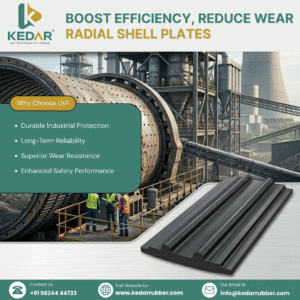
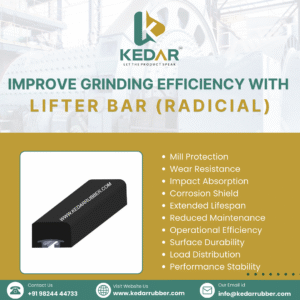
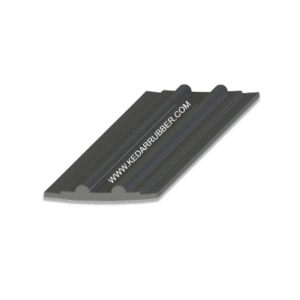
The best results in mineral processing come from customization. We do not believe in off-the-shelf solutions. Every radial shell plate Ahmedabad facility produces is tailored to the exact specifications of the client’s mill. This involves calculating the optimal lifter bar angles and plate thicknesses based on the ball charge trajectory.
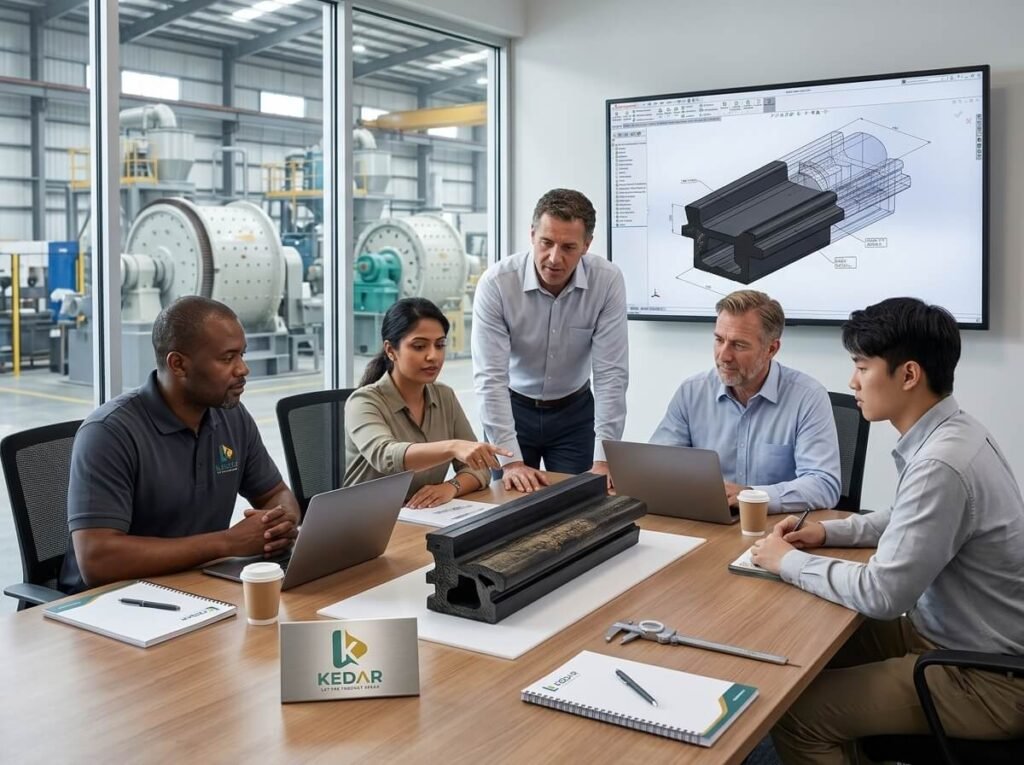
Our strength lies in our material science expertise. The rubber formulations we develop are specifically compounded to resist the harsh chemicals and sharp abrasions typical in wet and dry grinding. This weight reduction also translates to lower power consumption for the mill motor, providing long-term energy savings that quickly offset the initial investment.
Get a Quote for Rubber Liner for Mineral Processing
Our Manufacturing Capabilities & Process Flow
Delivering a longer life rubber liner requires a stringent, step-by-step manufacturing process that leaves no room for error. Led by Mr. Sandip Trivedi and a team of seasoned rubber technologists, our Changodar factory is equipped with advanced hydraulic presses, internal mixers, and precision testing laboratories.
Here is how Kedar Rubber approaches every project:
- Application Engineering: We begin by analyzing the mill operating parameters, including feed size, ore type, mill RPM, and grinding media details.
- Custom Formulation: Our laboratory develops a specific rubber compound. For instance, a mining rubber liner handling sharp, abrasive gold ore requires a different formulation than a cement mill liner processing clinker.
- Molding and Vulcanization: We utilize high-pressure hydraulic presses to mold the rubber. The vulcanization temperature and time are strictly controlled to ensure optimal cross-linking of the polymer chains, resulting in maximum tensile strength and tear resistance.
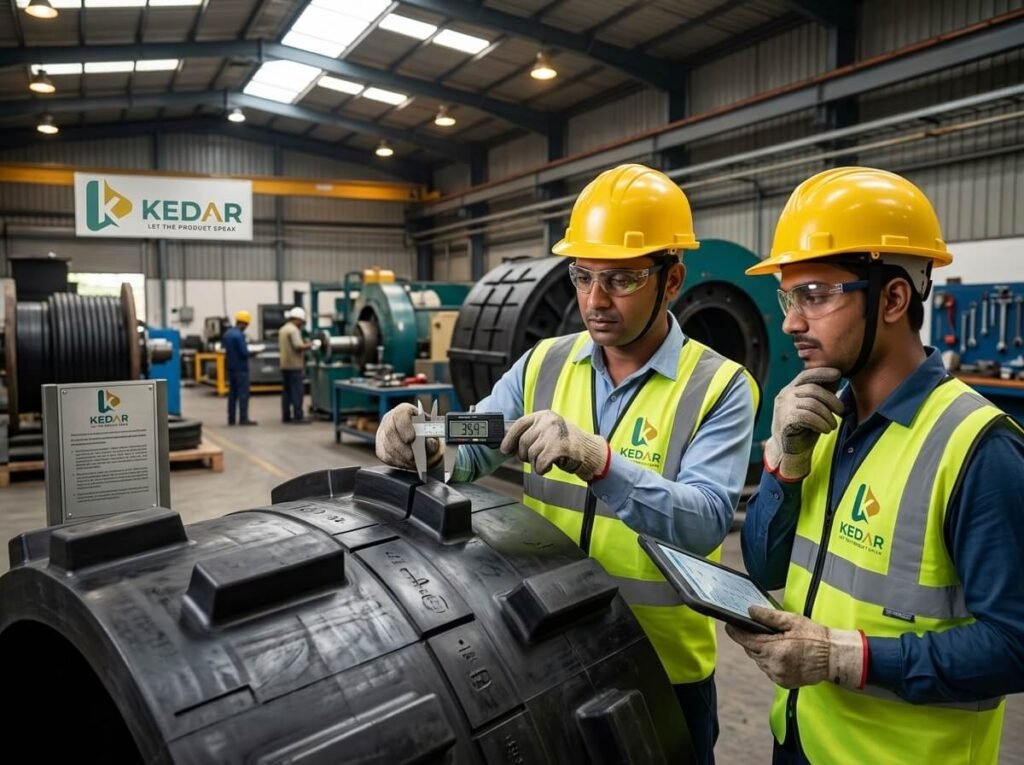
- Quality Inspection: Every ceramic embedded pulley lagging sheet undergoes rigorous ultrasonic testing and dimensional checks to ensure precise fitment before it is dispatched to client sites in cities like Hyderabad, Chennai, or Surat.
- Installation Support: We provide comprehensive installation guidelines and, when required, on-site supervision to ensure the liners are secured perfectly against the mill shell.
Navigating Quality Standards & ISO 9001:2015 Certification
In the heavy industrial sector, unverified claims of quality are a substantial risk. Plant managers require measurable, documented assurance that the custom molded rubber products they install will perform reliably under extreme stress.
What this means for procurement teams is complete traceability. how rubber liners improve ball mill performance From the incoming raw natural and synthetic rubbers to the final vulcanized product, every batch is tested and recorded. Our testing protocols align with global standards for abrasion resistance, shore hardness, and tensile elongation.
When a maintenance head in Pune or Indore specifies our liners, they receive a product backed by empirical data, not just promises. We maintain a medium risk of over-optimization by focusing purely on what matters: the physical integrity and wear life of the polymer matrix.
Local Manufacturers vs Kedar Rubber
When sourcing mill internals, procurement departments often weigh the pros and cons of local uncertified vendors against established Rubber Liner Manufacturers in Ahmedabad. The table below outlines the critical differences that impact the total cost of ownership.
| Feature / Metric | Average Local Manufacturers | Kedar Rubber Products Pvt. Ltd. |
|---|---|---|
| Quality Assurance | Often lacks formal certification; inconsistent batch quality. | ISO 9001:2015 Certified with strict batch traceability and lab testing. |
| Customization | Standardized molds only; limited profile optimization. | 100% custom-designed lifters and plates based on mill trajectory analysis. |
| Noise Reduction | Minimal testing; variable acoustic dampening. | Engineered to provide up to 70% noise reduction safely. |
| Wear Life | Frequent replacements required, causing high mill downtime. | Highly durable compounding ensuring longer wear life and scheduled maintenance. |
| Industry Experience | Limited project scope and geographic reach. | Over 25 years of experience, 200+ clients, serving major Indian cities like Jaipur, Chandigarh, Kolkata, and Vadodara. |
Real Client Case Study: Extending Wear Life in Cement Mills
To illustrate the practical impact of our engineering, consider a recent project involving a large-scale cement manufacturer in Rajasthan. The plant was struggling with excessive wear on their existing manganese steel liners in the secondary grinding chamber.
They approached Kedar Rubber seeking a more reliable solution. After a thorough site inspection by our engineering team, we identified that the ball trajectory was directly impacting the shell plates rather than the toe of the charge, causing rapid metal fatigue.
We replaced the steel setup with a highly wear resistant rubber liner system featuring custom-profiled lifter bars designed specifically for their operational RPM. The results were immediate and measurable. The mill’s power draw dropped by 8% due to the lighter weight of the rubber. More importantly, the noise levels on the grinding floor were reduced by 65%.
The client successfully eliminated unscheduled downtime, moving to a predictable 18-month replacement cycle, drastically reducing their overall maintenance budget. This case exemplifies why we are trusted Ball Mill Rubber Liner Suppliers India relies on for critical heavy-industry applications.
Ready to Optimize Your Mill?
Stop losing money to unscheduled downtime and inefficient grinding. Reach out to our technical team today for a Free Rubber Liner Consultation. You can also request to Download our Ball Mill Liner Cost Guide to understand your potential ROI.

Frequently Asked Questions
1. What is the average lifespan of a rubber liner for mineral processing?
The lifespan varies based on the ore hardness and mill speed, but a highly engineered rubber liner typically lasts 1.5 to 2 times longer than standard steel liners.
2. How much noise reduction can I expect by switching to rubber mill liners?
By replacing steel with an industrial rubber mill liner India plants commonly see up to a 70% reduction in operational noise. The rubber absorbs the acoustic energy of the tumbling grinding media.
3. Are rubber liners suitable for dry grinding processes?
Yes, we provide specialized heat-resistant rubber formulations specifically designed for dry grinding applications, such as in cement mills, ensuring the rubber does not degrade under elevated internal temperatures.
4. How does the weight of a rubber liner compare to a steel liner?
Rubber liners are exceptionally lightweight—typically 65% to 75% lighter than manganese steel. This significant weight reduction lowers the power required to turn the mill and makes manual installation much safer and faster.
5. Can Kedar Rubber customize the lifter bar profile for my specific mill?
Absolutely. We design and manufacture completely custom lifter bar profiles based on your mill’s exact diameter, RPM, and ball charge to ensure the perfect trajectory and maximum grinding efficiency.
6. What makes Kedar Rubber different from other industrial rubber manufacturers in Gujarat?
As an industrial rubber manufacturer Gujarat relies on, we bring over 25 years of experience, ISO 9001:2015 certification, and a track record of serving 200+ clients with precise.
7. How do I request a technical assessment or quote for my plant?
You can easily reach out to our engineering team by calling +91-98244 44733 or emailing info@kedarrubber.com. We provide free initial consultations to discuss your mill dimensions and wear challenges.