
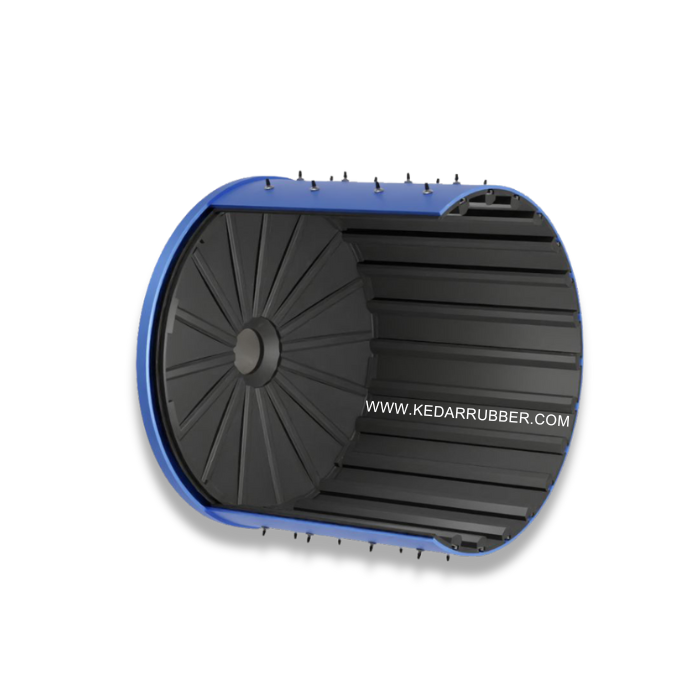
Rubber Liner for Ceramic Ball Mill: What Indian Plants Should Check Before Buying
When a ceramic ball mill stops for liner replacement, the real cost is not just the liner. It is lost production, delayed dispatches, extra labour, and the pressure on maintenance teams to restart fast. That is why many plant heads now look beyond price and focus on wear life, fitment accuracy, noise reduction, and delivery reliability. If you are evaluating a Rubber Liner for Ceramic Ball Mill, start with the actual application conditions, mill dimensions, and material movement pattern inside the shell. For a quick product overview, see Rubber Liner for Ceramic Ball Mill.
In India, ceramic units in Morbi, Surat, Ahmedabad, and even larger process industries in Mumbai often face the same issue: steel liners add weight, increase noise, and make shutdown work harder than it needs to be. A well-designed rubber system can reduce impact stress, improve handling during maintenance, and support a more stable operating cycle. This article explains what to check, how manufacturing quality affects life, and how Kedar Rubber approaches liner design from a practical factory-floor point of view.
Our Rubber Liner for Ceramic Ball Mill Manufacturing Capabilities
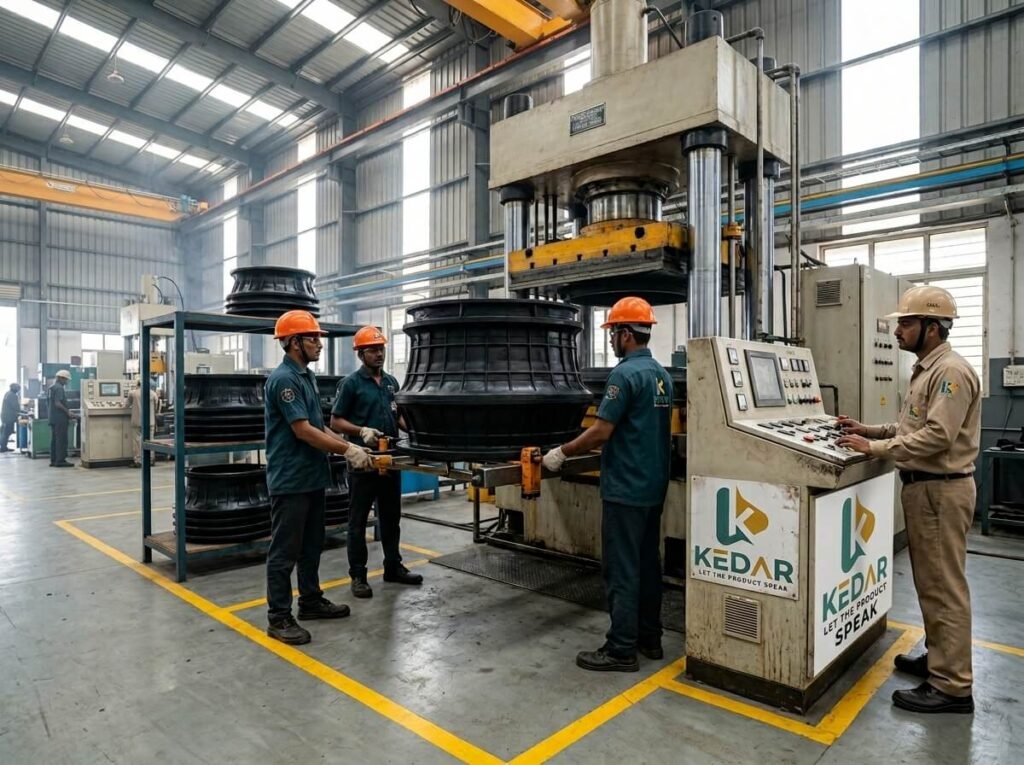
The best liner performance starts long before dispatch. It begins with compound selection, mould design, dimensional control, and understanding how the mill actually runs in Indian plant conditions. In ceramic grinding, the liner has to deal with abrasion, repeated impact, slurry or dry movement, and uneven loading patterns. That is why a wear resistant rubber liner is not just a shaped part; it is a wear component engineered for a specific duty cycle.
Yes, we provide application-based manufacturing rather than generic moulding. Kedar Rubber has over 25 years of experience, is led by Mr. Sandip Trivedi and a skilled rubber technology team, and has served 200+ clients across industrial applications. In practice, that means liners are made with close attention to shell size, lifter profile, fixing arrangement, feed characteristics, and shutdown constraints. Plants in Hyderabad, Chennai, and Pune usually ask for fast replacement and predictable fitment, because downtime planning is already tight.
Here’s how Kedar Rubber supports varied mill requirements in India:
- Rubber compound selection based on abrasion and impact duty
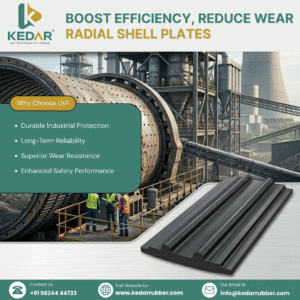
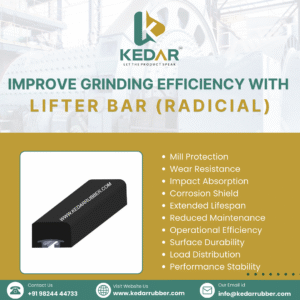
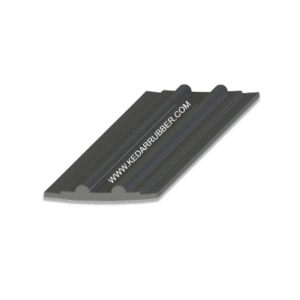
- Custom moulding for shell plates, lifter bars, and feed-end parts
- Lower handling weight compared to steel liners
- Noise control support, often useful for enclosed ceramic units
- Maintenance-friendly design for easier installation
- Customisation according to mill specification and operating pattern
If you want to compare related wear applications, the page on wear resistant rubber liners gives a broader view of how compounds and design geometry affect service life.
A small but important detail many buyers miss is bolt hole accuracy and seating consistency. Even a good compound can underperform if the liner does not sit properly on the shell. In plants around Bangalore and Vadodara, I have seen cases where repeated loosening was blamed on the liner material, while the actual issue was mismatch between drawing, fabrication tolerances, and installation surface condition.
Navigating Quality Standards & ISO 9001:2015 Certification
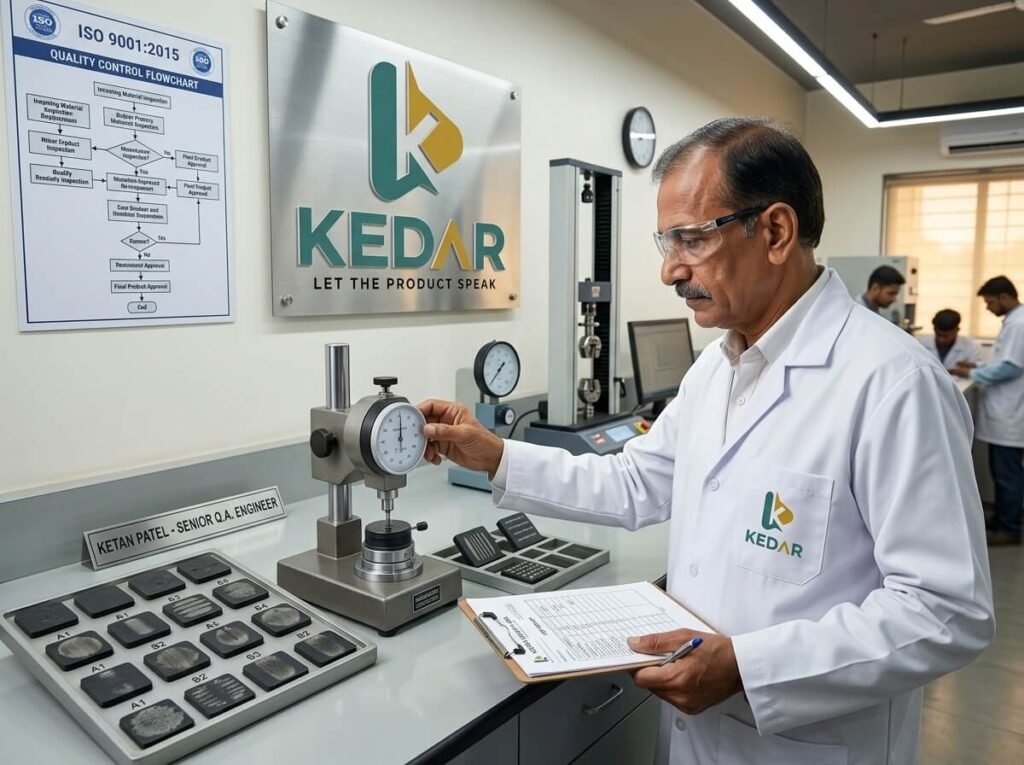
The best way to judge a liner supplier is to ask how they control process consistency, not just how they quote. A proper manufacturing system should cover raw material control, batch traceability, moulding discipline, curing checks, dimensional inspection, and dispatch verification. This is where ISO-based systems matter. Kedar Rubber is an ISO 9001:2015 Certified Company, which is relevant because ceramic and mineral processing plants need repeatable quality, not one good batch followed by two inconsistent ones.
Here’s how Kedar Rubber applies quality in a practical sense. First, the team studies the operating condition and not just the old sample. Second, compound and profile decisions are aligned with wear pattern and maintenance access. Third, the finished liner set is checked for fitment logic before dispatch. This matters to buyers searching for ball mill rubber liner manufacturers who can support custom requirements instead of supplying a one-size-fits-all product.
Quality also means knowing when adjacent parts affect liner life. A poor seal, worn fastener area, or damaged opening can reduce service life even when the liner itself is fine. That is why support components matter too. If your maintenance team is reviewing access points and closures during shutdown, the product page for man hole frame may help during planning.
A common question from procurement teams in Delhi, Jaipur, and Kolkata is whether a rubber liner is suitable only for ceramic mills or also for mining and cement. The answer depends on the design and duty. A mining rubber liner and a cement mill liner may share basic material logic, but liner profile, hardness balance, and fixing arrangement can differ a lot. In ceramic mills, the focus is often on controlled movement, lower noise, manageable weight, and dependable service intervals.
Local Manufacturers vs Kedar Rubber
The best comparison is not local versus non-local. It is generic supply versus engineered supply. Many buyers look for rubber liner manufacturers in Ahmedabad because local access helps with visits, drawing review, and dispatch coordination. That is valid. But the more useful question is whether the manufacturer understands application-specific wear and can convert that understanding into a liner set that fits and lasts.
| Evaluation Point | Generic Local Supplier | Kedar Rubber Products Pvt. Ltd. |
|---|---|---|
| Application study | Often sample-based only | Mill-spec and wear-pattern based review |
| Customization | Limited | Custom molded liner sets as per requirement |
| Quality system | Varies | ISO 9001:2015 process-oriented controls |
| Noise and weight advantage | Not always documented | Supports noise reduction and lighter handling |
| Experience signals | May be limited | 25+ years, 200+ clients, 30+ major projects, 5+ awards |
If you are researching suppliers and price-fitment balance, this guide on buy ball mill rubber liner is useful because it frames the buying decision around operating value, not just unit cost.
In many ceramic clusters, a buyer may shortlist a custom rubber liner Ahmedabad source for easier coordination. That makes sense, especially when drawings, site feedback, and replacement schedules need quick discussion. Still, what matters most is whether the manufacturer can deliver a longer life rubber liner with stable quality and practical installation support.
Step-by-Step Process – How We Deliver Rubber Liner for Ceramic Ball Mill
Here’s how Kedar Rubber usually handles a liner requirement in a way plant teams can actually work with.
1. Mill data and wear review
The team collects shell dimensions, liner layout, operating material, and present wear issues. If the old liner failed early, the focus is on why. In one Surat ceramic unit, the issue was not compound weakness but uneven load distribution and delayed rotation checks.
2. Design and customization
Next comes profile selection and drawing alignment. This stage matters for any buyer looking for custom rubber liner India solutions because even small changes in plate geometry can affect material movement and wear balance.
3. Compound and moulding
The liner is manufactured using process-controlled rubber compounding and moulding methods. This is where a capable industrial rubber manufacturer Gujarat can make a clear difference. Compound consistency has a direct effect on abrasion performance and service predictability.
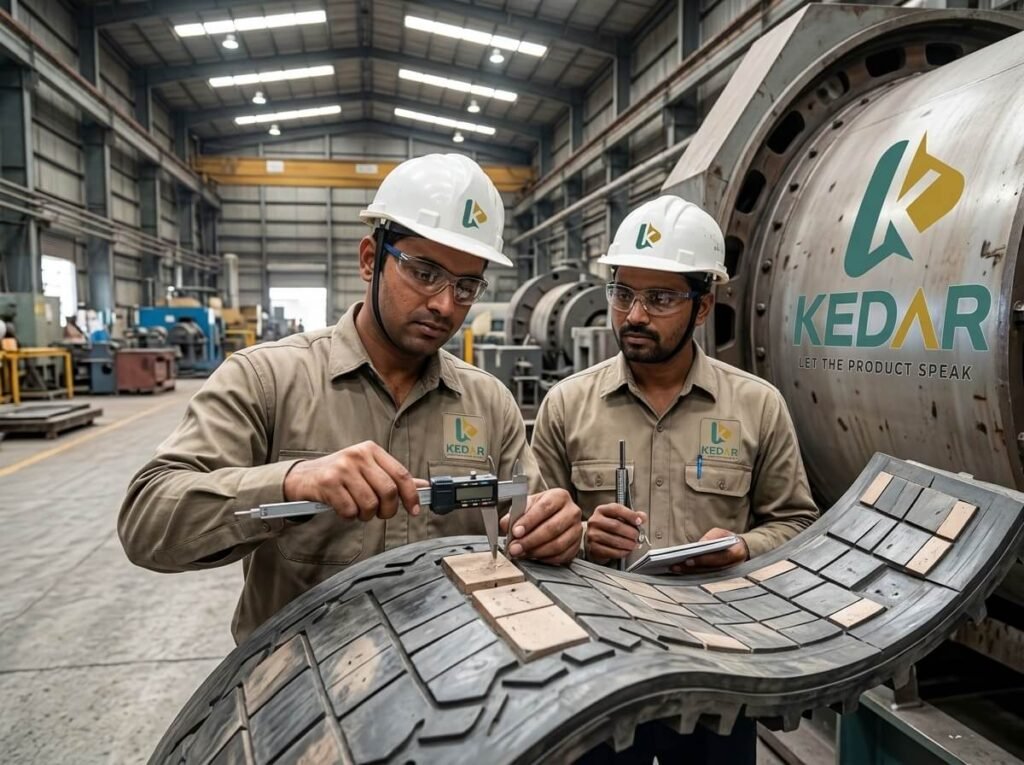
4. Inspection and fitment logic
Before dispatch, dimensions, hole positions, and set compatibility are checked. For local buyers evaluating options, the article on ball mill rubber liner Ahmedabad gives helpful context on why local technical coordination can reduce installation risk.
5. Dispatch, installation support, and follow-up
Once the liner reaches site, maintenance teams usually focus on shutdown duration, bolt alignment, and restart speed. In ceramic plants, a noise reduction rubber liner is also appreciated because work conditions improve around the mill area after commissioning.
Midway through your buying process, if you already have dimensions or an old sample, use this direct link:
Get a Quote for [Rubber Liner for Ceramic Ball Mill]
Real Client Case Study
Here’s how Kedar Rubber solved a practical problem for an anonymized ceramic client in Morbi. The plant was replacing liners too often, and the maintenance crew had started planning shutdowns almost as a routine monthly headache. The liner weight was also increasing handling time, which added pressure on labour and supervision.
After a review of shell size, wear zones, and fixing points, a custom rubber liner set was recommended and supplied. The goal was not dramatic claims. It was simple: improve wear consistency, reduce handling strain, and cut noise around the mill. Over the next operating cycle, the client reported more predictable maintenance planning and easier liner handling during shutdown.
A second smaller success story came from a processor supplying to markets in Mumbai and Indore. Their team mainly wanted lower replacement effort and better fitment accuracy. The result was not flashy, but it mattered: fewer installation adjustments, lower shutdown stress, and a smoother restart. For ceramic users in the Morbi belt, the page on ceramic embedded rubber liner in Morbi is worth reading when higher wear zones need a different lining approach.
Key takeaways
- A liner should be matched to the mill, not copied from the old part
- Weight, noise, fitment, and wear pattern all affect total operating cost
- ISO 9001:2015 systems help maintain repeatable quality
- Customization matters more than low initial price in most ceramic mills
- Local access is helpful, but application knowledge is more important
FAQs
What is the main benefit of a rubber liner in a ceramic ball mill?
The main benefit is improved wear management with easier handling during shutdown. Rubber liners can also help reduce noise and lower maintenance effort compared to heavier alternatives.
How long does a ceramic ball mill rubber liner last?
Service life depends on ore or material type, mill speed, feed size, operating hours, and liner design. A properly matched liner usually gives more predictable wear than a generic replacement.
Is a rubber liner suitable for ceramic plants in Morbi and Surat?
Yes. Many ceramic units in Morbi and Surat use rubber lining systems where lower noise, easier installation, and controlled wear are important.
How do I choose between local and national suppliers?
Start with application knowledge, customization ability, process quality, and support during fitment. Distance matters less when the manufacturer understands your mill well.
Does ISO 9001:2015 certification matter for liner manufacturing?
Yes. It indicates that the manufacturer follows a documented quality system, which supports consistent production, traceability, and inspection discipline.
Can you provide custom molded rubber products for specific mill sizes?
Yes. Customization is often necessary because liner geometry, bolt location, and wear zones vary from mill to mill.
Who should contact the supplier from our side?
Ideally, the maintenance head, plant engineer, or procurement person should share basic mill details, current liner issue, and expected shutdown timeline.