
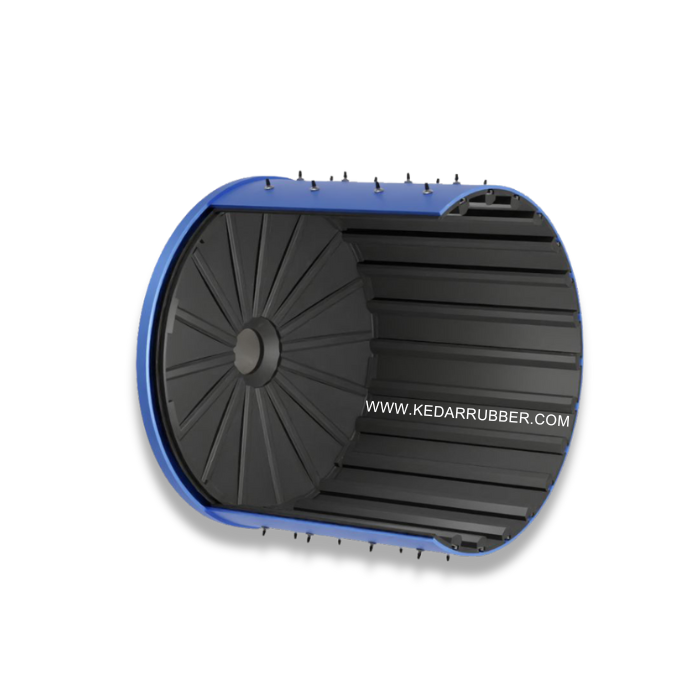
Mill liner performance affects more than wear life. In a cement plant, it touches output, shutdown planning, worker safety, and noise on the shop floor. A well-designed rubber liner can cut impact noise, reduce changeout effort, and help maintenance teams avoid frequent unplanned stoppages. For plants evaluating a dependable Cement Plant Ball Mill liner Supplier , the practical question is simple: will it fit the mill correctly, last in real operating conditions, and reduce downtime without creating fresh maintenance issues?
Why Choose Kedar Rubber for Cement Plant Ball Mill Liner Supplier
The right supplier is usually the one who understands mill conditions, not just drawings. Kedar Rubber has over 25 years of experience in industrial rubber engineering and manufacturing, with a strong base in Ahmedabad and supply capability across Mumbai, Delhi, Bangalore, Hyderabad, Chennai, Surat, Jaipur, Kolkata, Pune, Indore, and Vadodara. Led by Mr. Sandip Trivedi and a skilled team of rubber technology experts, the company has delivered custom rubber solutions to 200+ clients, completed 30+ major projects, and earned 5+ industry awards.
Yes, plant teams usually ask first about actual operating benefits. In most cement grinding applications, a properly built wear resistant rubber liner helps reduce metal-to-metal impact, supports quieter operation, and simplifies liner handling because rubber components are much lighter than steel. In Indian plants where shutdown windows are short and labour coordination is tight, that matters a lot.
Here’s how Kedar Rubber is usually evaluated by maintenance heads: fit accuracy, compound consistency, response speed, and ability to customize for chamber profile and feed conditions. The company operates from 903, 9th Floor, SKD Surya Icon, Opp. Torrent Power Office, Naranpura, Ahmedabad – 380013, Gujarat, India, with factory operations at 28,29,30 Shankheshwar Industrial Estate, Tajpur Road, Changodar, Ahmedabad – 382213, Gujarat, India. For buyers checking industrial rubber manufacturer Gujarat capabilities, that manufacturing visibility gives confidence.
A short example from a plant discussion in Surat comes to mind. The maintenance team was not chasing the lowest liner price. Their real issue was repeated shutdown spillover by half a shift because heavy liner handling delayed installation. That is a common Indian plant problem. Procurement may compare only unit cost, but production teams feel the true cost in lost grinding hours.
Our Cement Plant Ball Mill Liner Supplier Manufacturing Capabilities
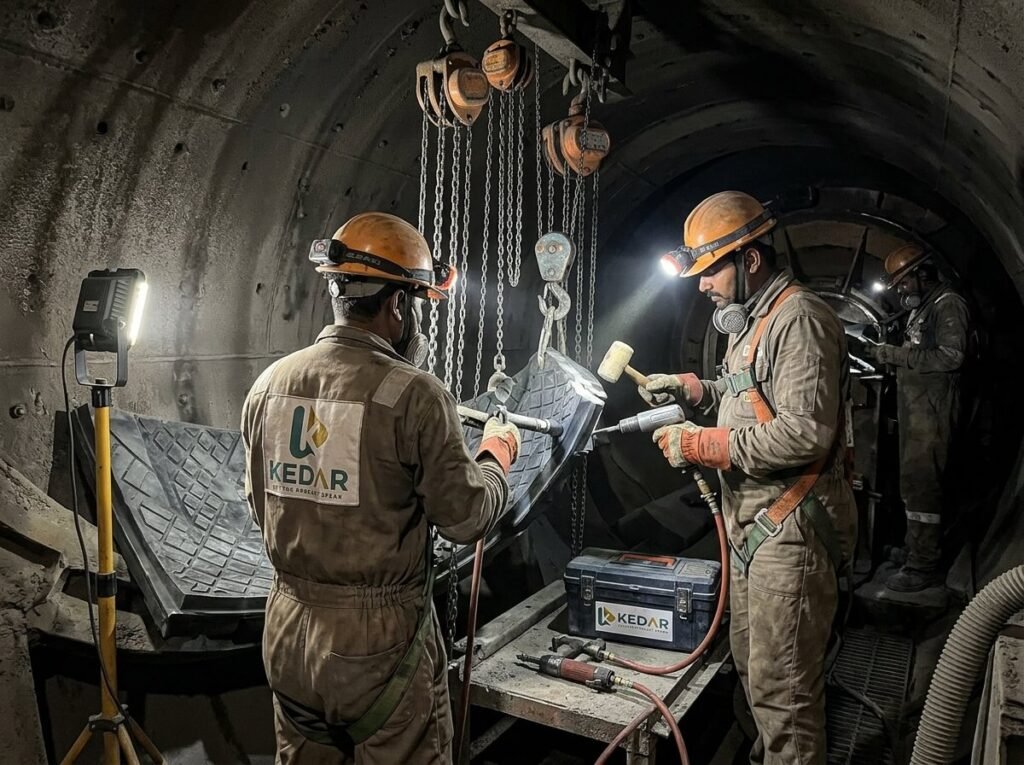
The best way to judge a liner manufacturer is by how they handle customization. Cement mills rarely operate under identical conditions. Feed hardness, ball charge, chamber design, speed, and moisture all change wear patterns. That is why custom molded rubber products and application-specific profiling matter more than catalogue selling.
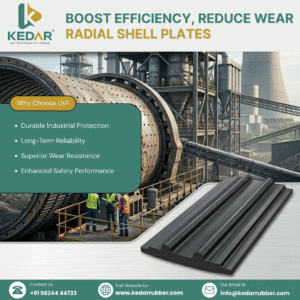
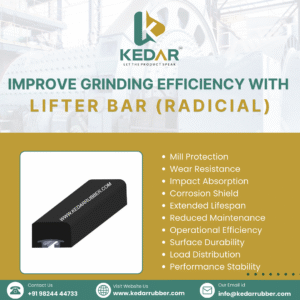
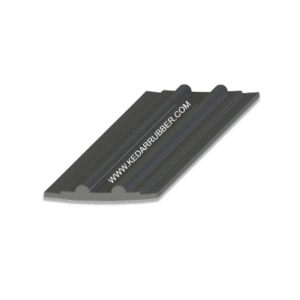
Yes, we provide tailored liner solutions for first review, retrofit planning, and replacement cycles. This includes shell liners, lifter bars, feed-end and discharge-end components, and support for noise reduction rubber liner requirements. Plants looking for custom rubber liner India support usually want three things together: abrasion resistance, impact handling, and stable fastening.
In practical terms, the manufacturing side must balance hardness, resilience, tear strength, and dimensional precision. A good longer life rubber liner is not only about using a hard compound. If the liner is too hard, impact handling may suffer. If it is too soft, abrasion can eat it early. In mining and cement use, a sound mining rubber liner or grinding liner design comes from matching the rubber grade to mill duty, not copying another plant’s drawing.
Here’s how Kedar Rubber approaches it on the shop floor: review the existing pattern, check bolt layout, understand material flow, note dead zones, and then suggest changes only where useful. For buyers researching ball mill rubber liner manufacturers near me, this practical approach is often more valuable than generic claims.
A mini client success story illustrates this well. One mid-sized cement unit near Vadodara had recurring complaints about high internal noise and difficult liner handling during shutdowns. After switching to a custom rubber-based lining layout for specific sections, the team reported easier fitment and noticeably lower noise in the operating area. Their exact wear cycle depended on feed variation, but the maintenance supervisor’s comment was simple: “changeout became less stressful.”
Mid-article, if your team is comparing quotations or redesign options, use this direct route:
Get a Quote for [Cement Plant Ball Mill Liner Supplier]
Navigating Quality Standards & ISO 9001:2015 Certification
Quality in liners is not a slogan; it is repeatability. An ISO 9001:2015 certified company is expected to maintain controlled processes, traceability, inspection discipline, and corrective action systems. For plant buyers, that means fewer surprises between approved sample and delivered batch.
Yes, this matters even more when mills are running in demanding conditions. A rubber mill liner India buyer should ask basic but important questions: How are compounds controlled? How is dimensional accuracy checked? Is there a process for identifying premature wear causes? Can the supplier support replacement planning? These are routine questions in Ahmedabad, Chennai, and Pune, where professional procurement teams usually look beyond brochure points.
For buyers comparing rubber liner manufacturers in Ahmedabad, the company’s ISO 9001:2015 certification is one practical marker. It supports confidence in process control, documentation, and consistent production practices. Plants can also review its detailed product work through ball mill rubber liner manufacturers insights that reflect local manufacturing relevance.
Another common question is whether rubber liners suit only low-impact duties. Not necessarily. The answer depends on mill design, ore or clinker characteristics, impact zones, and whether hybrid or reinforced arrangements are needed. In several Indian cases, the better answer has been selective rubber lining rather than full replacement of every steel component. That kind of application judgment usually comes only from hands-on experience.
Local Manufacturers vs Kedar Rubber (Comparison Table)
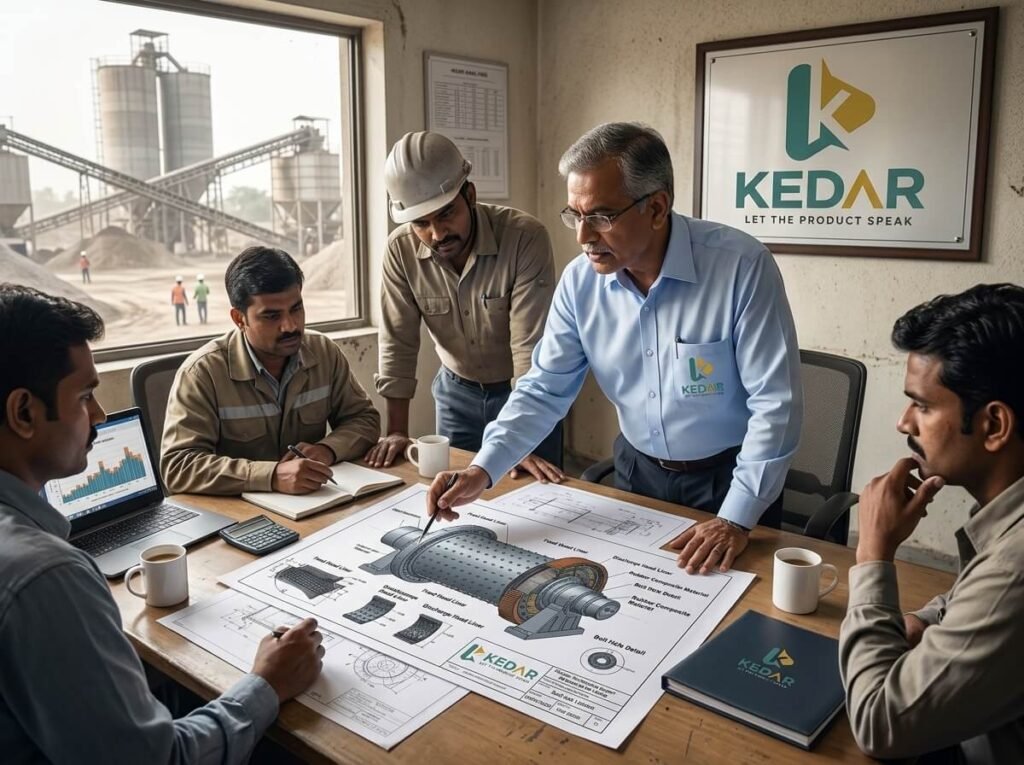
Here’s a practical comparison buyers often use while shortlisting suppliers for cement plant work.
| Evaluation Factor | Many Local Manufacturers | **Kedar Rubber** |
|---|---|---|
| Experience in industrial rubber | May vary, often limited by product range | Over 25 years in custom rubber solutions |
| Customization for mill specifications | Sometimes standard-size focused | Precise customization as per mill specifications |
| Weight advantage over steel | Not always optimized | Typically 65-75% lighter than steel |
| Noise reduction potential | Often not clearly defined | Up to 70% noise reduction in suitable applications |
| Quality system | May or may not be formally controlled | ISO 9001:2015 Certified Company |
| Project and client exposure | Usually smaller portfolio | 200+ clients, 30+ major projects, 5+ awards |
A related question often comes from plants in Hyderabad and Jaipur: is a local source always faster? Sometimes yes for simple parts, but not always for engineered liners. If redesign, mould accuracy, and application support are involved, capability matters more than distance alone.
Step-by-Step Process – How We Deliver Cement Plant Ball Mill Liner Supplier
Here’s how Kedar Rubber typically handles an enquiry. First comes application review: mill size, operating conditions, current liner issues, and target improvement. Second comes drawing or sample study. Third is compound and profile recommendation. Fourth is manufacturing, inspection, and dispatch planning. Fifth is installation support and post-run review.
Yes, one frequent People Also Ask query is: how do I know if my cement mill needs rubber liners? The practical answer is to review current wear rate, shutdown effort, liner handling risk, and internal noise levels. If steel liners are creating excessive downtime or maintenance burden, a rubber or hybrid review makes sense.
Another question is about related plant accessories. Buyers assessing shutdown hardware and fitment support can review man hole frame options where relevant, especially when inspection access and maintenance practicality are part of the same procurement plan.
One more common question: can custom liners be supplied outside Gujarat? Yes, regular industrial supply to Mumbai, Delhi, Bangalore, Chandigarh, and Kolkata is a standard expectation in this sector. Transport planning, packaging, and shutdown timing are as important as manufacturing itself.
Real Client Case Study
Here’s how a realistic project looked for an anonymized customer. A cement grinding unit near Indore, which we will call Client A, was facing uneven liner wear and difficult shutdown planning in a ball mill handling abrasive clinker mix. Their previous arrangement required more labour for removal, and the maintenance head was under pressure because every extra hour of stoppage affected dispatch commitments.
The first step was not selling; it was diagnosis. The team reviewed wear zones, bolt pattern, and handling issues. They also compared whether the duty needed a standard rubber profile or a more reinforced layout. For plants also studying advanced wear applications, custom rubber liner Ahmedabad style solutions show how application-specific design improves service life in harsh abrasive zones.
Client A moved ahead with a customized cement mill liner package. After installation, the reported gains were practical: easier handling during maintenance, smoother replacement activity, and a more controlled noise environment around the mill area. The plant did not describe the outcome in fancy terms. Their production manager said the improvement showed up in shutdown discipline first, which is exactly how many Indian teams judge value.
If your team is at comparison stage, ask for a Free Rubber Liner Consultation, Download Ball Mill Liner Cost Guide, or connect on WhatsApp for drawing review and planning. You can also use contact page access for direct discussion. Reach out at +91-98244 44733, +91 63569 50669, +91 63590 30015, +91 90990 53366, or 079 4924 3469. Email: info@kedarrubber.com, kedarrubber@gmail.com, factory@kedarrubber.com.
FAQs
1. What does a Cement Plant Ball Mill Liner Supplier actually provide?
A supplier provides custom-designed rubber liners, wear parts, fitment guidance, and replacement support suited to your mill size, feed material, and operating conditions.
2. Are rubber liners better than steel liners for cement mills?
They can be better in many cases, especially where lower weight, easier handling, lower noise, and reduced maintenance time are important. Final suitability depends on duty conditions.
3. How long does a rubber liner last in a ball mill?
Wear life depends on clinker abrasiveness, mill speed, liner profile, ball charge, and operating discipline. A proper application review is needed before estimating life.
4. Can you supply liners for plants outside Ahmedabad?
Yes. Supply planning for major industrial cities across India is common when drawings, dispatch timing, and shutdown schedules are properly coordinated.
5. Does ISO 9001:2015 certification matter when buying mill liners?
Yes. It indicates controlled quality systems, documentation, and process consistency, which are important for repeatable liner performance.
6. Can liners be customized for existing bolt patterns and mill dimensions?
Yes. Customization is a routine requirement in this field and helps reduce fitment issues during shutdown.
7. What is the fastest way to get pricing and technical guidance?
Share your drawing, liner sample, mill dimensions, and current wear issue through call, email, or WhatsApp. That helps the supplier respond with a useful recommendation.