

Kedar Rubber Products Pvt. Ltd.: Wave Liner in Morbi for Heavy-Duty Industrial Protection Against Wear
Severe industrial settings constantly subject machinery to stress, pushing it to its physical limits. Mining sites manage abrasive minerals, cement factories process high-force clinker, ceramic producers work with sharp feedstock, and bulk handling systems move massive material volumes daily. Across these industries, a persistent issue is equipment deterioration from wear, making Wave Liner solutions in Morbi a practical and dependable option for vital industrial wear defence.
Wear isn’t merely an upkeep concern. It directly impacts facility uptime, power usage, personnel safety, and long-term operational dependability. Unforeseen halts due to liner breakdown or material spills can derail production schedules and increase overall costs.
Global industrial needs show a growing emphasis on equipment lifespan, predictable service intervals, and safer work settings. As mining and metal processing operations expand across Asia, the Middle East, Africa, and India, engineers increasingly treat wear defence systems as essential components, not disposable items.
Within this context, Wave Liner systems offer a practical answer for industries seeking managed material flow, improved shock absorption, and consistent wear performance in crucial equipment zones.
Industrial Issues Driving Wave Liner Demand
In mining and metal processing, equipment surfaces are subject to multiple concurrent wear mechanisms.
Friction remains the most frequent problem. Hard particles rubbing against the insides of mills, chutes, and bins gradually erode exposed surfaces.
Impact forces arise when substantial material chunks strike liner surfaces at speed, particularly in ball mills and transfer points.
- Corrosion exacerbates wear when wetness, chemicals, or temperature swings affect exposed metal.
- Disruptions from liner replacement or failure interrupt continuous production.
- Upkeep expenses rise when liners require frequent checks, adjustments, or swaps.
Seasoned plant engineers often note that choosing the wrong liner not only leads to wear faster but also to inefficient grinding, uneven load distribution, and higher energy use.
Wave Liner designs tackle these combined problems by balancing wear resistance with shock absorption and controlled material movement.
What Is Wave Liner?
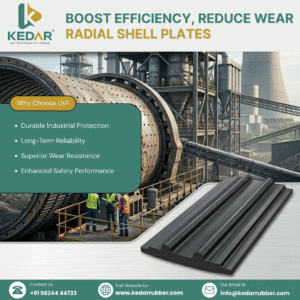
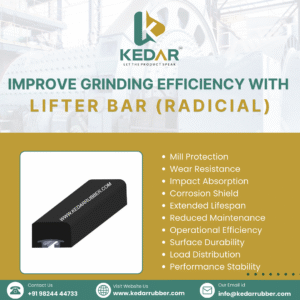
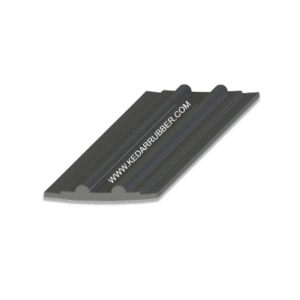
Wave Liner uses a specially shaped, wave-like rubber profile to protect surfaces. Unlike flat liners, the wave pattern directs material flow, spreads impacts, and distributes wear across the liner’s face.
From an engineering view, a Wave Liner’s goal is not just to resist wear, but to manage the material’s interaction with machine surfaces. This design allows for:
- Better absorption of impact energy
- Controlled motion of grinding components
- Reduced stress buildup in specific spots
- More even wear patterns over time
Industries commonly use Wave Liners in ball mills, chutes, hoppers, and other high-wear areas where material dynamics heavily impact equipment.
Applications Across Sectors
Mining Industry
Mining facilities widely use Wave Liners in ball mills and transfer systems that handle ores like iron, copper, bauxite, and limestone. The wave shape helps manage ball movement while shielding mill bodies from repeated hits.
Cement Plants
Cement grinding processes benefit from Wave Liners in raw and finish mills, where stable wear performance supports consistent grinding efficiency and fewer liner changes.
Metal & Steel Plants
Metal processing plants use Wave Liners in material-handling sections exposed to slag, sinter, and fine metal particles, where friction and impact occur simultaneously.
Ceramic Manufacturing
Ceramic factories that handle materials such as feldspar, quartz, and alumina often need liners that can handle sharp, angular substances without rapid surface breakdown.
Power Plants
Coal and ash handling systems use Wave Liners to minimise chute wear and reduce material accumulation.
Bulk Material Handling
Conveyors, transfer chutes, and storage silos benefit from wave-profile liners that slow down material velocity and lessen liner damage at impact points.
Material Science & Engineering Aspects
From a materials engineering viewpoint, Wave Liners rely on carefully developed rubber mixes formulated for industrial wear conditions.
Rubber characteristics such as stretchiness, rebound, and resistance to tearing allow liners to absorb impact energy rather than transmit it to the machine structure. This lessens stress fatigue on mill shells and connected parts.
For applications requiring improved friction resistance, rubber liners can be paired with ceramic wear elements, which offer high hardness and low sliding resistance. The engineering task involves balancing ceramic hardness with rubber pliability to avoid sudden cracking.
Principles of wear resistance focus on managing surface contact, lessening sharp impact angles, and spreading load over a larger area—all of which are influenced by the wave liner’s contours.
Design & Customisation Needs
Wave Liners typically aren’t standardised parts readily available. How well they fit the equipment is crucial to their effectiveness.
Key design points include:
- Mill size and rotation speed
- Material size and mass
- Operating heat and dampness levels
- Mounting technique and liner securing system
Custom sizing guarantees a proper fit, minimises installation errors, and prevents the liner from shifting during operation. Adjustments specific to the application are often needed to match plant operating conditions.
Manufacturing Quality & Process Control
Manufacturers with extensive industry experience know that liner performance strongly depends on consistent production.
Precise manufacturing methods ensure uniform thickness, accurate wave shape, and strong adhesion between liner parts. Quality checks usually involve material testing, size verification, and batch tracking.
Stable production standards help maintain predictable wear over liner replacements, which is vital for maintenance scheduling.
Installation & Service Considerations
How easily a liner is installed directly impacts facility downtime. Well-conceived Wave Liners are made for simple handling and alignment during fitting.
Lighter weight than metal options enhances safety during maintenance tasks. Correct installation minimises gaps, reduces stress on bolts, and ensures even load bearing.
Service intervals are generally timed with scheduled stoppages, enabling facilities to optimise workforce use and avoid unexpected interruptions.
Safety & Operational Dependability
Personnel well-being is a primary factor in liner selection. Rubber-based Wave Liners reduce noise and vibration levels compared to metallic liners, enhancing the workplace atmosphere.
By shielding equipment surfaces and minimising the chance of liner failure, Wave Liners contribute to overall facility uptime. Consistent equipment function leads to fewer urgent fixes and better operational foresight.
Cost-Effectiveness Throughout the Equipment Lifespan
Companies realize cost value from Wave Liners by extending service life, reducing non-productive time, and optimizing maintenance schedules.
While linear systems involve an initial capital outlay, their enduring value comes from reducing production losses, reducing the need for repairs, and safeguarding valuable equipment parts.
Lifespan optimisation prioritises the total cost of ownership over the upfront expense.
Suitability for Export & International Acceptance
Worldwide industrial purchasers anticipate wear defence items to meet uniform quality benchmarks, supported by proper documentation and traceability.
Manufacturers ready for export understand global requirements for material specs, packaging, and the movement of goods. Engineers design Wave Liners for worldwide use, ensuring high performance across diverse operational settings and regulatory frameworks.
The Importance of Seasoned Producers
Engineering proficiency is vital for linear outcomes. Manufacturers with hands-on industry experience can anticipate real-world operational obstacles rather than rely solely on theoretical plans.
Dependable supply, technical aid, and guidance on application are equally crucial for enduring facility collaborations.
Regarding KEDAR RUBBER PRODUCTS PVT LTD
KEDAR RUBBER PRODUCTS PVT LTD is a seasoned industrial firm specialising in wear defence solutions for mining, cement, metalworking, ceramic production, and bulk material logistics sectors.
Serving across India — including Gujarat, Maharashtra, Rajasthan, Odisha, Chhattisgarh, Jharkhand, Karnataka, Tamil Nadu, Telangana, Andhra Pradesh, West Bengal, Madhya Pradesh, Uttar Pradesh, Punjab, Haryana, Himachal Pradesh, Uttarakhand, Bihar, and key industrial hubs such as Ahmedabad, Morbi, Surat, Mumbai, Pune, Nagpur, Raipur, Durg, Rourkela, Jamshedpur, Dhanbad, Chennai, Coimbatore, Salem, Hyderabad, Visakhapatnam, Bengaluru, Kolkata, and Delhi NCR — the firm also supports international industrial sectors.
Further details are found at 👉 https://www.kedarrubber.com/
Summary
Wave Liner systems serve a vital purpose in boosting equipment longevity, operational consistency, and maintenance foresight in demanding industrial settings. By merging sound material knowledge with practical engineering design, Wave Liners help facilities run more reliably under constant wear and tear.
Choosing the appropriate liner solution, backed by experienced manufacturing expertise, directly enhances long-term facility productivity and safety.
Key Takeaways
- Effective wear abatement extends equipment life.
- Wave shaping aids in managing impact and surface wear
- Suitable for numerous heavy process industries
- Boosts operational dependability
- Demonstrated relevance in global industrial arenas
Trending FAQs
Q1. What is the usual service duration for a Wave Liner?
The duration varies based on material traits, operating setting, and upkeep routines, usually aligning with planned shutdown schedules.
Q2. Are Wave Liners appropriate for applications involving high forces?
Yes, their rubber composition is made to absorb impact energy effectively.
Q3. How frequently do Wave Liners need servicing?
Checks are typically done during routine facility maintenance appointments.
Q4. How do rubber liners relate to ceramic wear options?
Rubber liners provide impact dampening, whereas ceramic options centre on superior resistance to rubbing wear. Selection hinges on application needs.
Q5. Are Wave Liners utilised worldwide?
Yes, they are widely accepted in the mining, cement, and bulk-handling sectors globally.
#WaveLiner #BallMillWaveLiner #RubberWaveLiner #BallMillRubberLiner #MillLinerSystem #WearLiner #RubberWearLiner #IndustrialLiners #MiningWearLiner #ImpactResistantLiner #KedarRubber